Volkswagen has officially unveiled the facelifted Taigun in India, a strategic move designed to sharpen the compact SUV’s appeal through design updates and enhanced cabin technology. By borrowing aesthetic elements from its global siblings, Volkswagen is attempting to give this subcompact model a more premium, “mini-Tiguan” identity.
A Global Design Hybrid
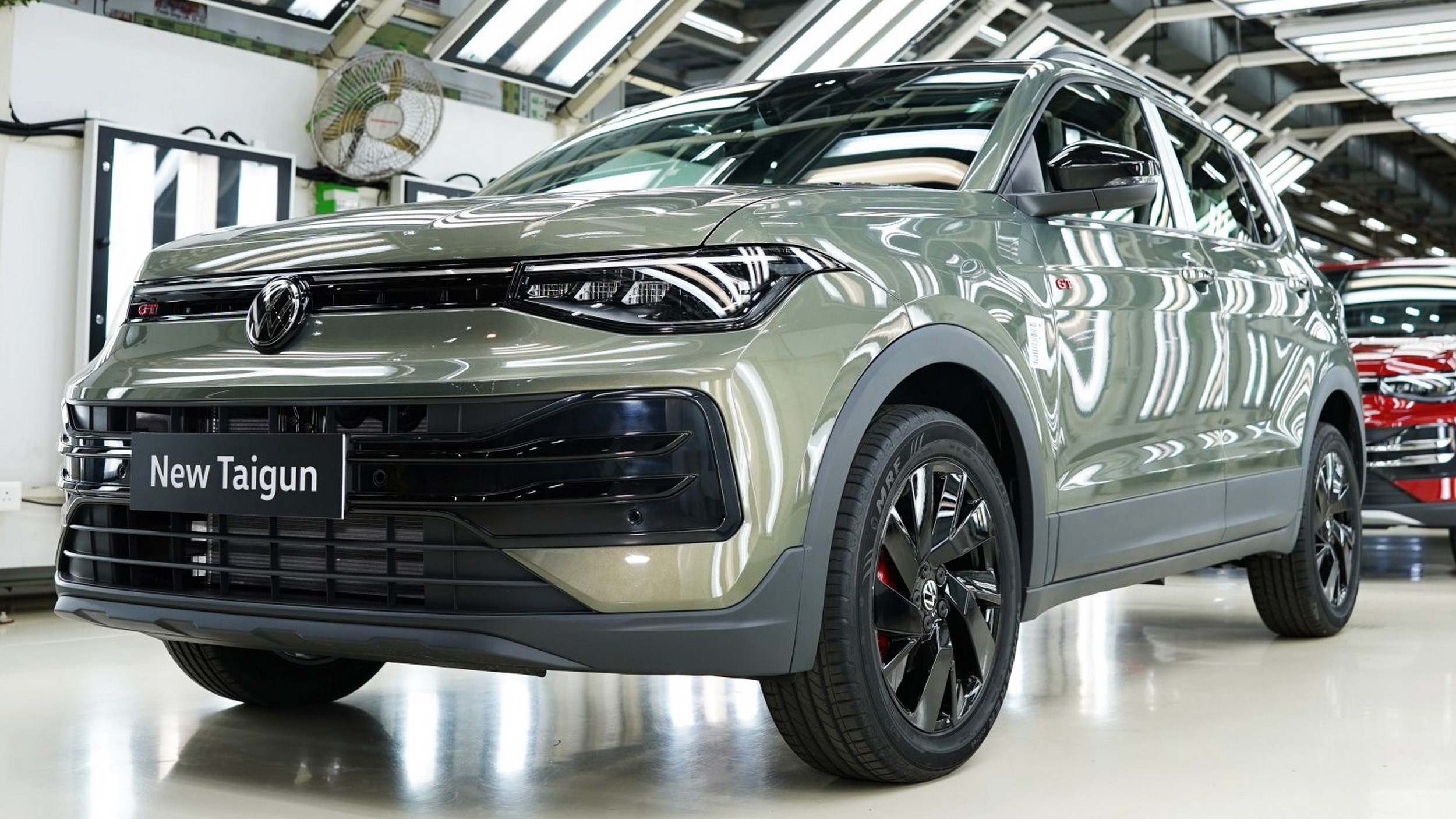
The facelift focuses heavily on visual refinement, drawing inspiration from the Chinese market. The new front fascia adopts styling cues from the Tharu XR (a model produced by the SAIC-VW joint venture in China), featuring:
– Slimmer grille elements for a sleeker look.
– Reshaped headlights.
– Cleaner, more modern bumper intakes.
While the side profile remains largely unchanged, the Taigun receives new 17-inch alloy wheels and an updated color palette. At the rear, the vehicle sports refreshed LED graphics across its full-width taillights. For those seeking a sportier aesthetic, the high-end GT Line and GT Plus Sport trims offer black bumper accents, matching alloys, and red brake calipers.
Upgraded Interior and Tech
Volkswagen has addressed consumer demand for better connectivity and comfort by significantly upgrading the interior experience. The cabin now features:
– A larger 10.1-inch infotainment screen.
– An 8-inch digital instrument cluster.
– Enhanced comfort features such as ventilated front seats (with electric adjustments for the driver), wireless charging, and ambient lighting.
– A much larger panoramic sunroof.
Note on Competition: While these upgrades improve the Taigun’s daily usability, it still trails its sibling, the Skoda Kushaq, which recently introduced segment-first massaging rear seats—a feature the Taigun currently lacks.
Mechanical Updates: Engines and Gearboxes
Underneath the skin, the Taigun continues to utilize the MQB A0 IN architecture, a platform shared with several key models in the Indian market, including the Skoda Kushaq and the VW Virtus sedan.
While the engine options remain consistent with previous models, there is a significant change in how power is delivered to the wheels:
| Engine Type | Power Output | Transmission Option |
|---|---|---|
| 1.0-liter Turbo | 113 hp (85 kW) | New 8-speed torque converter auto or 6-speed manual |
| 1.5-liter Turbo | 148 hp (110 kW) | 7-speed DSG |
The introduction of the eight-speed automatic for the 1.0-liter engine is a notable improvement over the previous six-speed setup, likely aimed at providing smoother shifts and better efficiency for urban driving. All models remain front-wheel drive.
Market Context and Availability
The Taigun occupies a vital niche in Volkswagen’s lineup, sitting above the smaller Brazilian Tera and European T-Cross. By refreshing this model, VW is defending its position in the highly competitive compact SUV segment in India.
Production has already commenced at the Skoda Auto Volkswagen India plant in Chakan, Pune. While pre-orders are currently open, official pricing has yet to be released.
Conclusion: The Taigun facelift represents a calculated effort by Volkswagen to elevate its subcompact SUV through “parts-bin” design synergies and improved transmission technology, aiming to bridge the gap between budget utility and premium feel.