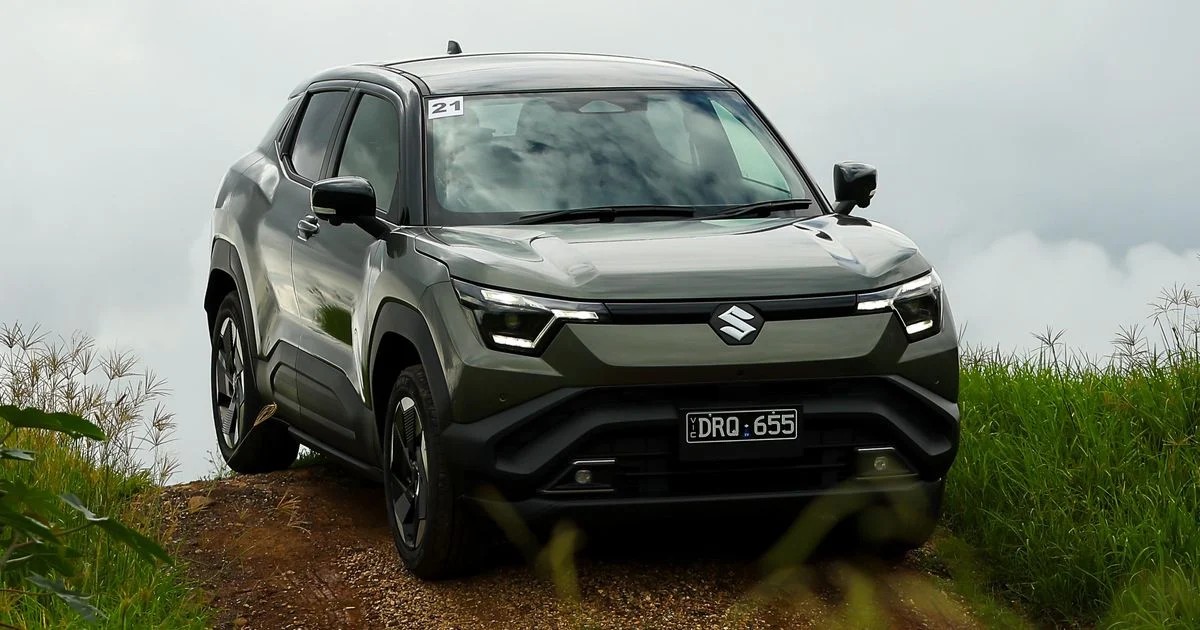
Suzuki will launch two distinct Vitara models in 2026: a mild-hybrid upgrade to the existing fourth-generation SUV and an all-new, dedicated electric vehicle (EV) called the e Vitara. The e Vitara, built in partnership with Maruti Suzuki in India, is poised to enter the Australian market as a competitive option against increasingly affordable Chinese electric crossovers.
Dual Vitara Strategy: Hybrid and Electric
Suzuki’s approach is unique; despite sharing a name, the Vitara Hybrid is an evolution of the decade-old SUV with 48V mild-hybrid technology. The e Vitara, however, represents a fresh start – a purpose-built EV designed for global markets, including a version rebadged as the Toyota Urban Cruiser. This split strategy allows Suzuki to cater to both traditional and emerging consumer preferences.
Pricing and Market Position
Australian pricing remains unconfirmed, but early indicators suggest the e Vitara will target the more accessible end of the EV spectrum. Japanese market figures show a starting price equivalent to around $35,000 AUD, potentially undercutting rivals like the Kia EV3 and positioning it competitively against brands such as Chery, Leapmotor, MG, and Jaecoo. The higher-spec AWD version will be priced around $43,455 AUD.
Interior and Tech
The e Vitara’s interior marks a significant upgrade over the aging standard Vitara. The cabin incorporates design elements from Toyota (such as the center console), dual 10-inch displays, and a mix of soft-touch materials. Physical controls for climate and drive modes are retained, a welcome departure from some EV designs. The infotainment system offers wireless smartphone mirroring, though its performance lags behind some Chinese competitors.
Performance and Range
The e Vitara will be available in two powertrain variants (with a third variant in Queensland), offering either a 49kWh or 61kWh battery. The larger battery version, available in AWD, delivers a claimed range of up to 426km (WLTP cycle). Acceleration is respectable, with Suzuki claiming a 0-100km/h time of 7.4 seconds. The car’s handling is competent, though its weight (nearly 1.8 tonnes) is noticeable.
Safety Features
The e Vitara will come standard with a comprehensive suite of safety features, including adaptive cruise control, autonomous emergency braking, blind-spot monitoring, lane-keep assist, and a surround-view camera. While an ANCAP safety rating is pending, it is expected to perform similarly to the European version which achieved a four-star rating.
Outlook
The Suzuki e Vitara’s success hinges on competitive pricing. If Suzuki can position the base model attractively (under $40,000 AUD), it could gain traction in the crowded affordable EV market. However, if priced too high, it risks being overshadowed by established rivals. The e Vitara represents a notable step for Suzuki into the EV landscape, but its ultimate impact will depend on value and market positioning.