The American automotive landscape is undergoing a fundamental shift. As the average age of vehicles on the road climbs to a record 13 years, car ownership is transitioning from a revolving door of short-term leases to a long-term investment strategy.
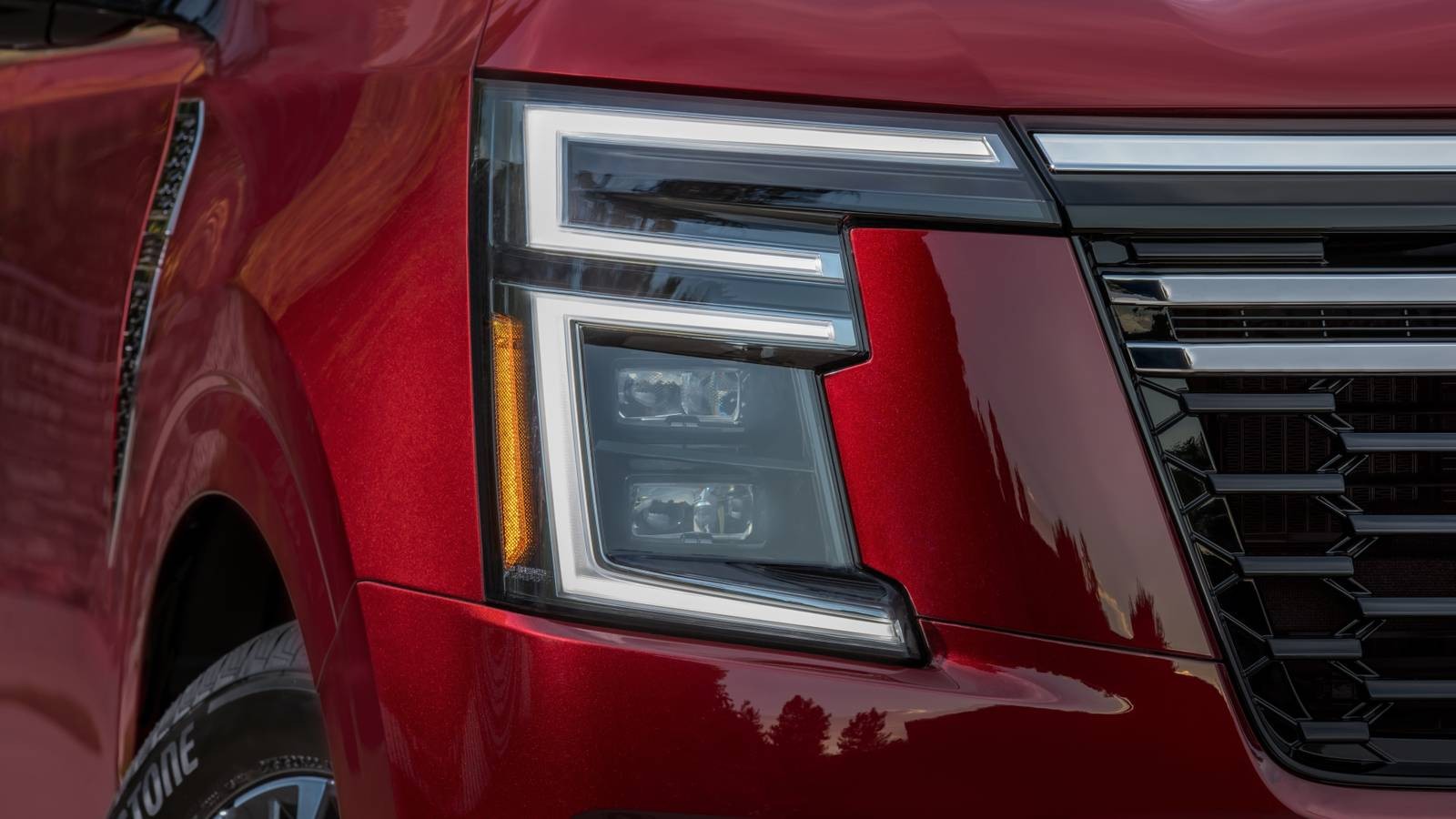
This shift is driven by economic necessity: with average new vehicle prices nearing $50,000 and monthly payments frequently exceeding $1,000, consumers can no longer afford to trade in vehicles every few years. Consequently, the market is moving away from “flashy” features and toward mechanical durability, fuel efficiency, and low total cost of ownership. In this climate, the 2026 Nissan Armada emerges as a significant, if understated, contender for those prioritizing longevity.
Engineering a New Standard for Reliability
For years, the full-size SUV segment was defined by heavy, naturally aspirated V8 engines. While powerful, these engines often struggled with efficiency and high maintenance demands over long periods. Nissan has addressed this with a major engineering pivot in the 2026 Armada.
The aging Endurance V-8 has been replaced by the VR35DDTT, a 3.5-liter twin-turbocharged V-6. This is not merely a downsizing for the sake of fuel economy; it is a move toward higher thermal efficiency and reduced weight. Key technical improvements include:
- Enhanced Power: Despite having fewer cylinders, the new engine produces 425 horsepower and 516 pound-feet of torque.
- Reduced Mechanical Wear: The use of a timing chain and a high-strength aluminum alloy block aims to minimize the long-term maintenance issues often associated with older belt-driven systems.
- Superior Transmission: The upgrade from a seven-speed to a nine-speed planetary automatic transmission provides a wider gear spread, which reduces strain on the engine during heavy towing (up to 8,500 lbs) and highway cruising.
- Thermal Management: New cooling strategies, including an integrated engine oil cooler, help prevent the “heat soak” that can degrade engine components in high-performance or heavy-duty cycles.
Real-World Durability and Ownership Costs
While “reliability” is often a subjective marketing term, data suggests the Armada is built for the long haul. According to iSeeCars, the vehicle has an estimated average lifespan of 8.8 years (approximately 136,006 miles), with a 17.6% probability of reaching the 200,000-mile milestone.
However, maintaining this longevity requires a disciplined approach to service. While Nissan offers a five-year/60,000-mile powertrain warranty, owners should prepare for a scaling cost structure:
- Early Years: Routine maintenance is relatively inexpensive, starting at approximately $340 in the first year.
- The “Maintenance Spike”: Costs rise significantly in the fourth year as the bumper-to-bumper warranty expires and major mechanical inspections become necessary.
- Long-Term Care: To reach high mileage, critical services—such as brake fluid flushes every 20,000 miles and cooling system inspections every 40,000 miles—are essential.
The average annual upkeep is projected at roughly $522, a competitive figure for the full-size SUV class, though specialized models like the Nismo or Pro-4X will incur higher costs due to larger 22-inch tires and performance hardware.
Technology and Interior Versatility
Despite its focus on durability, the 2026 Armada does not sacrifice modern utility. The cabin is centered around the new “Monolith” display, a massive 28-inch digital interface that integrates a 14.3-inch touchscreen with a matching driver gauge cluster.
The lineup is structured to meet diverse needs:
* Entry-Level (SV): Starts at $58,840, offering essential comforts like triple-zone climate control.
* Luxury & Off-Road (Platinum/Pro-4X): Ranges from $70,490 to $74,300, adding features like Zero Gravity seating, massaging chairs, and specialized off-road hardware.
* Performance (Nismo): Tops out at $79,530 for those seeking a performance-tuned driving experience.
For families, the interior provides significant utility. The Armada can be configured as an eight-seater with substantial headroom, and the cargo capacity is highly adaptable—expanding from 20.4 cubic feet with all seats up to a massive 97.1 cubic feet with the rear seats folded flat.
The Bottom Line: While it may not capture the same headlines as more experimental electric SUVs, the 2026 Nissan Armada is a pragmatic response to a high-cost era, offering a balance of high-tech features and the mechanical robustness required for decade-long ownership.