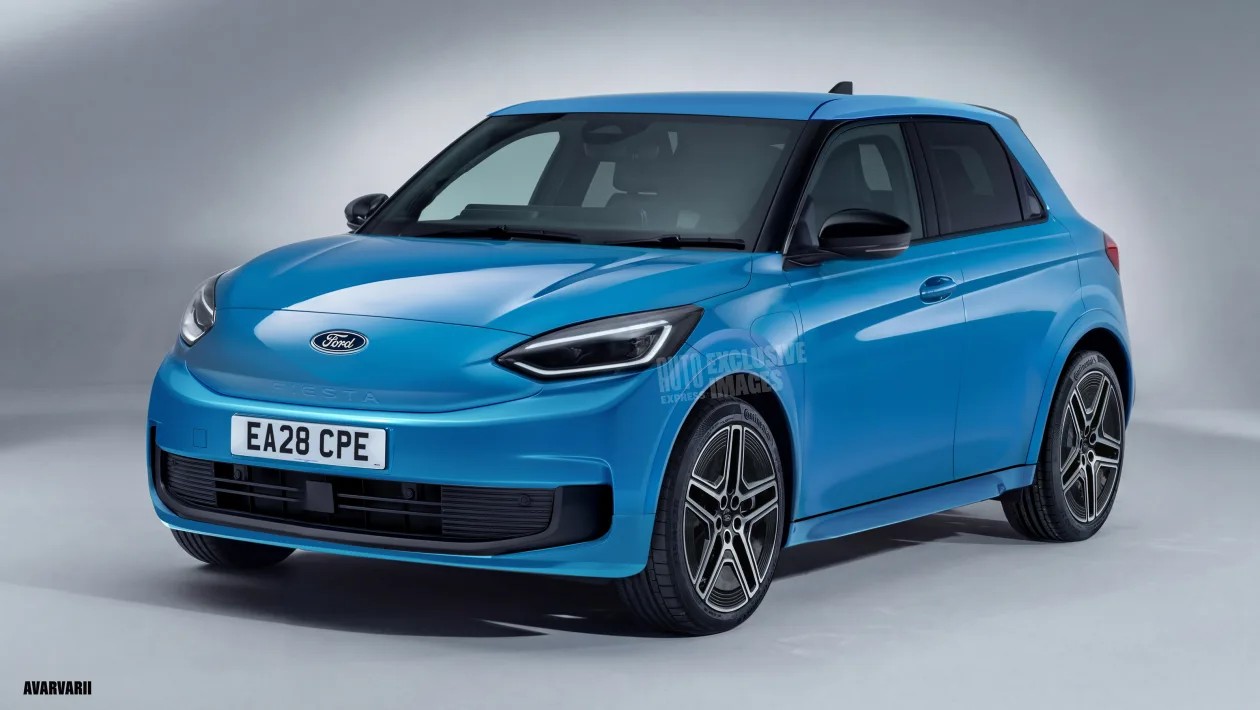
The iconic Ford Fiesta, discontinued in 2023, is set for a sensational return in 2028, thanks to a strategic partnership between Ford and Renault. This collaboration allows Ford to leverage Renault’s AmpR Small electric-car platform, already used in models like the Renault 5 and Alpine A290, securing its position in the competitive European small-car market.
Securing Scale with Renault’s EV Technology
The agreement, finalized in December 2025, grants Ford access to Renault’s advanced battery and motor technology. This move is crucial for Ford, enabling them to achieve economies of scale in the EV segment without the massive upfront investment of developing a platform from scratch. The partnership isn’t about rebadging; Ford will design unique bodies for both new models, ensuring they stand apart from Renault’s offerings despite sharing the underlying architecture.
Two New Models: Fiesta and a Second Small EV
Ford plans to launch two new models: a hatchback reviving the Fiesta nameplate and a second, unnamed small electric vehicle. Both will be designed by Ford, with a focus on maintaining distinct brand DNA in ride, steering, and handling. According to Ford of Europe president Jim Baumbick, “We’re very confident that we can completely differentiate the offering.”
Powertrain and Performance Expectations
The new Fiesta is expected to mirror the Renault 5 in dimensions, but with Ford’s signature dynamic styling. Powering the vehicle will likely be Renault’s 40kWh or 52kWh battery options, offering a potential range of up to 252 miles (WLTP). The higher-spec variant may deliver up to 148bhp, achieving 0-62mph in under eight seconds.
The possibility of a new Fiesta ST is high, potentially adopting the Alpine A290’s powertrain, which delivers up to 217bhp. This aligns with Ford’s strategy of doubling down on performance vehicles, such as the Mustang GTD and Ranger Raptor.
Production and Timeline
The Fiesta and its sibling will be assembled at Renault’s ‘ElectriCity’ complex in Northern France. Renault’s rapid development of the Twingo (under two years) suggests a similar timeline for the Fiesta, with a market launch targeted for 2028. Ford will benefit from Renault’s established R&D infrastructure, accelerating the project’s timeline.
Beyond the Fiesta: A Broader EV Strategy
Ford will continue to partner with Volkswagen for its C-segment vehicles, while the Renault collaboration focuses on B-segment small cars. The second EV is unlikely to replace the Puma Gen-E but will augment the lineup, potentially with a baby SUV or a revival of the Ford Ka.
The partnership may also extend to light commercial vehicles, leveraging Ford’s dominance in that sector.
The revival of the Fiesta marks a strategic win for Ford, securing access to competitive EV technology while preserving the brand’s identity in the small-car segment. This move demonstrates the growing importance of collaboration in the automotive industry as manufacturers race to electrify their lineups.