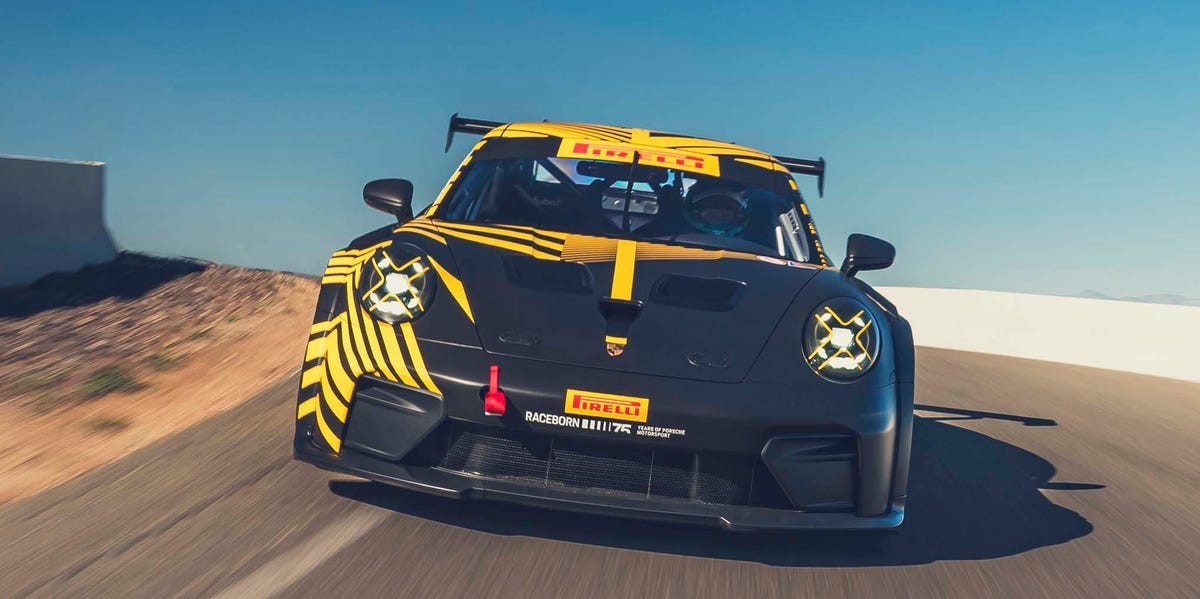
The Porsche 911 Cup car isn’t just another high-performance vehicle; it’s a dedicated racing machine engineered to sharpen skills and deliver uncompromising track performance. Former factory driver Patrick Long highlights the 996-generation Cup car as a pivotal tool for aspiring racers, teaching lessons applicable across multiple racing disciplines. The latest 992.2 iteration builds on this legacy, offering an intense driving experience that demands precision and rewards commitment.
The Track Experience: Raw and Unforgiving
Driving a 911 Cup car is fundamentally different from piloting a road-legal Porsche. The race seat and harness lock you into place, forcing focus solely on steering and threshold braking. Steering response is featherlight yet brutally direct, providing unfiltered feedback from the tires. Unlike road cars that understeer with aggressive inputs, the Cup car maintains grip, demanding smooth transitions rather than quick, jerky movements.
The car’s balance remains remarkably flat through corners, requiring deliberate smoothness instead of improvisational wheel-throwing. The engine, a 512-horsepower 4.0-liter flat-six, delivers instant throttle response to 8750 rpm, though the lack of sound insulation and paddle-shifted sequential manual amplify the sensation of speed.
Under the Skin: A Purpose-Built Machine
Porsche builds the Cup car on the same body shell as the street GT3, but the similarities stop there. The engine shares the road car’s flat-six architecture but swaps individual throttle bodies for a single butterfly valve, resulting in a raw, immediate feel. A six-speed sequential manual with paddle shifters replaces the dual-clutch automatic found in road cars.
The chassis is stripped down and optimized for track use: carbon fiber doors with plastic windows, no fuel filler door (it’s under the hood), and a massive rear wing for downforce. Even the interior is spartan, featuring a full roll cage, race seat, five-point harness, and a fire suppression system that drivers are sternly warned not to touch. The dash retains some familiar 911 elements, but the steering wheel is packed with controls for engine crank, radio, ABS, traction control, and even a pit-lane speed limiter.
Racing Series and Cost of Entry
The 911 Cup car isn’t just a track toy; it’s a competitive platform. Five series in the U.S. allow drivers to compete: Porsche Carrera Cup North America, Porsche Sprint Challenge North America, Porsche Sprint Challenge USA West, Porsche Sprint Trophy PCA, and Porsche Endurance Challenge North America. Races range from 40-minute sprints to grueling four-hour endurance events.
However, entry isn’t cheap. The 911 Cup car costs $375,000. While expensive, ownership costs are relatively manageable, with the first major service scheduled for 100 hours of track time. Porsche has also streamlined maintenance, including an auto-restart function and in-cabin adjustments for steering angle sensors and fuel maps.
Engineering for Reliability and Cost Reduction
Porsche has made deliberate design choices to reduce repair costs. The three-piece front splitter is cheaper to replace after contact, and the 992.2 Cup car eliminates the DRLs that previously melted into the heat exchangers after front-end collisions. These small changes lower the total cost of ownership, making the Cup car a more viable option for serious racers.
The 911 Cup car is a pure, unadulterated racing machine designed to push boundaries and extract maximum performance. Whether you’re an aspiring pro or a dedicated track enthusiast, it offers an experience that few other cars can match.
Ultimately, the Porsche 911 Cup car represents a clear commitment to competitive racing: it’s fast, unforgiving, and demands respect. The Cup car doesn’t just teach drivers how to go fast — it teaches them how to survive.