The latest round of testing from the Australasian New Car Assessment Program (ANCAP) has delivered a mixed bag of results for several popular models. While Audi and Cupra continue to lead the pack with top-tier safety scores, Nissan and Suzuki have struggled to reach the five-star threshold under the current assessment protocols.
The Five-Star Leaders: Audi and Cupra
The premium segment continues to demonstrate high safety standards. The Audi Q3, Audi A3, and the Cupra Leon have all successfully secured five-star safety ratings.
Notably, both the Audi A3 and the Cupra Leon were reassessed following specification updates, proving that their safety architecture remains robust even as the vehicles evolve.
Key performance metrics for the top performers:
– Cupra Leon: Showed exceptional balance, scoring 88% for adult occupant protection and 82% for both vulnerable road user protection and safety assist technology.
– Audi A3: Maintained high standards with 87% for adult protection and 86% for child protection.
– Audi Q3: Delivered a solid performance with 86% for adult occupant protection and 75% for safety assist systems.
The Four-Star Contenders: Nissan and Suzuki
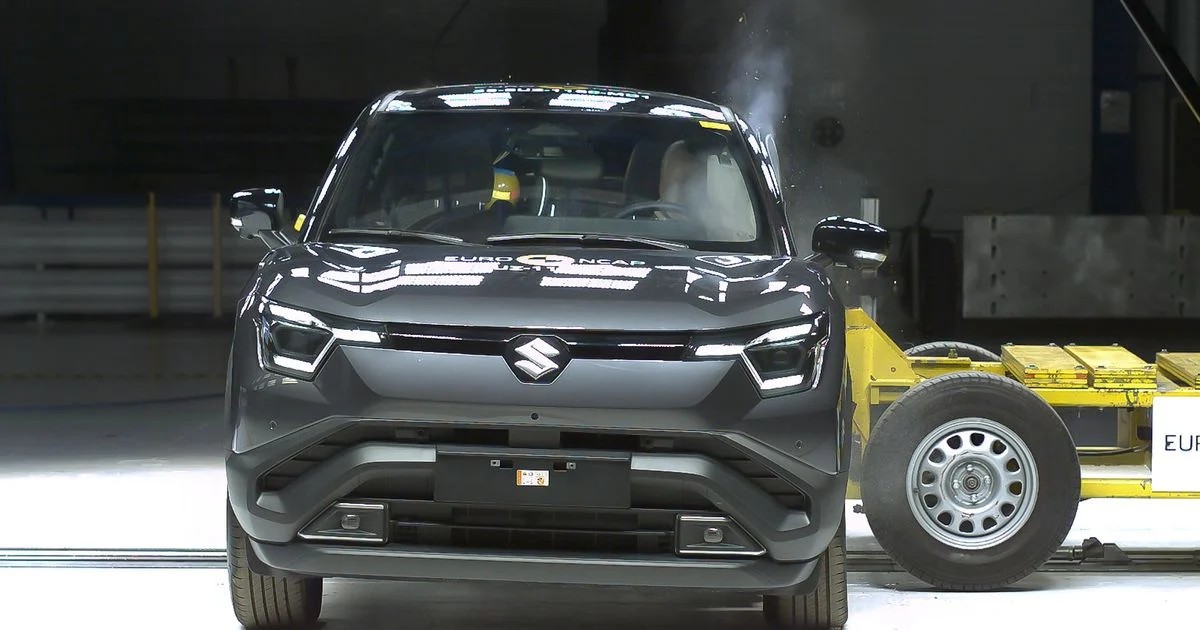
Not all models achieved the highest possible rating, with the Nissan Qashqai and the Suzuki e Vitara both receiving four stars.
Suzuki’s Upward Trend
The Suzuki e Vitara’s four-star rating is viewed as a significant step forward for the manufacturer. Recent Suzuki models, such as the Fronx (one star) and the Swift (three stars), have faced criticism for lower safety scores.
While the e Vitara fell short of five stars due to its adult occupant protection score (77%), ANCAP Chief Executive Carla Hoorweg noted that the result is an encouraging sign of improvement. It suggests that Suzuki is capable of producing vehicles with sound safety performance, even if they haven’t yet reached the absolute ceiling.
Nissan Qashqai’s Setback
In a surprising turn, the Nissan Qashqai received a four-star rating following a re-test after specification changes. This marks a departure from the model’s historical performance; since its Australian launch in 2014, the Qashqai has consistently been a five-star performer.
The model’s lower score was primarily driven by its performance in two critical areas:
– Vulnerable road user protection: 68%
– Safety assist technology: 62%
Why These Ratings Matter: The Road to 2026
These results are being released under the outgoing 2025 protocols, which serve as a final benchmark before a major shift in safety standards.
Starting in 2026, ANCAP will implement much stricter protocols. These new rules will align more closely with Euro NCAP standards, placing much heavier emphasis on the effectiveness and usability of advanced driver-assist systems (ADAS).
For manufacturers, this means that simply having safety technology is no longer enough; the technology must be intuitive, reliable, and highly effective at preventing collisions to meet the upcoming higher bar of excellence.
The transition to stricter 2026 protocols means that the margin for error is shrinking, forcing manufacturers to move beyond basic protection toward more sophisticated, seamless driver-assist integration.
Conclusion
While Audi and Cupra maintain their dominance in safety, the lower scores for Nissan and Suzuki highlight the increasing difficulty of maintaining top ratings as technology and expectations evolve. As the industry prepares for much tougher 2026 standards, the focus is shifting heavily toward how well a car’s automated systems can actually protect both occupants and pedestrians.