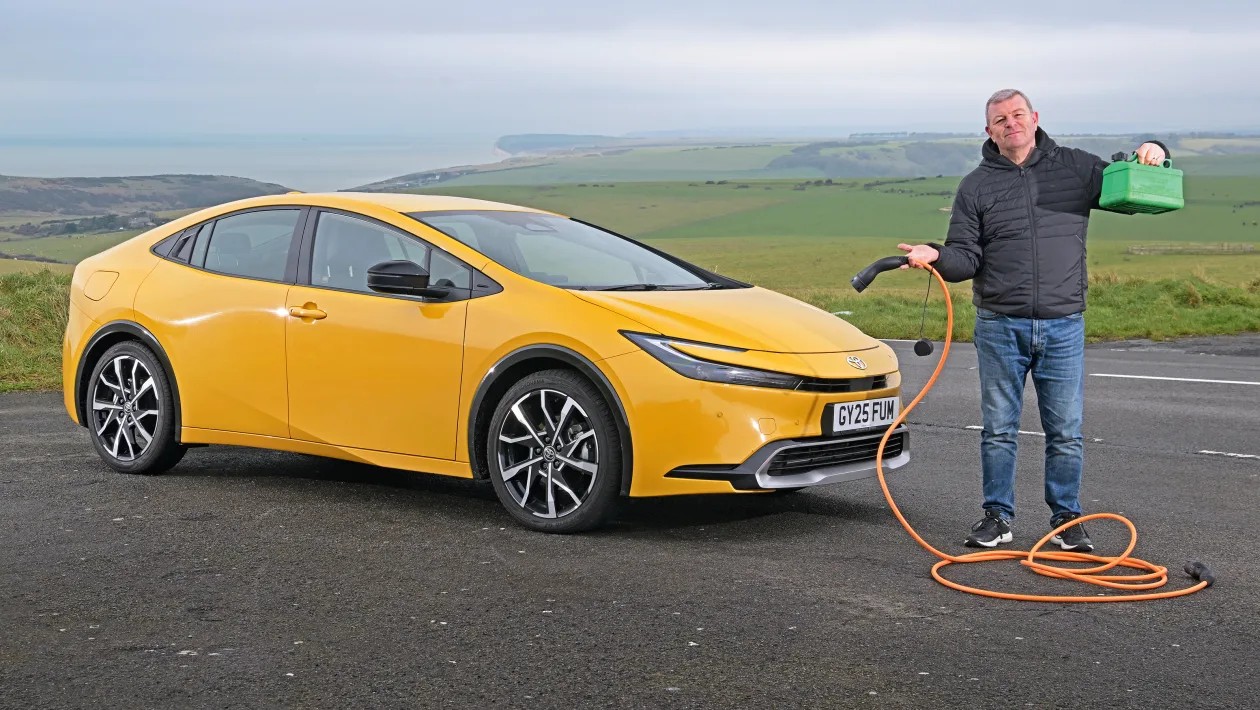
For years, the Toyota Prius was often viewed through a single lens: extreme efficiency at the expense of style and driver engagement. However, after 5,350 miles of testing the latest Excel plug-in hybrid (PHEV) model, it is clear that Toyota has fundamentally changed the DNA of its flagship hybrid.
The new Prius is no longer just a tool for the eco-conscious; it is a refined, high-performance machine that manages to balance impressive fuel economy with a level of build quality that rivals premium brands.
Performance and Efficiency: The Best of Both Worlds
The most significant upgrade in this fifth-generation model is the powertrain. Moving away from smaller engines, Toyota has equipped the Prius with a 2.0-litre four-cylinder petrol engine paired with a 13.6kWh lithium-ion battery. This combination produces 220bhp, allowing the 1,610kg vehicle to accelerate from 0-62mph in just 6.8 seconds.
The efficiency remains the car’s primary selling point, but it is now paired with much better performance:
– Real-world fuel economy: Averaging approximately 68.3mpg in everyday driving.
– EV Range: While the manufacturer claims 53 miles, real-world usage settles around 40 miles per charge.
– Total Range: With a 40-litre tank and high MPG, the car can theoretically travel over 600 miles, though the onboard computer suggests refueling around the 450-mile mark to prevent running dry.
Context Matters: In an era of skyrocketing fuel prices, the ability to run on electricity for short urban trips—costing roughly £6 for a 40-mile charge—makes the Prius a highly relevant choice for commuters.
Driving Dynamics and Refinement
Perhaps the most surprising aspect of the long-term test is the vehicle’s composure. Despite its focus on efficiency, the Prius offers a sophisticated ride and quiet cabin.
The damping is notably well-tuned, handling poor road surfaces with ease and remaining “eerily calm” during motorway cruising. This level of refinement suggests that Toyota has moved the Prius upmarket, aiming for a driving experience that feels more akin to a Lexus than a standard economy hybrid.
Interior Quality and Technology
The cabin of the Excel model feels significantly more premium than many competitors in the £40,000 price bracket, including models from Volkswagen and Ford.
- Build Quality: The materials and control precision feel high-end and well-constructed.
- Infotainment: A large 12.3-inch central touchscreen serves as the hub for the car’s complex technological features, proving intuitive and easy to navigate.
- The Trade-off: The driver’s instrument display is somewhat small and positioned in a way that some drivers may find less ideal than a larger, more central unit.
Summary of Specifications (Toyota Prius Excel)
| Feature | Specification |
|---|---|
| Price (as tested) | £40,545 |
| Powertrain | 2.0L 4-cylinder Petrol PHEV |
| Power Output | 220bhp |
| CO2 Emissions | 17g/km |
| Average Mileage | 68.3mpg |
The Verdict
The new Toyota Prius has successfully transitioned from a niche eco-car to a versatile, high-quality all-rounder. While the lack of rapid charging means it is best suited for those with home charging access, its combination of performance, premium feel, and exceptional economy makes it one of the most compelling options in its segment.
The Prius is no longer just a sensible choice; it is a car that is genuinely enjoyable to drive.