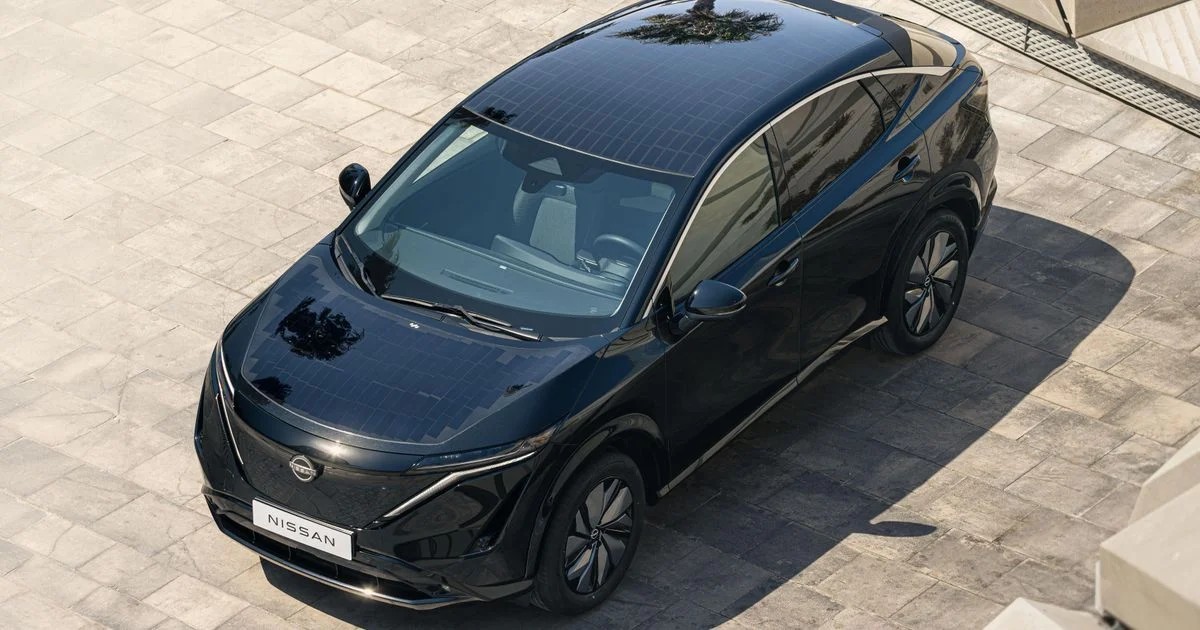
Nissan has unveiled the Ariya Solar Panel Concept, showcasing how solar energy can supplement an electric vehicle’s range. The concept vehicle integrates 3.8 square metres of solar panels across its bonnet, roof, and rear windscreen, comprising 480 cells capable of generating up to 700W of peak power, or roughly 4kWh per day.
Real-World Range Gains 🌍
The potential range increase varies significantly based on location. Nissan estimates that under ideal conditions, the Ariya Solar Panel Concept could add up to 23km of range daily. Even in less sunny cities like London, it could still provide an extra 10.2km per day. In sunnier climates, the gains are even greater:
- Barcelona: 17.6km per day
- New Delhi: 18.9km per day
- Dubai: 21.2km per day
These figures demonstrate the viability of solar integration, though real-world results will depend on weather conditions and parking habits.
Technology and Partnerships 🤝
The concept was developed collaboratively by Nissan’s teams in Dubai and Barcelona, leveraging solar panel technology from Dutch company Lightyear. Lightyear previously produced a high-end solar-powered sedan (priced at €250,000) capable of adding up to 70km of range per day under optimal conditions.
Cost and Precedents 💰
The cost of integrating this solar setup into a production Ariya remains unknown. However, Toyota already offers a solar roof option for the Prius Plug-in Hybrid overseas, adding approximately US$610 (A$880) to the price. This system generates up to 185W (2.2kWh), providing around 10km of additional range.
Historical Context 🕰️
Solar integration in cars isn’t new. Mazda experimented with solar-powered ventilation systems as early as 1991 in the 929 model, though these were used for cooling parked cars rather than supplementing driving range.
The Nissan Ariya Solar Panel Concept shows how manufacturers are actively exploring ways to make electric vehicles more self-sufficient and sustainable, though widespread adoption depends on cost-effectiveness and consumer demand.
Ultimately, this concept represents a step towards more sustainable mobility by harnessing the power of the sun.