The MG QS marks a significant shift in the Australian car market: the arrival of a large, three-row crossover SUV from China. For years, Chinese automakers have steadily increased their presence, now accounting for a substantial share of sales across multiple segments. However, the large SUV category—dominated by stalwarts like the Toyota Kluger, Hyundai Santa Fe, and Kia Sorento—remained largely untouched until recently.
While GWM briefly experimented with the Haval H8 and Chery has entered with the Tiggo 8 Pro Max, the MG QS is the latest entrant in this space. The QS isn’t the first attempt at a large MG SUV; the RX8 was launched in the Middle East years ago, but it was a rugged, body-on-frame model. The QS, in contrast, is a modern crossover with unibody construction, designed to compete directly with established players.
Borrowed Design, Familiar Roots
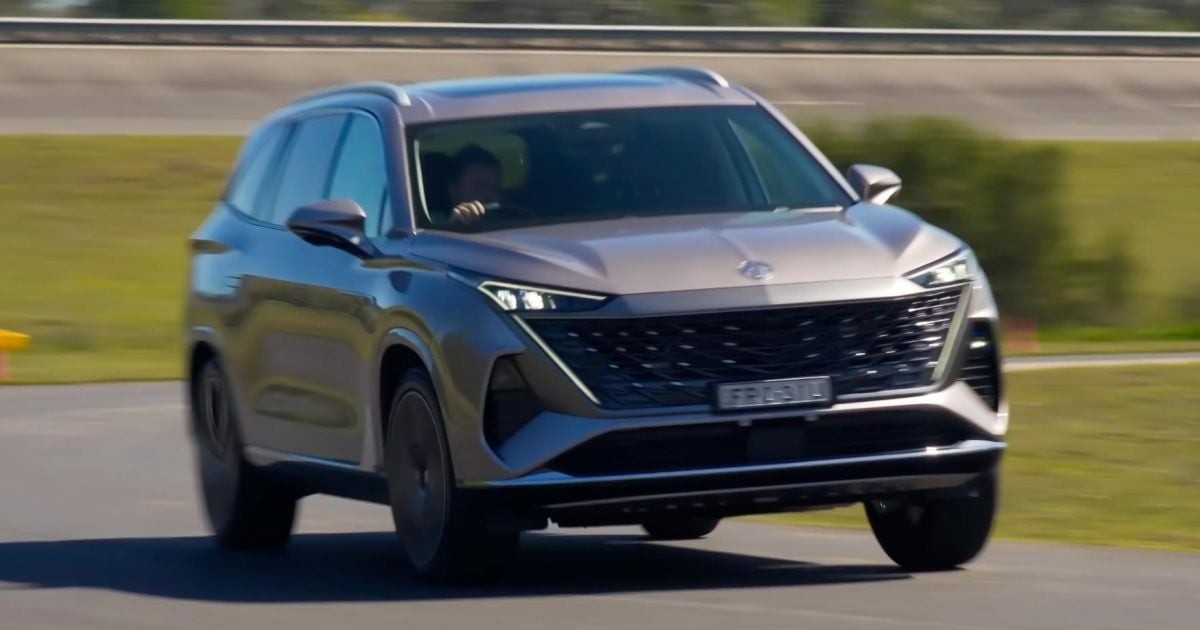
MG’s parent company, SAIC Motor, often rebadges models from its Roewe brand to fill gaps in the MG lineup. The QS is essentially the Roewe RX9 sold elsewhere, a strategy seen with other models like the MG U9 (originally an LDV Terron 9). While some might see this as a shortcut, the result is a handsome SUV with a distinctive, if somewhat aggressive, front grille. The design features metallic accents and 21-inch wheels that give it a premium look.
Inside the Cabin: Modern, But Not Perfect
The interior of the QS is modern and well-appointed, though not without its quirks. The top-spec model lacks a head-up display, which feels like an oversight. The digital instrument cluster offers multiple themes, but the speed readout can be obscured depending on seating position.
The touchscreen infotainment system is a significant improvement over previous MG iterations, with a well-organized layout and physical buttons for essential controls. Still, adjusting features like heated seats requires navigating menus, which is less convenient. Wireless Android Auto works reliably, though some users have reported issues with wireless Apple CarPlay.
Storage is ample, with generous door pockets and a deep center console bin. The front seats are plush and supportive, while the second row offers comfortable seating for adults. The third row is usable but features hard plastics, and lacks top-tether or ISOFIX anchor points. Boot space is limited with all rows in use.
Engine and Driving Experience
The QS is powered by a turbocharged 2.0-liter four-cylinder engine, with a plug-in hybrid version planned for the future. The engine delivers decent performance, but the driving experience is not particularly sporty. The steering is light, making city driving easy, while the adaptive dampers provide a comfortable ride on most surfaces.
The brakes feel spongy and lack feedback, which detracts from confidence when driving aggressively. The QS isn’t designed for spirited handling; it prioritizes comfort and practicality over dynamism.
The Verdict: A Competitive Newcomer
The MG QS is a credible contender in the large SUV segment, offering a well-equipped and stylish package at a competitive price. While it has some minor usability issues and a less-than-stellar driving experience, it represents a significant step forward for MG and a clear indication that Chinese automakers are serious about challenging the established brands in Australia.
The QS’s arrival signifies a turning point: Chinese manufacturers are no longer just filling niche segments but are actively targeting mainstream categories. Whether buyers embrace this new competition remains to be seen, but the MG QS is undoubtedly a vehicle to watch.