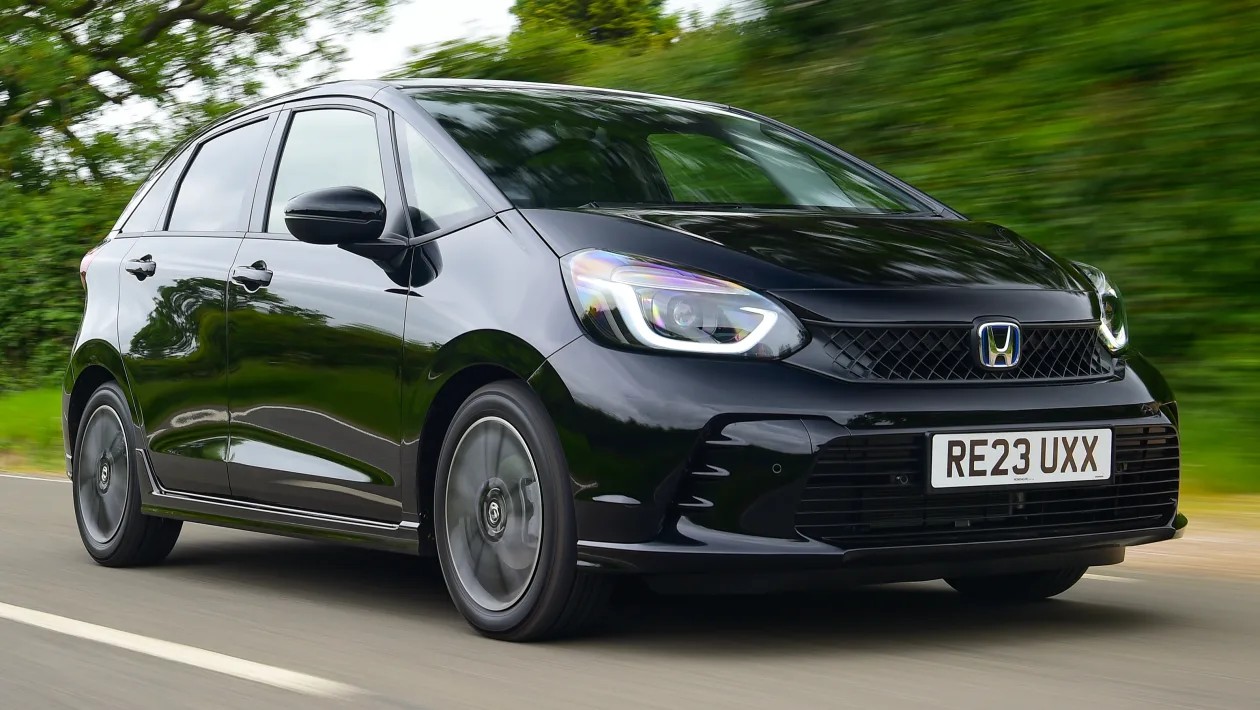
The Honda Jazz remains a compelling choice for buyers prioritizing fuel efficiency, low running costs, and unmatched interior versatility. While it may not excite with its styling or driving dynamics, the latest fourth-generation model delivers on its core strengths – practicality and reliability – in a highly competitive segment.
A Blend of Common Sense and Hybrid Efficiency
The Jazz stands out by offering only a hybrid powertrain. This commitment to electrification, mirroring Toyota’s approach with the Yaris, prioritizes fuel economy. The 1.5-liter e:HEV system allows for short bursts of electric-only driving, which is most effective in stop-and-start city traffic. This choice reflects Honda’s broader shift away from conventional engines in Europe, making the Jazz a practical step toward a more sustainable future.
The Jazz’s Enduring Appeal: Reliability and Value Retention
Since its UK introduction in 2002, the Honda Jazz has built a loyal following by consistently delivering on reliability and low ownership costs. This reputation has been a key selling point, even if it has limited its broader market reach. The Jazz’s understated nature attracts buyers who value substance over style, ensuring strong resale values over time.
Model Grades and the Crosstar Variant
The current Jazz lineup includes four trim levels: Elegance, Advance, Advance Sport, and the SUV-inspired Crosstar Advance. The Crosstar, with its raised ride height and rugged styling cues, attempts to capitalize on the growing crossover trend. However, it sacrifices some efficiency for aesthetics and doesn’t offer any off-road capability. The Crosstar’s appeal is questionable given the Jazz’s core ethos of practicality over pretense.
Performance and Driving Experience: Prioritizing Smoothness over Thrills
The Jazz’s 1.5-liter hybrid powertrain delivers steady performance and exceptional fuel economy. It accelerates from 0-62mph in roughly 9.4 to 9.7 seconds, depending on the trim level, which is comparable to rivals like the Renault Clio E-Tech. The CVT transmission can be noisy under hard acceleration, but the overall driving experience prioritizes smoothness and efficiency over sporty handling.
Fuel Economy and Running Costs: A Clear Advantage
The Jazz excels in real-world fuel efficiency, achieving up to 62.8mpg on the combined WLTP cycle. This outpaces competitors like the Renault Clio E-Tech, which manages 55.2mpg in the same tests. Insurance costs are higher than some rivals, but depreciation is well-controlled, with the Jazz retaining between 52% and 56% of its initial value after three years. This makes it a financially sensible long-term investment.
Interior and Technology: Functional but Not Luxurious
The Jazz’s interior is durable and well-built, though it lacks the plushness of some competitors. The nine-inch touchscreen infotainment system is functional but not intuitive, requiring more steps to perform basic tasks than some modern systems. Wireless Apple CarPlay is included, but Android Auto requires a cable connection. The cabin design is minimalist and practical, prioritizing usability over luxury.
Space and Versatility: The Jazz’s Defining Feature
The Honda Jazz’s interior space is its greatest asset. The rear seats can be folded flat or flipped up in “Magic Seat” configuration, creating a tall, flat cargo area capable of accommodating unusually large items. This versatility sets the Jazz apart from nearly all supermini rivals, making it an ideal choice for families or those who frequently transport bulky items.
In conclusion, the Honda Jazz is not a car that will set your pulse racing, but it remains a supremely practical, efficient, and reliable choice for buyers who prioritize substance over flash. Its hybrid powertrain, combined with its unmatched interior versatility, makes it a standout option in the crowded supermini segment.