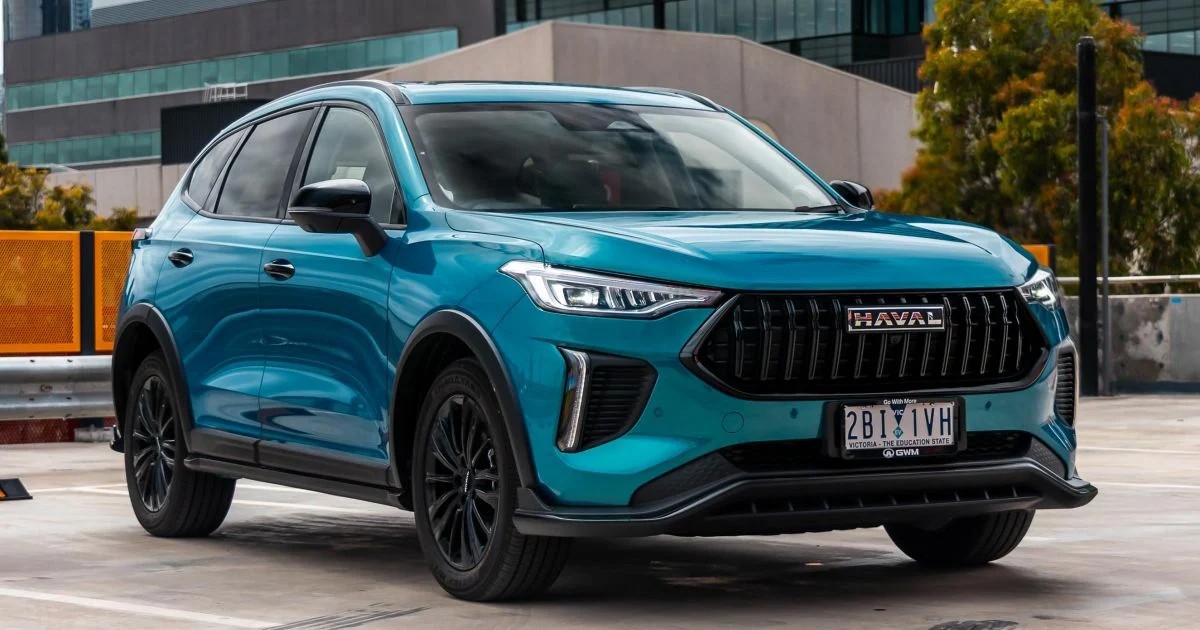
The GWM Haval Jolion continues to be a significant player in the Australian small SUV segment, with over 20,000 units sold in 2025. As the Chinese auto market expands rapidly Down Under, the Jolion has managed to hold its own against established rivals and newer entrants alike. This review focuses on the 2026 Vanta Hybrid, the top-spec variant, to assess whether it still offers enough to compete in a fiercely competitive landscape.
Key Sales Figures and Market Position
The Jolion’s success isn’t accidental. It’s part of a broader trend: affordable Chinese SUVs with hybrid technology are gaining traction with Australian buyers. GWM was among the first Chinese brands to establish a foothold in Australia over 15 years ago, and the Jolion benefits from this early brand recognition. It currently battles closely with the Chery Tiggo 4 and MG ZS for dominance, putting pressure on the traditionally leading Hyundai Kona.
Updates for 2026: A Subtle Evolution
Despite the intensifying competition, the 2026 Jolion Vanta Hybrid remains largely unchanged from the 2025 model. The major update – the “new shape” design with hybrid powertrains – was introduced last year. The primary change is the discontinuation of the Ultra trim in favor of the blacked-out Vanta variant, which retains most of the Ultra’s features, including both petrol and hybrid options.
Pricing and Value
The Vanta Hybrid currently retails at $38,990 drive-away, with a $1000 discount available until December 31, 2025. This places it competitively against the MG ZS Essence Hybrid+ ($36,990) and Chery Tiggo 4 Hybrid Ultimate ($34,990). Higher-end rivals like the Honda HR-V e:HEV ($42,900) and Hyundai Kona Hybrid ($45,590) command a premium. The Jolion, therefore, remains a strong value proposition, especially given its standard hybrid powertrain.
Interior: Familiar Quirks Persist
The Jolion’s interior remains a mixed bag. While functional, it suffers from ergonomic shortcomings and outdated technology. The driver’s seat is firm, and steering wheel adjustment is limited, resulting in an awkward driving position for some. The tiller itself has a deep dish, making it hard to grip properly, and stalks are awkwardly placed.
Despite these issues, there have been some minor improvements. The infotainment system’s graphics have been updated, and poorly translated settings have been corrected (e.g., “Front Washer Scraper Interval” is now “Front Wiper Interval”). The interior still feels busy with a mix of finishes, but the Vanta’s gunmetal accents improve the aesthetic.
Performance and Handling: A Functional Hybrid Experience
The Jolion Hybrid combines a 1.5-liter petrol engine with an electric motor, delivering 115kW/250Nm through a two-speed CVT. Fuel economy is respectable, and the powertrain offers a smooth transition between electric and petrol power. The electric mode operates up to 80km/h, and a one-pedal regen mode is available.
However, the engine noise is harsh, and the CVT drone is noticeable. Handling is predictable but not exceptional. The steering is light, making it easy to maneuver in urban environments, but the ride is firm, sacrificing some comfort for sporty styling.
Safety Systems: Annoying, Not Always Helpful
The Jolion’s safety systems remain intrusive. The driver monitoring system, though slightly improved, still triggers false alarms. Lane-keep assist is overreactive, aggressively steering the vehicle back into the lane even on straight roads. The “tailgating” warning is excessively loud and annoying. These systems can be disabled but remain a source of frustration for drivers.
Boot Space and Practicality
Boot capacity is limited at 255 liters, smaller than competitors like the MG ZS Hybrid+ (443L) and Chery Omoda 5 (360L). Hybrid models only come with a tire repair kit, a downgrade from the space-saver spare in petrol versions.
Final Verdict
The 2026 GWM Haval Jolion Vanta Hybrid remains a competitive option in the crowded small SUV segment. It offers good value, especially given its hybrid powertrain, but the interior ergonomics and intrusive safety systems detract from the overall experience. While GWM has made incremental improvements, the Jolion needs further refinement to truly stand out.
The Jolion’s continued success hinges on its affordability and brand recognition, but to keep rivals at bay, GWM must address the lingering issues that hold it back from being a truly refined vehicle.