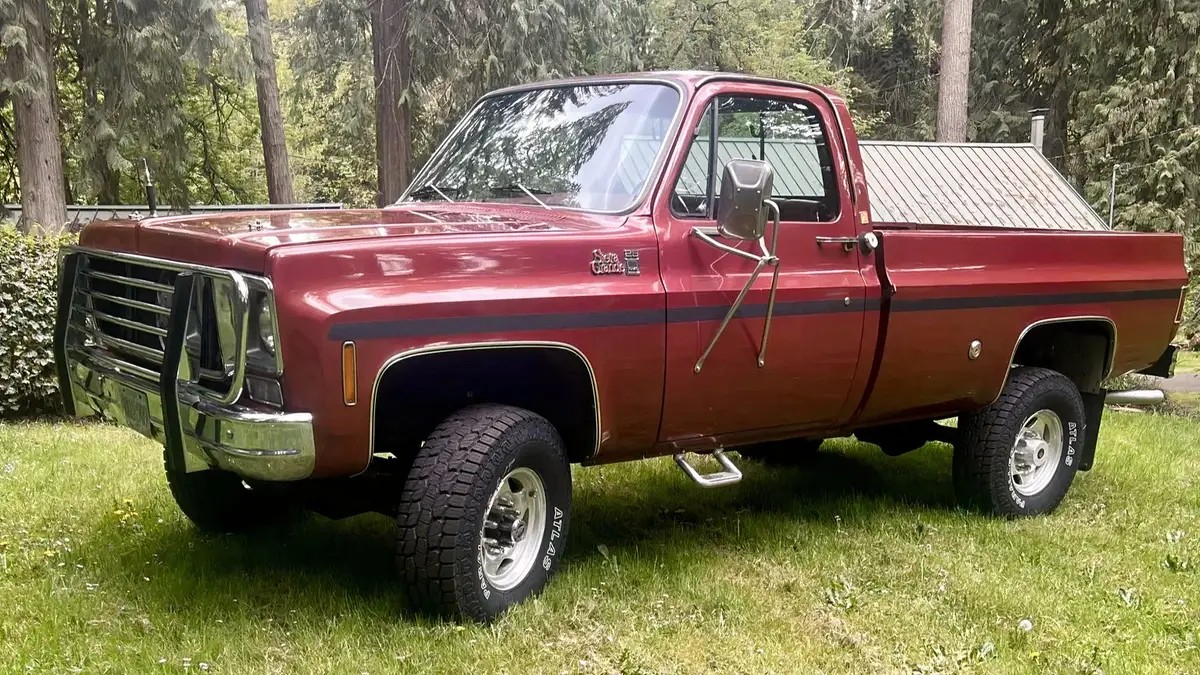
Forget what you heard a decade ago. Back then, a $5,000-to-$8,000 Square Body GM truck was just another weekend warrior purchase, changing hands with barely a second glance. Now? That 1977 GMC Sierra Grande 2500 asking for $21,50 on the Jalopnik site feels different. It signals a market that has completely turned over.
These aren’t used trucks anymore. They are collector items. And the Sierra Grande sits near the top.
The listing, dropped on July 15, 2016, puts a hard number on the trend. But is the price right? Depends. Condition. Originality. Options. The details that didn’t matter when these rigs were just cheap haulers now dictate whether you’re looking at fair market value or pure optimism.
Square Body trucks have crossed the line from utilitarian tools to legitimate collectibles.
The cheap era is over
Look at the restomod scene. SEMA floors are full of elaborate C/K builds these days—LS swaps, frame-off jobs, custom everything. This exposure woke buyers up. They saw the virtue in that boxy, simple silhouette. It photographs well. It accepts modern engines without requiring a structural engineering degree. Parts exist for every nook and cranny.
Meanwhile, the supply dried up. The good ones? The uncut, rust-free survivors from the Midwest or Northeast? They were already restored or sitting in estate sales waiting to be found.
Uncut bodies are disappearing. Demand is up. Supply is down. Math does the rest. That is how a six-grand truck becomes a twenty-one-grand asset in ten years flat.
Trim levels actually matter here
Not all Square Bodies are created equal. The Sierra Grande nameplate matters. In ’77, that was the upper-tier GMC package. More chrome. Better interior materials. It distinguished the truck from the work-beater spec.
The 2500 tag adds more weight. Literally and figuratively. Three-quarter ton capacity meant durability, yes, but for collectors, it also means a slightly rarer profile than the ubiquitous half-ton 150s.
Put those two together and you narrow the field. Add factory options—maybe a diesel, or specific paint codes—and you’re holding a different asset class entirely. Matching-numbers powertrains still command the highest respect. A re-powered truck is fun, sure. But it doesn’t hold value like the original engine with its papers intact.
Where the price lands
Check the comps. Clean, driver-quality C/ks hover around $12k to $16k. Fully restored, show-ready beasts from reputable shops clear $30k, sometimes hitting $40k at auction.
So where does our $21,50 example fit? Right in the sweet spot. $18k to $24k is the band for solid, honest condition trucks with the right specs. Not a barn find. Not a showroom piece. Just a well-preserved survivor.
But condition is king. At this price, buyers shouldn’t settle.
- High-quality original with minimal rot? Go for it.
- Professional restoration with receipts? Also fine.
- Questionable bodywork and a swapped motor? Run away. That truck is overpriced.
Solid floors. Straight metal. A numbers-matching engine. That is what justifies the ticket price today.
Spotting the difference
How do you tell a collectible from a parts hauler tagged at the same price? Originality wins.
A truck that still has its factory-stamped VIN drivetrain, untouched interior, and uncut frame is worth more than one that has been modified. Even if the mods are “tasteful.” The market doesn’t care much about taste; it cares about history.
Restoration quality is the second checkmark. Amateur paint hiding rust is a time bomb. Misaligned panels are liabilities.
Documentation matters. Build sheets, title history, service records. Provenance builds confidence. A Sierra Grande with a factory diesel is a different animal than a common V8 wearing a badge. Treat the purchase with due diligence. Verify the VIN. Inspect for rust.
The era of bargain-bin Square Bodies is gone. Cultural momentum shifted. Supply vanished. For a well-documented, honest Sierra Grande 250, $21,5k isn’t just a guess.
It is exactly where the money lives right now. Whether that’s fair for you is up to how you value originality versus convenience. The floor has risen. It isn’t coming back down soon.