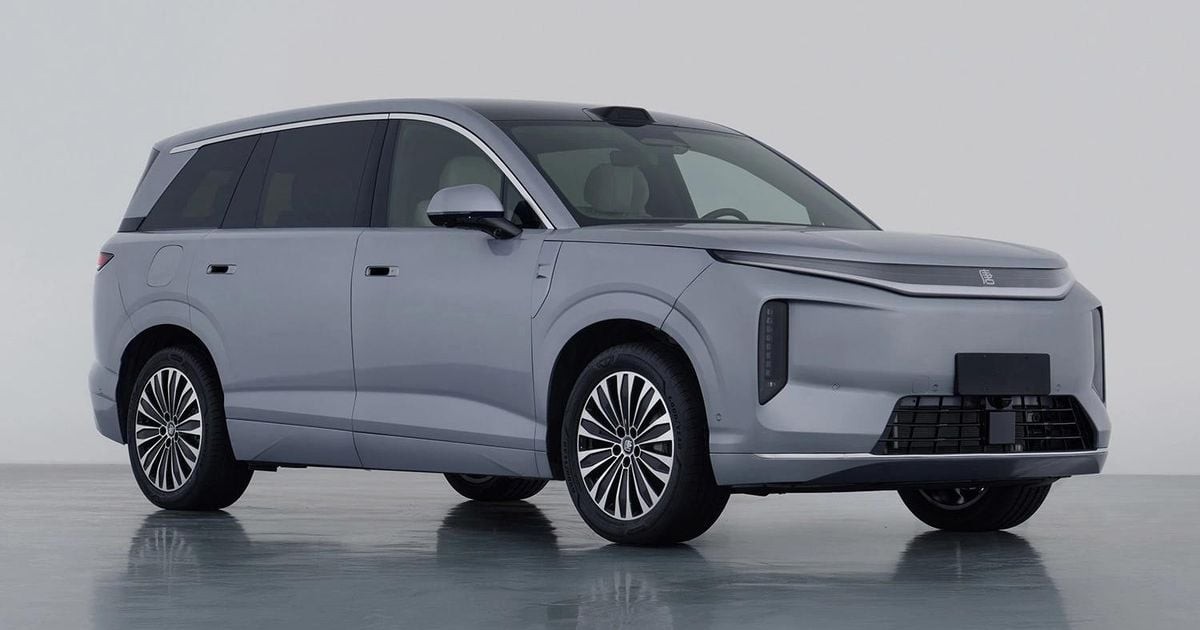
BYD, a leading Chinese automotive manufacturer, has revealed its largest SUV to date: the Great Tang. This vehicle positions the brand directly into the booming Chinese market for large electric SUVs, a sector currently dominated by rivals like Xpeng and Li Auto. The unveiling came via a filing with the Chinese Ministry of Industry and Information Technology (MIIT), confirming key specifications and design details.
Size and Dimensions
The Great Tang is a substantial vehicle, measuring between 5.26 and 5.3 meters long, 1.99 meters wide, and up to 1.89 meters tall, riding on a 3.13-meter wheelbase. This makes it larger than popular models like the Toyota LandCruiser 300 Series, showcasing BYD’s ambition to compete in the premium SUV segment. Although it doesn’t quite match the size of BYD’s luxury Yangwang U8, the Great Tang solidifies BYD’s position as a major player in large-format electric vehicles.
Powertrain Options
The Great Tang will offer multiple powertrain configurations, including single-motor options with 300kW and 370kW outputs, as well as a dual-motor setup combining 215kW front and 370kW rear motors. All variants will utilize BYD’s signature lithium iron phosphate (LFP) batteries, though specific capacity details remain undisclosed. Kerb weights range from 2.64 to 2.97 tons, depending on the chosen configuration.
Design and Features
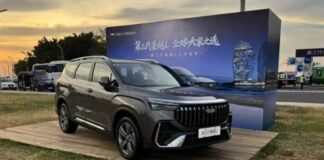
Stylistically, the Great Tang shares design cues with other BYD Dynasty series vehicles, such as the Tang L (sold as the Sealion 8 in some markets). These include a full-width front trim incorporating headlights, pop-out door handles, and a full-width rear light bar. However, it distinguishes itself with a boxy silhouette, clean side profiles, and a raked rear window line. The MIIT filing also showcases a variety of wheel designs, including striking monoblock styles. Interior details have not yet been released.
Market Positioning and Launch
The Great Tang is slated for official launch in China during the first half of 2026. It will compete directly with models like the Xpeng GX, Li Auto L9, and Aito M9, all popular choices among Chinese consumers. BYD’s lineup is currently divided between Dynasty and Ocean model series, with some Dynasty vehicles being rebranded as Ocean models for international markets.
The question remains whether BYD will bring this flagship SUV to markets outside of China. The brand has recently launched its premium Denza sub-brand, featuring large plug-in hybrid SUVs such as the N8L and N9. This may influence BYD’s decision, as the Great Tang could potentially overlap with Denza’s offerings.
The Great Tang’s launch demonstrates the rapid evolution of China’s EV market, where manufacturers are increasingly focused on larger, more luxurious electric vehicles to cater to growing consumer demand. The competition among these brands will likely drive innovation and lower prices, benefiting consumers in the long run.