The next-generation BMW X5, slated for a mid-2026 debut with deliveries beginning in early 2027, is undergoing a significant redesign. The most notable change is its styling, which will closely mirror the design language of the second-generation iX3. This move signals BMW’s commitment to its Neue Klasse platform, streamlining the look of its future vehicles.
A Shift in Design Philosophy
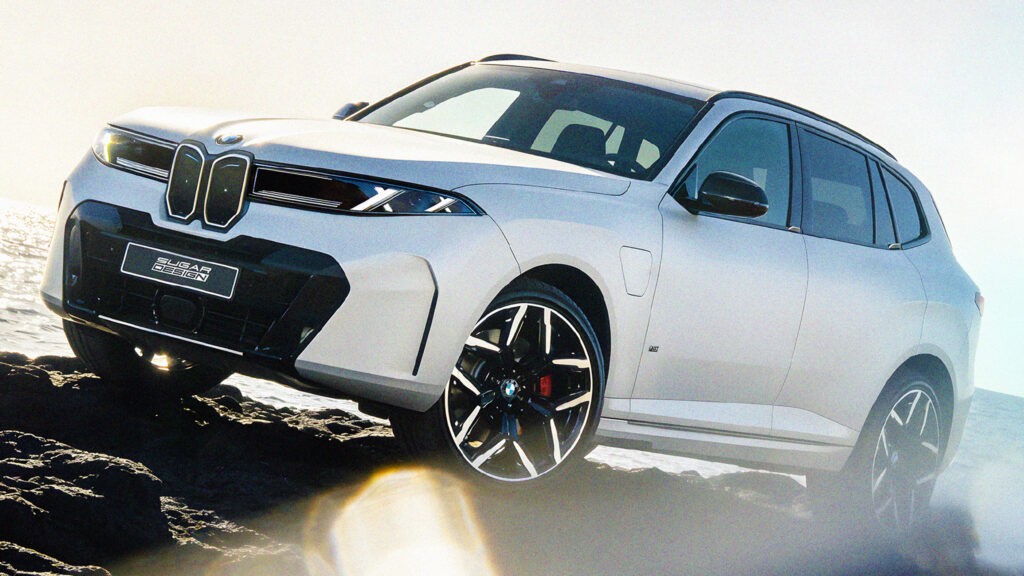
The current X5 is already among BMW’s more understated models, but the upcoming iteration will push this further. Renderings from Sugar Design reveal a more dramatic yet potentially appealing aesthetic. The front end features upright kidney grilles and distinctive headlights integrated with X-shaped daytime running lights. A gloss black lower fascia will house sensors and cameras for driver-assistance systems.
The sides of the SUV will move away from the convoluted lines of the outgoing model, opting for smoother door panels and squared-off indentations on the front and rear quarter panels. The rear design will be more aggressive, with a sharply styled two-tone bumper, a diffuser, and quad tailpipes on high-performance models. Slim horizontal taillights complete the modern signature at the back.
A Revolutionary Cabin Layout
Inside, the 2027 X5 will adopt BMW’s latest Panoramic iDrive setup, which pairs a central touchscreen with a slim display stretching across the base of the windscreen – a feature first seen in the iX3 and i3 sedan. This full-width screen will deliver essential driving information, navigation, and media directly in the driver’s line of sight. Wireless Apple CarPlay and Android Auto are expected, though CarPlay Ultra is not yet confirmed.
The First X5 With Every Possible Powertrain
Perhaps the biggest change is the breadth of powertrain options. For the first time, the X5 will be available with gas, diesel, plug-in hybrid, all-electric, and even hydrogen configurations. This unprecedented variety aims to capture a wider customer base.
Combustion engine options will likely include the 40, 40 xDrive, 40d xDrive, 50e xDrive, M60 xDrive, and M60e xDrive. Engine choices will consist of turbocharged 2.0-liter four-cylinder and 3.0-liter inline-six units, with the X5 M retaining BMW’s 4.4-liter twin-turbo V8. Diesel variants will also be available in select markets.
The electric variant, dubbed the iX5, will mirror the i5’s tiered lineup. Expect the eDrive40 to deliver around 340 hp, capable of 0-62 mph in under six seconds. The iX5 M60 is tipped to push nearly 600 hp, accelerating to the same speed in around four seconds. A range-extender EV remains a possibility.
Competition and Market Positioning
The 2027 BMW X5 will compete with established luxury SUVs like the Porsche Cayenne and Range Rover Sport, as well as newer electric rivals such as the Volvo EX90 and Polestar 3. The next-generation Audi Q7 and an updated Mercedes-Benz GLE are also expected around the same time.
BMW’s decision to offer such a wide range of powertrains reflects a growing trend in the automotive industry: catering to diverse consumer preferences while navigating the transition toward electrification. This strategy ensures that BMW remains competitive in a rapidly changing market.