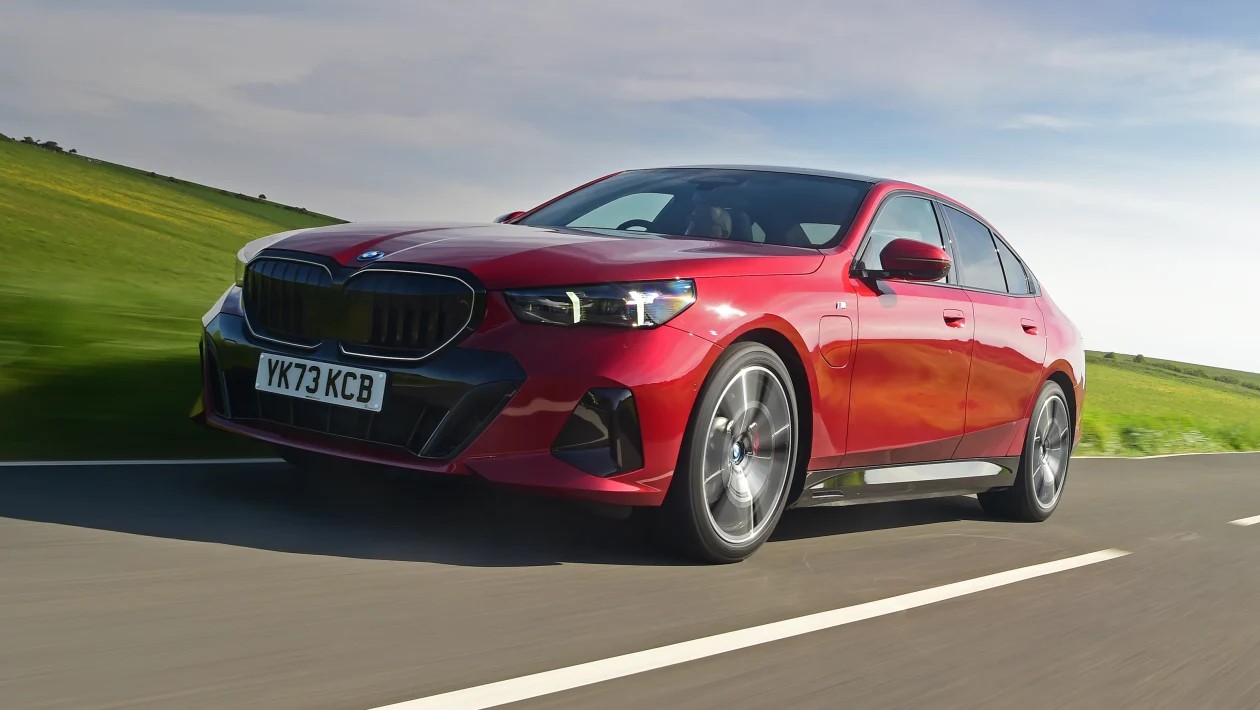
The BMW 5 Series remains a benchmark in the executive car segment, blending luxury, performance, and practicality with impressive refinement. While the latest generation has shifted towards electrification—with mild-hybrid, plug-in hybrid, and fully electric (i5) options—the core strengths of the 5 Series endure. This review covers performance, interior quality, running costs, and overall suitability for both personal and business buyers.
Powertrain and Driving Experience
The current BMW 5 Series lineup has largely abandoned diesel in favor of electrified powertrains. The range begins with the mild-hybrid 520i, which provides adequate performance for everyday driving, starting around £53,100. For those seeking more power, the plug-in hybrid 530e and 550e offer increased efficiency and performance, though at a higher price point—under £59,700 and £76,800, respectively.
The driving experience is where the 5 Series excels. Despite weighing over two tonnes in plug-in hybrid form, handling remains sharp, with quick steering and controlled body movements. While it lacks the ultra-soft ride of a Mercedes E-Class, the BMW compensates with tighter control at higher speeds, making it an excellent long-distance cruiser. The brakes are responsive, and the transition between regenerative and mechanical braking in PHEVs is nearly seamless.
Performance figures range from 7.5 seconds (0-62 mph) for the 520i to just 4.3 seconds for the 550e. For those wanting even more, the BMW M5 delivers a staggering 3.5-second sprint.
Interior and Technology
The 5 Series’ interior is a standout feature, emphasizing premium materials and high-end technology. The cabin strikes a balance between luxury and sportiness, with excellent build quality. The standard Veganza leather (a manufactured alternative) feels high-end, with the option to upgrade to genuine Merino leather.
The infotainment system includes a 12.3-inch digital instrument cluster paired with a curved 14.9-inch touchscreen. The system is intuitive, with both touch controls and the familiar iDrive click wheel for easy navigation. Standard features include Apple CarPlay, Android Auto, and wireless charging pads. Sound systems range from a 205-watt Harman Kardon setup to a more powerful 655-watt Bowers and Wilkins option.
Despite the technological advancements, some controls—particularly the touch-sensitive panels—can be frustrating. The removal of physical buttons may also disappoint some drivers.
Practicality and Running Costs
The 5 Series is a practical choice, offering ample space for passengers and luggage. The saloon body style provides generous boot space, and the 5 Series Touring estate offers even more versatility.
Running costs are competitive, though the electric BMW i5 is more favorable for company car drivers due to lower Benefit-in-Kind (BiK) taxation. The plug-in hybrids (530e and 550e) also offer decent real-world efficiency, though achieving the quoted MPG figures requires regular charging.
The absence of a diesel option in the UK may push some buyers towards the Mercedes E-Class, which still offers diesel variants. Insurance costs are high, with the base 520i starting in insurance group 35 and the top-spec 550e in group 44. Depreciation is moderate, retaining 42-48% of its original value after three years.
Conclusion
The BMW 5 Series remains a compelling choice in the executive car market. Its blend of performance, luxury, and technology makes it a strong contender against rivals like the Mercedes E-Class. The shift towards electrification offers advantages for company car buyers, while the overall driving experience and interior quality ensure a premium feel. While some controls may frustrate, the 5 Series’ strengths far outweigh its weaknesses, solidifying its position as a top performer in its class.