
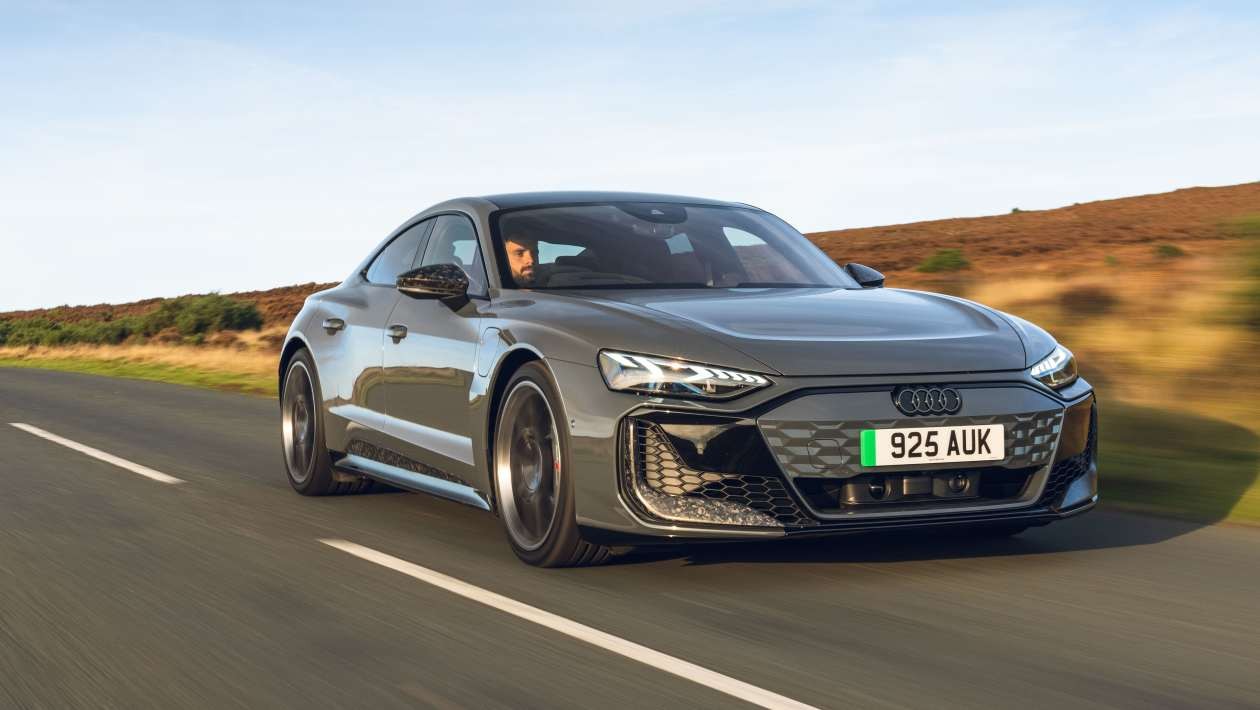
Audi’s e-tron GT, initially launched in 2021, has quietly evolved into a standout high-performance EV. While sales were sluggish at first, recent updates – particularly in chassis technology – have transformed the car into a truly competitive luxury saloon. The 2026 RS e-tron GT Performance isn’t just faster; it’s more capable, making it a belated but compelling flagship for Audi’s electric ambitions.
A Late Bloom for Audi’s Electric Vision
The e-tron GT debuted at a time when Audi was pushing a bold, futuristic design language. However, the company’s subsequent shift towards a simpler aesthetic left the car feeling somewhat out of step. This created an odd situation: a vehicle built on an ideology that was nearly abandoned before it could prove itself. Fortunately, the latest revisions demonstrate that the original concept had merit all along.
Performance and Efficiency Upgrades
The most significant changes lie beneath the skin. Audi has increased the battery capacity from 93kWh to 105kWh, paired with upgraded motors and inverters. Charging speeds have also been boosted to 320kW, allowing for a 10-80% top-up in just 18 minutes. The result is impressive: the base e-tron GT Quattro now boasts a range of up to 386 miles, while the RS Performance model still manages around 365 miles.
Acceleration is brutal, with the RS Performance variant dispatching 0-62mph in a mere 2.5 seconds, making it the fastest production Audi to date. The two-speed transmission on the rear motor delivers a noticeable jolt at around 60mph, adding to the visceral driving experience.
Unmatched Ride Quality with Advanced Suspension
The standout feature of the new e-tron GT is its innovative active suspension system. Utilizing electronically controlled hydraulic dampers, the car eliminates traditional anti-roll bars while maintaining exceptional body control. This results in a ride quality that borders on surreal; the car glides over even the most punishing road surfaces with remarkable composure.
The suspension’s ability to react instantly to changes in the road makes it feel incredibly stable and controlled. It also offers gimmicky but impressive features, such as the car rising slightly when the doors open and subtle body leaning in corners.
Interior and Practicality: A Familiar Space
Inside, the e-tron GT retains the build quality and materials of its earlier iterations. While the cabin isn’t as technologically advanced as some newer Audis, the simpler touchscreen and physical controls are a welcome change in an era of over-digitalization.
However, space is limited, particularly in the rear seats. The 351-liter boot is also relatively small, though the small under-bonnet compartment provides convenient storage for charging cables.
The Verdict: A Worthy Latecomer
The 2026 Audi RS e-tron GT Performance is a remarkable vehicle that has finally reached its full potential. While the extreme acceleration of the top-spec model isn’t strictly necessary, opting for a mid-spec S e-tron GT or even the base Quattro variant with the Active Suspension system could create one of the finest EVs on the market. This car proves that sometimes, the best things come to those who wait. It’s a shame Audi didn’t refine it sooner, but the wait was ultimately worth it.