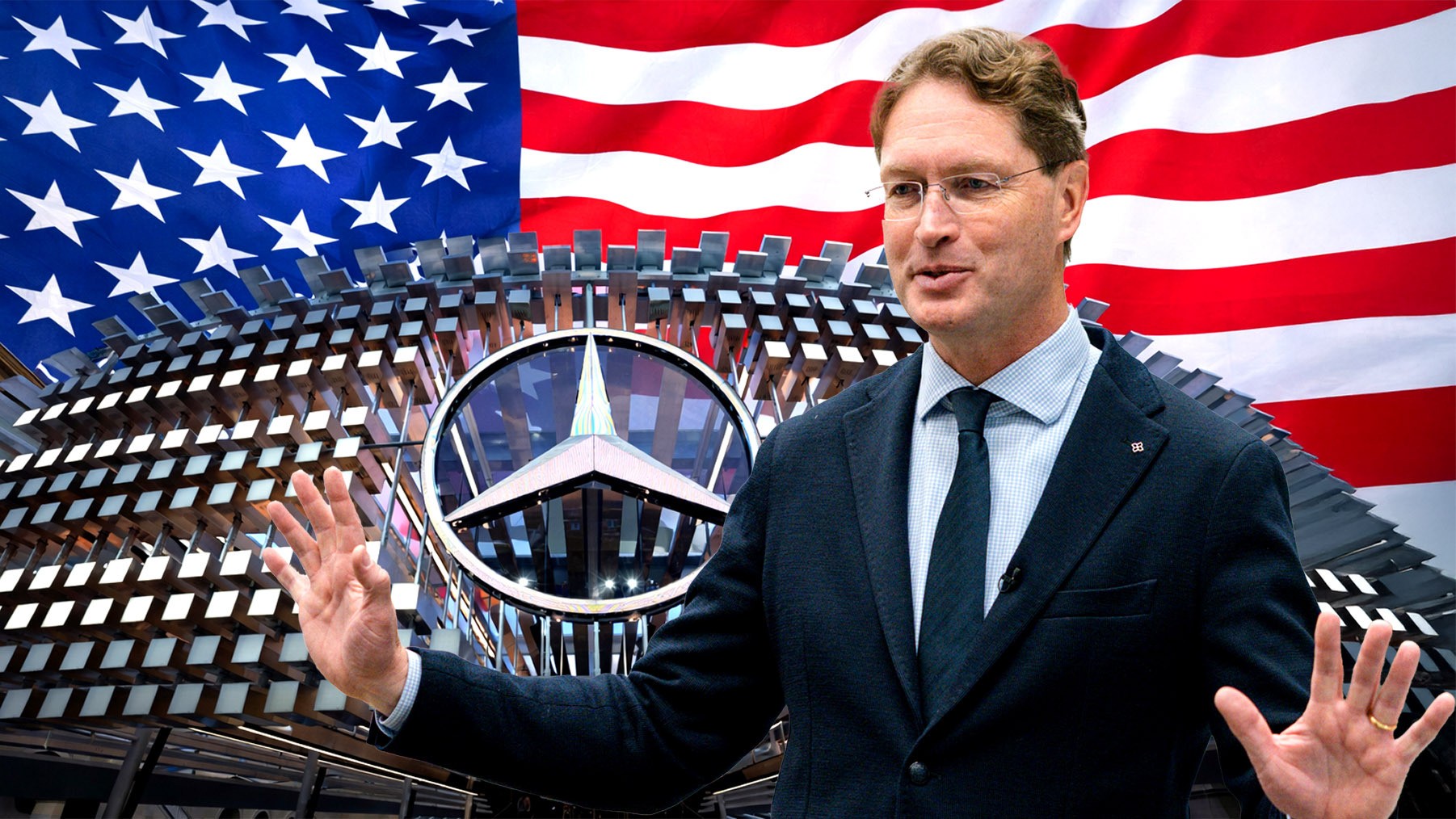
The Trump administration actively courted Mercedes-Benz to move its corporate headquarters from Germany to the United States, according to recent statements by Mercedes CEO Ola Källenius. Despite offering financial incentives, including tax breaks, the company ultimately rejected the proposal, reaffirming its commitment to its German origins.
Pressure Tactics and Incentives
Speaking with The Pioneer, Källenius disclosed that Commerce Secretary Howard Lutnick personally lobbied for the relocation. While such inducements can sometimes sway companies between US states, convincing an established international firm to uproot itself is a far more challenging undertaking.
Källenius made it clear that Mercedes had no intention of abandoning its historical base: “The [three-pointed] star has been a global company for more than 100 years, but we are rooted in Swabia. Those roots cannot – and should not – be pulled out of the ground.” This firm rejection underscores the limits of economic coercion in global business.
Trade Wars and US Manufacturing
The attempt to relocate Mercedes appears to have occurred around a year ago, likely early in a hypothetical second Trump term. The US has aggressively pursued domestic manufacturing through tariffs and pressure on foreign automakers.
Mercedes already operates a major production facility in Tuscaloosa, Alabama, and in response to trade pressures, has committed to building its GLC model in the US starting in 2027. The vehicle will be produced alongside the GLE, GLE Coupe, GLS, EQE SUV, and EQS SUV.
This situation highlights the tension between national economic policies and the realities of global corporate strategy. Despite the US government’s efforts to incentivize onshoring, established multinational companies often prioritize historical ties and operational stability over short-term financial gains.
The administration’s direct appeal to Mercedes suggests a willingness to leverage economic pressure to reshape international business landscapes, yet it also demonstrates that such tactics don’t always succeed.