The barriers to market entry for electric SUVs are getting higher and higher. Polestar has officially landed in France, forcing the industry to rethink its lineup. It’s not a prototype. This is not a modified test mule. This is the production version of the Polestar 3 Long Range Single Motor vehicle.
The world record has just been broken for the longest distance a production electric SUV can travel on a single charge.
This is not marketing fluff. This is concrete data. The car completed the journey in one go. There are no plugs. It never stopped. Pure efficiency. Automakers have long cited range limitations as an excuse for hesitation. They claim that the network is not ready yet. They say the anxiety is real. The drive in France has shown that there are no more excuses.
The meaning is simple and clear. If Polestar can do this with a single motor and a standard battery, the competition will have a lot of work to do. Tesla has held this throne for some time. Volkswagen focuses on the development of the MEB platform. Mercedes renews its EQ range. Now they all have to step up. The race for autonomy has changed from a sprint to a marathon.
“The limited autonomy that has constrained purchasing decisions for so long is no longer present in this discussion.”
Why is this important to you? Because it changes the way ownership is calculated. You no longer have to plan your life around charging stations. You can drive You can stop and have a coffee. You can continue. Polestar 3 didn’t just drive far. It has enough range that the range anxiety argument is irrelevant.
The French market is generally skeptical of new entrants. At Polestar, we strongly believe that efficiency speaks louder than brand tradition. Now the numbers are on their side.
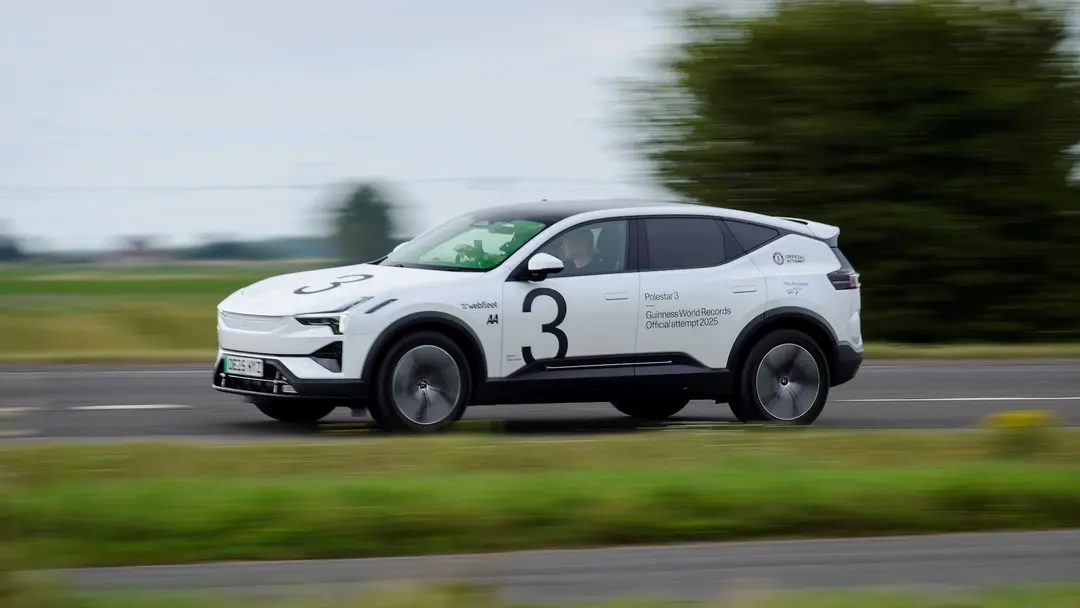

This is not done with a drawstring. This was not done in a wind tunnel. This record was set on British roads where the weather has all its effects on drivers: rain, wind and the unpredictability of real driving. The clock ticked 22 hours and 57 minutes. What is the mileage? 935.44 km. This is a tough durability test for any electric vehicle, let alone one of this quality.
Three professional drivers take turns driving, changing vehicles every three hours. Why three? Keep your focus clear. Fatigue reduces efficiency. Staring at the blur of rain-slicked asphalt, you can’t squeeze out every last drop. The result is an impressive average energy consumption of only 12.1 kWh / 100 km. For a midsize luxury SUV, these numbers are already very good. This goes against the normal physics of large electric vehicles.
12.1 kWh/100 km is the magic number. It’s just not efficient. This is record efficiency.
This achievement is different than distance or time. It is the cleanliness of the environment. All used vehicles are vehicles in stock. There are no software settings limiting the power supply. There are no aerodynamic add-ons. No weight loss. It’s a Porsche Macan Electric right out of the factory.
ring? Michelin’s sporty electric car. wheel? Standard 20 inch alloy. There is no after-sales service. There are no optimizations. This is important because it shows that the distance requirement is not based on secret driver technology or modified hardware. It’s about the car itself. Efficiency comes from design, not hacking.
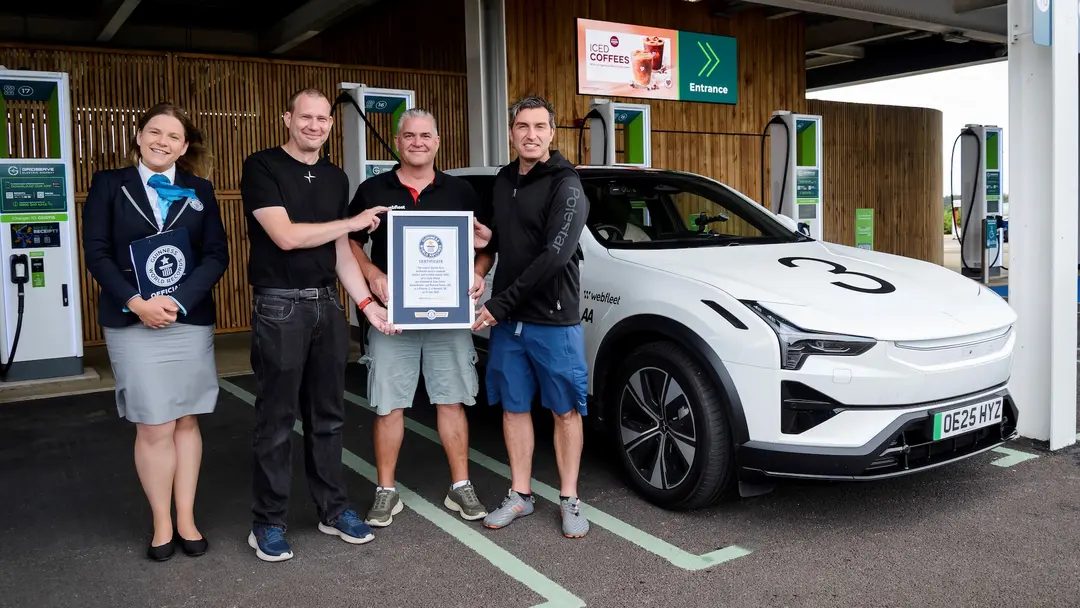
Every kilometer is monitored. All data points are validated. This run was certified by an official Guinness World Records judge. This is not a YouTube challenge with loose rules. This is a recognized independent verification of actual performance. The judge’s seal is non-negotiable. Tire pressure logs cannot be disputed.
Weather conditions also have a big impact. Rolling resistance increases with rain. Grip changes. This causes the regenerative braking system to work harder in unexpected ways. It’s one thing to do this in dry, controlled conditions. Doing this for almost 23 hours in varying weather conditions? It’s a different beast. Test battery thermal management, powertrain stability and energy management system consistency under stress.
Most EV range tests are done in a laboratory. Or on a certain track. This is a road test. The real path. There are also real problems. Macan solves this problem by absorbing energy like a cup of tea.
Will 12.1 kWh/100 km become the new benchmark for SUVs? perhaps. But most importantly, it shows what’s possible when you put aside the marketing nonsense and let the car do its job. No changes. There are no tricks. The proven pure efficiency is only 935 km. The question that remains is how long this lead will last before a new competitor emerges.
The electric anxiety myth is officially dead.
The numbers don’t lie. The Polestar 3 has a theoretical WLTP range of 706 km with 20% battery remaining. That’s not all. Despite the zero on the dashboard, the SUV continued for 12.8 kilometers. This is not a fault. This is evidence of a fine-tuned energy management system that doesn’t panic when the tank is low.
For Polestar, this is more than just a technology demonstration. It was a declaration of war on the last bastion of the internal combustion engine. The idea that electric cars are only suitable for grocery runs is now outdated. The large family SUV can now outperform its gas-powered rivals in endurance tests without compromising on comfort, safety or the brand’s signature sharp, minimalist design.
The message is simple. If you’ve been waiting for an electric car that can go long distances without having to constantly hunt for a charger, this is the sign. Technology has caught up with lifestyle. You can take the scenic route. You can ignore the range gauge. The Polestar 3 proves that in the electric era, compromises are no longer necessary. It’s about capability.