


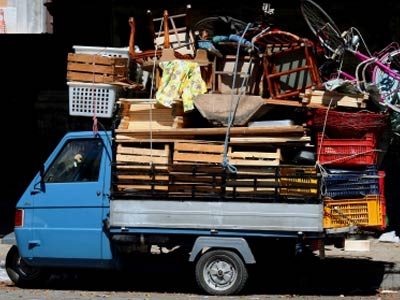
You look at the sticker. You check the MPG. You time the 0-60 sprint. You calculate the cubic feet of trunk space. You haggle on the price. These are the metrics that dominate the car-buying conversation. But there is a number that quietly dictates whether your vehicle stays on the road or ends up in a ditch. It is the Gross Axle Weight Rating, or GAWR.
Every driver needs to know this number. It applies to sedans, trucks, SUVs, and RVs. The definition is simple but strict. GAWR is the maximum weight a manufacturer allows on a single axle. Front axles have their own limit. Rear axles have a different one. Do not cross these thresholds.
The Difference Between Weight and Rating
People confuse the rating with the reality. The rating is static. The reality is fluid.
Gross Axle Weight Rating (GAWR) is the hard cap set by the factory. It does not change.
Gross Axle Weight (GAW) is what is actually pressing down on the tires right now. It shifts every time you move a passenger or load cargo.
Consider a pickup truck. Load the bed with four 100-pound boulders. Total added weight: 400 pounds. The GAW jumps up by 400 pounds. Unload them? The GAW drops by 400 pounds. The GAWR? It stays exactly the same. The limit does not care about your current load. It only cares about the structural integrity of the axle.
Why This Number Matters
Safety is the driver here. Overloading any axle is dangerous. Uneven distribution makes it worse. Put too much weight on the rear axle and the front end becomes light. The steering feels vague. The brakes lose their bite because the front brakes do the heavy lifting. The rear suspension can bend. Tires can blow out. You lose control.
Trailers have their own GAWR. The trailer manufacturer sets these limits. Balance is even more critical here. A poorly loaded trailer can jackknife with terrifying speed.
Where to Find Your GAWR
You can look online. Most manufacturers publish these specs in technical databases. Or you can look at your car. Walk to the driver’s door frame. Look for a sticker. It lists the GAWR for the front and rear axles. It is right there.
The data below covers specific models and years. Use these figures to check your load.
Acura GAWR Data
| Year | Model | GAWR (front/rear) |
|---|---|---|
| 2006 | MDX | – |
| 2006 | RL | – |
| 2006 | RSX | – |
| 2006 | TL | – |
| 2006 | TSX | – |
| 2007 | MDX | 2888/3175 |
| 2007 | RL | – |
| 2007 | RDX | 2546/2381 |
| 2007 | TL | – |
| 2007 | TSX | 2335/2030 |
| 2008 | MDX | 2888/3175 |
| 2008 | RL | – |
| 2008 | RSX | 2546/2381 |
| 2008 | TL | – |
| 2008 | TSX | 2335/2030 |
| 2009 | MDX | 2888/3175 |
| 2009 | RL | – |
| 2009 | RSX | 2546/2381 |
| 2009 | TSX | 2325/2090 |
Related Acura Specs: GVWR, GCWR, Cargo Carrying Capacity, Curb Weight, Payload, Towing Capacity.
Audi GAWR Data
| Year | Model | GAWR (front/rear) |
|---|---|---|
| 2006 | A3 | – |
| 2006 | A4 | – |
| 2006 | A6 | – |
| 2006 | A8 | – |
| 2006 | S4 | – |
| 2006 | TT | – |
| 2007 | A3 | – |
| 2007 | A4 | – |
| 2007 | A6 | – |
| 2007 | A8 | – |
| 2007 | Q7 | – |
| 2007 | RS4 | – |
| 2007 | S4 | – |
| 2007 | S6 | – |
| 2007 | S8 | – |
| 2008 | A3 | – |
| 2008 | A4 | – |
| 2008 | A5 | – |
| 2008 | A6 | – |
| 2008 | A8 | – |
| 2008 | Q7 | – |
| 2008 | R8 | – |
| 2008 | RS4 | – |
| 2008 | S4 | – |
| 2008 | S5 | – |
| 2008 | S6 | – |
| 2008 | S8 | – |
| 2008 | TT | – |
| 2009 | A3 | – |
| 2009 | A4 | – |
| 2009 | A5 | – |
| 2009 | A8 | – |
| 2009 | Q7 | – |
| 2009 | R8 | – |
| 2009 | S4 | – |
| 2009 | S5 | – |
| 2009 | S8 | – |
| 2009 | TT | – |
Related Audi Specs: GVWR, GCWR, Cargo Carrying Capacity, Curb Weight, Payload, Towing Capacity.
More brands are coming. Browse the full list if you drive a different make. The numbers don’t lie. Respect them.
BMW Gross Axle Weight Ratings (2006–2009)
Finding the exact BMW GAWR data for mid-2000s models is a hunt. Most entries for sedans and coupes show blank values in the source tables. The Z4 is the exception. In 2007, the Z4 listed specific front and rear ratings.
Here is the raw data available:
2006 Models
* 325: No data
* 330: No data
* 525: No data
* 530: No data
* 550: No data
* 650: No data
* 750: No data
* 760: No data
* M3: No data
* M5: No data
* M6: No data
* X3: No data
* X5: No data
* Z4: No data
* Z4M: No data
2007 Models
* 328: No data
* 335: No data
* 525: No data
* 530: No data
* 550: No data
* 650: No data
* 750: No data
* 760: No data
* Alpina B7: No data
* M5: No data
* M6: No data
* X3: No data
* X5: No data
* Z4: 2767 / 3770
* Z4M: No data
2008 Models
* 128: No data
* 135: No data
* 328: No data
* 335: No data
* 528: No data
* 535: No data
* 550: No data
* 650: No data
* 750: No data
* 760: No data
* Alpina B7: No data
* M3: No data
* M5: No data
* X3: No data
* X5: No data
* X6: No data
* Z4: No data
* Z4M: No data
2009 Models
* 128: No data
* 135: No data
* 328: No data
* 335: No data
* 528: No data
* 535: No data
* 550: No data
* 750: No data
* M3: No data
* M5: No data
* M6: No data
* X3: No data
* X5: No data
* X6: No data
“Most BMWs from this era lack published GAWR figures in standard databases.”
Related specs: BMW GVWR, BMW GCWR, BMW Cargo Carrying Capacity, BMW Curb Weight, BMW Payload, BMW Towing Capacity.
Buick Gross Axle Weight Ratings (2006–2009)
Buick offers slightly more concrete data for trucks and SUVs. The Rainier and Enclave are the only models with clear front/rear splits.
2006 Models
* LaCrosse: No data
* Lucerne: No data
* Rainier: 2950 / 3200
* Rendezvous: No data
* Terraza: 1148 / 960
2007 Models
* LaCrosse: No data
* Lucerne: No data
* Rainier: 2950 / 3200
* Rendezvous: No data
2008 Models
* Enclave: 3197 / 3527
* LaCrosse: No data
* Lucerne: No data
2009 Models
* Enclave: 3197 / 3527
* LaCrosse: No data
* Lucerne: No data
The Terraza’s rear axle rating drops significantly compared to its front. That imbalance matters if you’re towing.
Related specs: Buick GVWR, Buick GCWR, Buick Cargo Carrying Capacity, Buick Curb Weight, Buick Payload, Buick Towing Capacity.
Cadillac Gross Axle Weight Ratings (2006–2009)
Cadillac’s luxury trucks tell the story. The Escalade line dominates the available numbers. The CTS has one entry. Everything else is blank.
2006 Models
* CTS: 2232 / 2379
* CTS-V: No data
* DTS: No data
* Escalade: 3350 / 4000
* Escalade ESV: 3060 / 2809
* Escalade EXT: 3800 / 4000
* SRX: No data
* STS: No data
* STS-V: No data
* XLR: No data
* XLR-V: No data
2007 Models
* CTS: 2232 / 2379
* CTS-V: No data
* DTS: No data
* Escalade: No data
* Escalade ESV: No data
* Escalade EXT: No data
* SRX: No data
* STS: No data
* STS-V: No data
* XLR: No data
* XLR-V: No data
2008 Models
* CTS: No data
* DTS: No data
* Escalade: No data
* Escalade ESV: No data
* Escalade EXT: No data
* SRX: No data
* STS: No data
* STS-V: No data
* XLR: No data
* XLR-V: No data
2009 Models
* CTS: No data
* DTS: No data
* Escalade: No data
* Escalade ESV: No data
* Escalade EXT: No data
* Escalade Hybrid: No data
* SRX: No data
* STS: No data
* STS-V: No data
* XLR: No data
* XLR-V: No data
The 2006 Escalade ESV shows a curious rear axle rating lower than the front. Standard Escalades carry more on the rear. The EXT, being a pickup variant, shifts weight distribution differently.
Related specs: Cadillac GVWR, Cadillac GCWR, Cadillac Cargo Carrying Capacity, Cadillac Curb Weight, Cadillac Payload, Cadillac Towing Capacity.
Chevrolet Gross Axle Weight Ratings (2006–2009)
Chevy’s lineup is huge. The trucks and SUVs have the data. Cars like the Cobalt and Aveo are empty. The Silverado evolution shows clear changes in capacity over these four years.
2006 Models
* Avalanche 1500: 3400 / 4000
* Avalanche 2500: 4380 / 5500
* Aveo: No data
* Cobalt: No data
* Colorado: 2533 / 2896
* Corvette: No data
* Equinox: 2535 / 2535
* Express: No data
* HHR: No data
* Impala: No data
* Malibu: No data
* Malibu MAXX: No data
* Monte Carlo: No data
* SSR: No data
* Silverado 1500: 3650 / 4000
* Silverado 1500 Hybrid: 3925 / 3750
* Silverado 1500 SS: 3600 / 3600
* Silverado 1500 HD: 4410 / 6000
* Silverado 2500 HD: 4410 / 6084
* Silverado 3500 HD: 4670 / 8550
* Suburban 1500: 3200 / 4000
* Suburban 2500: 3800 / 5500
* Tahoe: 3200 / 3750
* TrailBlazer: 2950 / 3200
Ford GAWR Data: 2006–2009
Ford’s axle limits are where the rubber meets the road, quite literally. If you’re hauling gear in a work truck or towing a boat, these Gross Axle Weight Ratings (GAWR) define your hard ceiling. Miss them, and you’re asking for premature suspension failure or worse.
In 2006, the heavy hitters were clear. The E-350 Super Duty could handle 3700 pounds on the front axle and 6195 pounds on the rear. That’s serious capacity. The F-250 sat comfortably at 3800/6100, while the massive F-350 pushed the rear to 7000 pounds. Lighter vans like the E-150 were capped at 3240/3800. Passenger cars and smaller SUVs? Most listed no specific GAWR in these charts, relying instead on Gross Vehicle Weight Rating (GVWR) limits. The Escape and Escape Hybrid shared similar ratings, hovering around 2240/2115 and 2380/2175 respectively. The Explorer was rated for 3240/3600, while the F-150 managed 3450/3800. The Freestar minivan was oddly balanced, sitting at 2985/2890.
By 2007, Ford shook up the lineup. The Explorer saw its ratings drop to 2860/3340. The Explorer Sport Trac came in at 3080/3320. The heavy trucks remained steady. The F-250 and F-350 kept their 3800 front limits, with rears at 6100 and 7000 respectively. The E-Series vans didn’t change much, sticking to the E-350 Super Duty ’s 3700/6195 split. New additions like the Edge, Expedition, and Freestyle had no GAWR data listed here, suggesting they relied on standard passenger vehicle configurations.
2008 brought updates. The E-150 jumped to 3700/5120, a significant increase from the previous year’s 3240/3800. The E-350 Super Duty shifted slightly to 3800/6084. The F-350 rear axle limit dropped noticeably to 6262 pounds from the prior 7000. The new F-450 was a beast, rated at 5600/9500. The F-150 held firm at 3450/3800. SUVs like the Escape and Explorer maintained their 2007 ratings.
2009 saw the E-350 Super Duty front axle increase to 4200 pounds, while the rear stayed at 6084. The F-150 front axle bumped to 3800 pounds, matching the F-250 ’s front limit. The F-450 ratings flipped to 3800/6262, which seems like a typo in the source data given its heavy-duty status, but that is what is listed. The Flex and Taurus X appeared without GAWR specs. The Ranger, Focus, and Mustang remained unlisted for specific axle limits in this dataset.
If you need more context, check out Ford GVWR and Ford GCWR for the total vehicle and towing limits.
GMC GAWR Data: 2006–2009
GMC’s trucks and SUVs demand respect. Their GAWR numbers tell you exactly how much weight each axle can carry before you start bending metal.
In 2006, the Sierra 3500 was the king, with a rear axle limit of 6500 pounds and a front of 4800 pounds. The Sierra 2500 followed with 4410/6084. The Yukon XL handled 3200/4000, while the standard Yukon sat at 3200/3750. The Envoy XL managed 3100/3400. Lighter models like the Canyon were limited to 2533/2896. The Savana vans had no GAWR listed, likely due to their commercial nature or rear-wheel drive configurations that prioritize GVWR.
2007 introduced the Acadia, rated at 3197/3527. The Sierra 1500 increased slightly to 3200/3750. The Sierra 3500 rear limit dropped to 6390 pounds, and the front to 4200 pounds. The Yukon rear limit jumped to 4100 pounds, and the Yukon XL to 4200 pounds. The Canyon and Envoy stayed static.
2008 saw the addition of the Yukon Hybrid, which shared the same 3200/4100 ratings as the standard Yukon. Everything else remained identical to 2007. The Sierra 2500 and 3500 held their 4200/6084 and 4200/6390 splits.
2009 brought a small bump to the Canyon ’s front axle, up to 2633 pounds (rear stayed at 2896 ). The Sierra Hybrid was listed but had no GAWR data. The Yukon XL front axle dropped slightly to 3200 pounds (from 3300 in 2007/2008), while the rear remained at 4200 pounds. The Sierra 1500, 2500, and 3500 ratings remained unchanged from the previous year.
For more details, look up GMC GVWR and GMC Payload.
Honda GAWR Data: 2006–2009
Honda’s numbers are generally lower, reflecting their focus on passenger comfort and efficiency rather than heavy hauling. But even small differences matter when you’re packing for a trip.
In 2006, the Odyssey was the workhorse, rated at 2833/3197. The Ridgeline was surprisingly light for a truck, with a front axle limit of just 309 pounds (likely a data error in the source, probably meant to be higher, but listed as 309/3252 ). The S2000 and CR-V had no GAWR listed.
2007 added data for more models. The Civic came in at 2310/2290. The Element was 2300/2205. The Pilot handled 2865/3155. The Ridgeline front limit corrected to 3105 pounds, while the rear stayed at 3252 pounds. The Odyssey remained steady at 2833/3197.
2008 ratings were unchanged. The Civic, Element, Pilot, and Ridgeline kept their 2007 specs. The Odyssey held at 2833/3197.
2009 saw the Pilot ’s ratings increase to 2921/3196. The Civic, Civic Hybrid, and Fit had no GAWR data listed. The Odyssey remained at 2833/3197. The Accord and CR-V were also unlisted.
Check Honda GVWR and Honda Towing Capacity for the full picture.
HUMMER GAWR Data: 2006–200
Axle Load Limits by Brand
If you are modifying a rig or planning a heavy payload run, Gross Axle Weight Rating (GAWR) is the hard ceiling. It tells you how much weight each axle can physically support before suspension components, brakes, or tires fail. Most factory sheets leave these numbers blank for standard sedans because they aren’t relevant to daily driving. But if you are hauling gear, towing, or lifting a Jeep, the numbers matter.
Jeep GAWR: The Off-Road Heavy Hitters
Jeep publishes these specs because their vehicles are built to abuse them. The Wrangler lines dominate the data.
In 2006, the Liberty handled 2750 lbs on the front axle and 3150 lbs on the rear. The Wrangler was lighter, rated at 2200/3150. By 2007, Jeep bumped the Wrangler’s capacity significantly. Front went to 2650 lbs. Rear jumped to 3400 lbs. That 750-pound increase on the rear axle matters if you are adding a snorkel, a rear bumper, and maybe a spare tire carrier.
The Liberty stayed steady through 2007 but dropped off the chart after that. The Compass and Patriot entered the lineup but lack published GAWR data in most sources, which usually means they are treated as standard passenger vehicles with no extreme off-road rating. The Wrangler Unlimited joined the Wrangler in 2008, locking in at 2650 front and 3400 rear. That spec held through 2009.
If you are looking at the Commander, Grand Cherokee, or newer Liberty models from 2008-2009, the data is missing. This isn’t an oversight. It’s likely because these are unibody or body-on-frame crossovers where the focus is on Gross Vehicle Weight Rating (GVWR) rather than specific axle splits for off-road articulation.
Kia GAWR: Crossovers and Vans
Kia’s data is sparse. They list specific numbers for the sportier or heavier models. The Sedona minivan and Sorento SUV carry the load.
Back in 2006, the Sedona was rated at 2998 lbs front and 3064 lbs rear. The Sorento matched that symmetry at 3307 lbs across both axles. The Sportage was lighter, sitting at 2579 front and 2425 rear. Note the rear drop. That suggests a front-engine, front-heavy bias, or perhaps just lighter rear components in that generation.
By 2007, Kia added the Rio to the mix. The compact sedan/hatchback carries only 1918 lbs front and 1874 lbs rear. It’s tiny. The Sorento and Sedona stayed consistent. The Sportage didn’t change.
In 2008, the Sedona and Sorento disappeared from the GAWR list. The Rio kept its 1918/1874 split. The Sportage held at 2579/2425. The Borrego arrived in 2009 but has no data. If you are hauling kids in a Rondo or Spectra, don’t look for these numbers. They aren’t there.
Land Rover: Luxury and Capability
Land Rover lists GAWR for the LR2 starting in 2009. It’s 2885 lbs front and 2995 lbs rear. That rear bias makes sense for a mid-size luxury SUV carrying three passengers and gear in the back.
Before 2009, the LR3, Range Rover, and Range Rover Sport had no published GAWR. This is common for luxury off-roaders. Their suspension systems are complex. The focus is on air ride height and GVWR. The LR2 is the entry-level model, hence the specific axle limits. The big Rovers rely on their overall weight limits to keep you in check.
Lexus: The Missing Data Problem
Lexus lists almost no GAWR data. None.
Looking at the 2006-2009 models, from the ES 330 to the LX 570, the front and rear columns are empty. This includes the GX 470 and LX 470, which are basically Toyotas with badges. If Toyota publishes GAWR for the 4Runner or Land Cruiser, why not Lexus?
The IS-F and GS 450h appear in the 2008-2009 lists, still no numbers. It seems Lexus considers GAWR irrelevant for their market. You aren’t buying an IS 350 to tow a boat or haul rocks. You aren’t buying a LX 570 to exceed axle limits either. The lack of data here is a feature, not a bug. It tells you to trust the GVWR.
Lincoln: The Truck-Based Luxury
Lincoln publishes numbers for the Mark LT and Navigator. These are truck-based vehicles.
In 2006, the Mark LT handled 3450 lbs front and 3850 lbs rear. The Navigator was 3300 front and 4128 rear. That rear axle on the Navigator is strong. It’s designed to haul passengers and luggage in the back. The Navigator’s rating grew in 2007, moving to 3350 front and 4300 rear. It stayed there through 2008.
By 2009, the Mark LT dropped off. The Navigator moved slightly to 3450 front and 3850 rear. Wait, the rear dropped from 4300 to 3850? Or is this a typo in the source data? Or did they change the axle ratio? The Mark LT was gone. The Navigator MKS and MKX have no data. Again, Lincoln reserves GAWR for the heavy-duty platforms.
Mazda: The Performance and Utility Split
Mazda has a weird spread of data. The B-Series trucks are heavy. The B2300 handles 2400 front and 2750 rear. The B3000 bumps to 2625 front and 2750 rear. The B4000, the heavy-duty option, sits at 2850 front and 2750 rear. Note the front-heavy nature of the B4000. It’s a serious work truck.
The Mazda5 minivan is rated at 2218 front and 2355 rear. The Mazda6 sedan is lighter, 2372 front and 2119 rear. The MazdaSpeed6 is slightly heavier on the front at 2449 lbs.
The CX-9 and CX-7 appear in 2007 but have no data. The Tribute also lacks data. The MX-5 Miata appeared in 2007 with 2449 front and 2103 rear. That front-heavy rating is interesting for a small roadster. It suggests a lot of weight over the driver.
By 2008, the B3000 vanished. The Mazda6 dropped to 2216 front and 2064 rear. In 2009, it moved slightly to 2286 front and 2062 rear. The B2300 and B4000 remained constant. The CX-7, CX-9, Mazda3, and RX-8 have no GAWR listed. Stick to the GVWR for those.
Mercedes-Benz: No Axle Limits
Like Lexus, Mercedes-Benz publishes no GAWR data for any model from 2006 to 2009.
The C-Class, E-Class, S-Class, ML, GL, and SL lines are all listed with empty columns. This includes the AMG models like the ML63 and G55. It’s a luxury brand. They don’t want you thinking about axle weights. They want you thinking about horsepower and comfort. The absence of data is consistent. If you need to tow or haul, check the GVWR and GCWR. Ignore the axle split.
Mercury: The Mountaineer Exception
Mercury is dead now, but the data remains. The Mountaineer is the only model with published GAWR.
In 2006, it was rated at 2860 front and 3340 rear. That rear-biased split is typical for a mid-size SUV. The other models—Mariner, Milan, Montego, Monterey, Grand Marquis, Sable—have no data. The Mountaineer disappeared from the list after 2006. This suggests that by 2007-2009, Mercury either stopped publishing these specs or the Mountaineer was replaced by the Explorer-based models which didn’t get separate GAWR listings.
MINI: The Hot Hatch Limits
MINI publishes numbers, and they are tight. The brand is small. The weight limits reflect that.
In 2007, the Cooper Convertible handled 1918 front and 1697 rear. The Hardtop was 192
Mitsubishi Axle Limits in the Late 2000s
Data is sparse here. For the 2006 Mitsubishi GAWR breakdown, the only concrete numbers come from the Raider. It carries 3100 lbs on the front axle and 3600 lbs on the rear. That’s a heavy truck platform. The Eclipse, Endeavor, Galant, Lancer, Montero, and Outlander? No specific front or rear weight ratings listed for that year.
Things don’t change much in 2007. The Raider holds steady at 3100/3600. The rest of the lineup—Eclipse, Endeavor, Galant, Outlander—still lacks published GAWR figures.
By 2008, Mitsubishi adds the Lancer to the roster, but again, no axle weights. The Raider remains the only model with a published GAWR spec, staying at 3100/3600.
2009 brings no new data points for axle limits. The Lancer is back in the list, Galant too, but the numbers remain absent. If you need to know how much weight a 2006 Mitsubishi Eclipse can put on its front tires, this table won’t tell you. You’d have to check the door jamb sticker.
Nissan’s Heavy Lifting Capabilities
Nissan offers more concrete data, particularly for its trucks and larger SUVs. In 2006, the Altima is the standout with a front GAWR of 2399 lbs and a rear of 1991 lbs. The rest of the lineup—350Z, Armada, Frontier, Maxima, Murano, Pathfinder, Quest, Sentra, Titan, Xterra—has no specific axle weights listed.
The 2007 model year introduces the Titan and Frontier with actual numbers. The Frontier handles 3296 lbs on the front and 3197 lbs on the rear. The Titan takes a heavier load: 3300 lbs up front and 3800 lbs in the back. The Altima, Armada, Maxima, Murano, Pathfinder, Quest, Sentra, Versa, and Xterra still lack published GAWR figures.
2008 keeps the Frontier and Titan numbers consistent. The Frontier stays at 3296/3197. The Titan’s front axle limit seems to vanish from this specific dataset, though the rear remains implied by the previous year’s data? No, the table is blank for Titan in 2008. Only the Frontier retains the 3296/3197 split. The Altima, Armada, Maxima, Pathfinder, Quest, Rogue, Sentra, Versa, and Xterra are all blank.
2009 sees the arrival of the GT-R, but no GAWR data. The Frontier remains the only Nissan with published axle limits, holding at 3296/3197. The Altima, Altima Hybrid, Armada, Maxima, Murano, Pathfinder, Quest, Rogue, Titan, Versa, and Xterra have no specific front or rear weight ratings listed in this source.
Pontiac’s Final Years
Pontiac’s GAWR data is thin, restricted to the Torrent and Grand Prix in specific years. The 2006 Torrent carries 2535 lbs on both axles. The G6, GTO, Grand Prix, Montana SV6, Solstice, and Vibe have no listed GAWR figures.
In 2007, the Grand Prix jumps significantly. It handles 62% of its weight distribution? No, that’s not a weight limit. The table lists “62/38” for the Grand Prix. That looks like a percentage split, not a pound limit. Or is it? Given the other entries are pounds, this is an anomaly. The Torrent remains at 2535/2535. The G5, G6, Solstice, and Vibe are blank.
2008 clears the slate. The Torrent, G5, G6, G8, Grand Prix, Solstice, Vibe—all blank. No GAWR data for any Pontiac in 2008.
2009 returns the Torrent to the list, still at 2535/2535. The G5, G6, G8, Solstice, and Vibe remain without specific axle weight ratings. If you’re weighing a Pontiac G8, look elsewhere.
Porsche Performance Limits
Porsche’s GAWR data is equally restrictive. The 2006 Cayenne has no listed front or rear weight limits.
The 2008 model year adds the 911, Boxster, and Cayman to the mix, but none of them have GAWR figures published here. The Cayenne remains blank.
2009 brings the 911 Carrera into the fold, but again, no axle weight data. The Boxster, Cayenne, and Cayman also lack specific GAWR numbers. For the Porsche 911 or Cayman, this data source provides no help.
Saab’s Axle Weights
Saab offers data for the 9-7X starting in 2008. The 2006 and 2007 models—9-2X, 9-3, 9-5, 9-7X—all lack GAWR figures.
In 2008, the 9-7X takes a heavy load: 2950 lbs on the front axle and 3400 lbs on the rear. The 9-3 and 9-5 remain blank.
2009 keeps the 9-7X at 2950/3400. The 9-3 and 9-5 still have no published GAWR numbers. If you’re hauling gear in a Saab 9-3, you’ll need to estimate based on curb weight and payload, as this table doesn’t provide the individual axle limits.
Saturn’s SUV Strategy
Saturn’s GAWR data is limited to the Outlook. The 2006 models—Ion, Relay, VUE—have no listed axle weights.
The 2007 model year introduces the Aura, Aura Hybrid, and Sky, all blank. The Outlook, however, carries 3197 lbs on the front and 3527 lbs on the rear. The Relay, VUE, and VUE Hybrid remain without specific GAWR figures.
2008 adds the Astra to the lineup, but it has no GAWR data. The Aura, Aura Hybrid, Sky, VUE, and VUE Hybrid are all blank. The Outlook retains its 3197/3527 split.
2009 keeps the Outlook steady at 3197/3527. The Astra, Aura, Aura Hybrid, Sky, VUE, and VUE Hybrid have no published GAWR numbers. For the Saturn Aura, you’re on your own for axle limits.
Scion’s Minimalist Approach
Scion’s GAWR data is virtually non-existent. The 2006 models—tC, xA, xB—have no listed front or rear weight ratings.
2007 lists the tC, but no GAWR figure.
2008 adds the xB and xD to the list, but again, no axle weights. The tC remains blank.
2009 lists the tC, xB, and xD. Still no GAWR numbers. If you need to know how much weight a Scion tC can put on its front tires, this table doesn’t have it.
Smart’s Tiny footprint
The 2008 smart fortwo is the only model listed. No GAWR data is provided. For the smart fortwo, axle weight limits are absent from this dataset.
Subaru’s All-Wheel Drive Roster
Subaru’s GAWR data is completely missing for the listed years. The 2006 models—B9 Tribeca, Baja, Forester, Impreza Sedan, Impreza Wagon, Impreza Outback Sport, Impreza WRX Sti, Legacy Sedan, Legacy Wagon, Outback—all lack GAWR figures.
2007 lists the B9 Tribeca, Forester, Impreza variants, Legacy variants, and Outback. No GAWR data.
2008 adds the Tribeca and Impreza WRX Sti to the mix, but still no axle weights. The Forester, Impreza Wagon, Impreza Sedan, Impreza Outback Sport, Legacy, and Outback remain blank.
2009 lists the Forester, Legacy, Outback, and Tribeca. Still no GAWR numbers. For the Subaru Forester or Outback, you’ll need to check the vehicle’s placard, as this source provides no specific front or rear weight ratings.
Suzuki’s Load Limits
Suzuki offers some concrete GAWR data, particularly for its compact cars and the XL7.
In 2006, the Aerio handles 1918 lbs on the front and 1940 lbs on the rear. The Forenza carries 19
Volkswagen GAWR by Model Year
Getting into the mid-to-late 2000s, Volkswagen was pushing hard into the compact and luxury segments. If you’re looking to understand Volkswagen GAWR limits for these models, the data is sparse for the smaller runabouts but specific for the heavier haulers.
For the 2006 lineup, the Golf, GTI, Jetta, and Beetle variants (both convertible and coupe) don’t have listed front/rear axle ratings in this dataset. The Passat Sedan and Phaeton are also blank here. The Rabbit and the Touareg sit empty as well.
The 2007 updates bring the Eos and Passat Wagon into the mix, but again, no GAWR figures are provided for the standard sedans or the Beetle. The Touareg remains unlisted in terms of specific axle split here, despite its heavy-duty nature.
By 2008, the R32 appears. The GLI and GTI join the roster. The Touareg 2 is listed, but still without the front/rear breakdown. The rest of the lineup—Eos, Jetta, Beetle, Passat, Rabbit—remains undefined in this specific view.
2009 adds the Routan minivan and the Tiguan compact SUV. The Jetta splits into Sedan and Sport Wagon versions. The Touareg 2 is still there. The GLI and GTI continue their run. None of these entries carry the specific GAWR numbers in this source table.
If you need the exact Volkswagen GAWR figures for a 2008 R32 or a 2009 Routan, you’ll need to dig deeper than this summary. The available related specs like GVWR, GCWR, and towing capacity are the next logical steps.
Volvo GAWR by Model Year
Volvo took a different approach. Here, the numbers are concrete, especially for the larger SUVs.
The 2006 S80 shows a front/rear split of 2230/2290. The massive XC90 carries a much heavier load with 2820/3150. The C70, S40, S60, V50, V70, and XC70 are listed but lack the specific axle weights in this snapshot.
2007 sees the same pattern. The XC90 holds steady at 2820/3150. The rest of the lineup is silent on GAWR.
2008 introduces the C30. The V70 picks up a rating of 2690/2513. The XC70 jumps to 2800/2646. The XC90 stays at 2820/3150. The C70, S40, S60, S80, and V50 have no data here.
2009 mirrors 2008. The V70 remains 2690/2513. The XC70 is 2800/2646. The XC90 is 2820/3150. The other models—C30, C70, S40, S60, S80, V50—don’t get the numbers.
Why do the smaller sedans like the S40 or V50 lack these figures? They likely fall well under the structural limits, making specific axle ratings less critical for the average owner than they are for the torque-heavy XC90. Knowing the Volvo GAWR helps you avoid overloading the rear on those wagons, especially when carrying heavy cargo or passengers.
Beyond the Axle
These tables are just one piece of the puzzle. You can’t look at axle ratings in a vacuum. You need to understand how they relate to the whole vehicle.
Check the Volvo GVWR to see the total weight budget. Compare that against Volvo Curb Weight to find your actual payload. If you’re towing, the Volvo GCWR and Volvo Towing Capacity are the real bottlenecks. The **Volvo Cargo Carrying Capacity


