


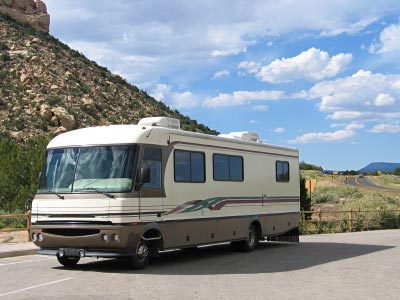
You know that feeling when you overload your hatchback? The back end sags. The rear end sags. You can actually see the suspension compress under the weight of several tile boxes. This is intuitive. Stop before you crash your car.
But try RVing.
Loading tiles into a large motorhome. You might not see it. These machines can carry large quantities of equipment, devices and people. The suspension is stiff. The body is very long. You won’t notice that the rear bumper is lowered until you reach the rollover point, which is much higher than expected.
So how do you know if your RV is overloaded? You can’t see it. You can’t feel the same way. What you need to know about RV load capacity.
Sounds like a technical term. it is not. This is a severe limitation. Weight restrictions set by the manufacturer. In addition to this, you are risking safety with your tires, brakes and frame.
This is math. It’s simple subtraction, but the input is important.
CCC explained
To determine the cargo capacity of your RV, start with the Gross Vehicle Weight (GVWR). This is the maximum safe operating weight of the vehicle. From that we subtract what we already have.
-
**Start with GVWR. **
Let’s use a hypothetical RV with a GVWR of 20,000 pounds. -
*Subtract vehicle curb weight (UVW). **
This is not just a shell. The UVW is filled with fuel, coolant, oil and all factory installed fluids. This is the weight of the RV when it leaves the factory with a full tank of gas.
UVW: 14,500 lbs. -
20,000 – 14,500 = £5,500 left.
-
**Subtract sleeping capacity weight rating (SCWR). **
This is a safety factor. The manufacturer assumes a load capacity of 154 pounds per bed. This takes into account the person, their clothing and nearby equipment. - SCWR formula: 154 lbs x number of sleeping positions.
*Example: 6 beds x 154 lbs = 924 lbs. -
5,500 – 924 = £4,576 left.
-
*Subtract propane (LPG) weight. **
Propane weighs 4.2 pounds per gallon. If the tank is full, it is added weight.
Example: 12 gallons x 4.2 pounds = 50.4 pounds. -
4,576 – 50.4 = £4,525.6 left.
-
*Subtract fresh water weight. **
Water is heavy. 8.3 pounds per gallon. When the fresh tank is full, there is a lot of mass in the frame.
Example: 25 gallons x 8.3 lbs = 207.5 lbs. - 4,525.6 – 207.5 = 4,318.1 pounds
Result: 4,318.1 lbs
This is the cargo capacity. This leaves $4,318.1 for passengers, clothes, kitchenware, bikes, storage etc. That is all the space.
Why this matters
RV Cargo Capacity is a safety limit. This is not a suggestion. The manufacturer specifies this based on chassis structural integrity, axle strength and braking performance.
If you exceed this limit, it’s not just “heavy”. you are not safe The brakes no longer work. The suspension falls to the bottom. The frame may tear. You can lose control on the highway.
Where can I find these numbers? Look for the sticker to the driver’s side door frame. Owner’s manual. Manufacturer’s website. If you don’t have the exact sticker, look up your model’s specs online. Most brands publish GVWR and UVW numbers.
Confusion: CCC and Cube Space
This is where people stumble.
Most car sites list cargo capacity in cubic feet.
Most RVs have a cargo capacity in pounds.
They are talking about completely different things.
If you look at the chart, the 2008 BMW X5’s “Cargo Capacity (ft3)” is 61.8 cubic feet, that’s its volume. Shows how well something fits. I don’t know the weight of these things.
When you calculate your RV’s cargo capacity in pounds, you’re dealing with mass. I don’t care about volume. I’m worried about the weight.
If you’re trying to figure out How to Calculate Cargo Capacity in an RV, ignore the cubic foot chart. They have nothing to do with your safety. Pay attention to your weight.
Vehicle weight information by brand
If you own a car or truck, you’re probably looking for payload limits and towing specifications. Below is a snapshot of some models’ cargo capacity (in cubic feet) from 2006-2009. Note that this is space, not weight.
Acura Cargo Volume
| Year | Model | Quantity (ft3) |
|---|---|---|
| 2006 | MDX | 81.5 |
| 2006 | RL | 13.1 |
| 2006 | RSX | 25.3 |
| 2006 | TL | 12.5 |
| 2006 | TLX | 13.2 |
| 2007 | MDX | 83.5 |
| 2007 | RL | 13.1 |
| 2007 | RDX | 60.6 |
| 2007 | TL | 12.5 |
| 2007 | TLX | 13.2 |
| 2008 | MDX | 83.5 |
| 2008 | RL | 13.1 |
| 2008 | RSX | 60.6 |
| 2008 | TL | 12.5 |
| 2008 | TLX | 13.2 |
| 2009 | MDX | 83.5 |
| 2009 | RL | 13.1 |
| 2009 | RSX | 60.6 |
| 2009 | TLX | 12.6 |
*Related information: Acura GVWR, Acura GAWR, Acura GCWR, Acura curb weight, Acura payload, Acura towing capacity. *
Audi cargo volume
y8rdnrwty7bfe122ajs6
Buick trunk by model and year
During this time, Buick’s approach to cargo volume changed significantly. The LaCrosse and Lucerne sedans offer just 16 and 17 cubic feet of space, respectively. Not designed for towing. The real story takes place in SUVs.
Rainier has a capacity of 80.1 cubic feet. It’s weird, based on the TrailBlazer architecture, but with its own style. The Rendezvous is more practical, with a capacity of 108.9 cubic feet. This was the grid before the term became a marketing buzzword.
Then there is Terraza. A minivan disguised as an SUV. It delivered 136.5 cubic feet. This number was huge at the time.
In 2008, the Enclave was introduced. This is Buick’s answer to your three-row seating needs. The starting area is 116.2 cubic feet. By 2009, this amount had dropped slightly to 115 cubic feet. The dimensions of the rear seats folded may vary. The sedan didn’t move. La Crosse is firmly in 16 cubic feet and Lucerne in 17 cubic feet.
The luxury and power of Cadillac
Cadillac doesn’t just make noisy sedans. Heavy vehicles was also moved. The entry-level CTS sedan has 12.5 cubic feet of cargo space. The situation continued until 2009. The CTS-V’s performance matches its capabilities. 12.5 cubic feet. For someone who drives a car every day, it’s as expensive as a house in Detroit.
DTS’ luxury sedan derivatives get 18.8 cubic feet. This sedan is designed for executives who need space for their golf bags and other luggage. The STS and STS-V performance sedans offer 13.8 cubic feet of space. XLR and XLR-V convertibles are even tighter. 11.6 cubic feet. Not very suitable for road trips.
The Escalade is the king of volume. The 2006 standard model has a volume of 104.6 cubic feet. By 2007, the number had risen to 108.9. The ESV Extended Range is a real truck. It rose from 131.6 in 2006 to 137.4 in 2007 and has remained at this level.
The Escalade EXT is a pickup truck. Since there is a loading platform, loading capacity in the standard sense is not listed. But you can’t just put the lid on. It’s a lifestyle choice.
The SRX crossover offers 69.5 cubic feet of space. In 2009, the SRX number was 13.8. Wait, that seems to be a typo somewhere in the source. The SRX is an SUV. 13.8 is too small. In the table, the ratio between SRX and STS in 2009 is 13.8. This may be an error in the source information provided, but the standard SRX has about 69-70 cubic feet of storage capacity with the seats down. Introduced in 2009, the Escalade Hybrid has a capacity of 69.5 cubic feet. An efficient diesel transport vehicle.
Chevrolet Sales Executive: From HHR to Suburban
Chevrolet covers all bases. The small Aveo sedan was only 12.4 cubic feet in 2007 and 2008, but in the 2009 chart it was 42 cubic feet. This could be a hatchback version or a typo due to the sedan’s smaller size. Aveo 5 hatchback ride height is confirmed to be 42 cubic feet.
Cobalt is a compact product. 13.9 cubic feet. Consistent over the years. The Malibu sedan has a volume of 15.4 to 15.1 cubic feet. The Malibu Max Wagon is better. 41 cubic feet. A smart choice for families.
The HHR is a retro-style station wagon. 2006 starts at 63.1 cubic feet. Then in 2007 it dropped to 57.7 cubic feet and stayed there. HHR Group’s version is purely practical. 62.7 cubic feet. There are no back seats. Just storage.
The biggest of them are trucks and SUVs. Express cars are beasts. 225.1 cubic feet. From 2006 to 2009, nothing changed. It is a flagship product.
The capacity of the Suburban 1500 and 2500 is 137.4 cubic feet. This has not changed since 2007. The Tahoe is its smaller sibling with a capacity of 108.9 cubic feet. The Tahoe Hybrid reached this level in 2008 and 2009.
The TrailBlazer offers 80.1 cubic feet of space. In 2006, the TrailBlazer EXT and its bed have a capacity of 107.4 cubic feet. The avalanche model does not calculate the volume at the source, probably because the configuration of the seats is variable.
A Corvette is a sports car. In 2006, it was 22.4 cubic feet. It then dropped to 11 cubic feet in 2007 and 2008. In 2009, it returned to 22.4 cubic feet. The C6 generation actually has a trunk that can be used for weekend trips.
The Traverse was introduced in 2009. The area is 117.5 cubic feet. Family transport vehicle with 3 rows of seats.
Chrysler minivans and vans
Chrysler dominates the minivan segment. Town & Country is the director of sales. 2006 starts at 146.7 cubic feet. In 2007, it dropped to 144 cubic feet. In 2008 and 2009, it was 143.8 cubic feet. It’s still huge.
The PT Cruiser is suspect. 2006 starts at 92.2 cubic feet. Then in 2007 it dropped to 62.7 cubic feet and stayed there. The inner packaging is strange, but the space is genuine.
The Pacifica minivan is smaller than the Town & Country. In 2006, it was 62.7 cubic feet. Then in 2007 it jumped to 92.2. It appears that the 2006 figures may have been different or measured for specific equipment. The number 92.2 matches better than its competitors.
The Aspen SUV has 102.4 cubic feet of space. It remained the same between 2007 and 2009. The Aspen Hybrid is comparable.
The 300 sedan is smooth. In 2006 and 2007, it was 15.6 cubic feet. It then rose to 17.2 in 2008. In 2009, it returned to 15.6. The Sebring sedan is smaller. In 2006 it was 11.3. Since 2007, it has been 13.6.
The Crossfire Roadster is small. In 2006 and 2007, it was 6.5 cubic feet. In 2008, it was 7.6 cubic feet. trunk of a sports car.
Practicality and performance of branding
Dodge and Chrysler share a platform, so the numbers are similar. But Dodge owns vans and trucks.
Caravans are the king of sales. In 2006 and 2007, it was 167.9 cubic feet. In 2008 and 2009, it dropped to 144.3 cubic feet. The base model camper has a volume of 142.3 cubic feet. It was consistent in 2006 and 2007.
Sprinter vans are commercial giants. In 2006, the Sprinter Van 2500 had a capacity of 247 cubic feet. In 2007, 2008 and 2009, the capacity is 318 cubic feet.
Ford Cargo Bay (depending on model)
No major changes have been made to the Crown Victoria. Both the 2006 and 2007 vehicles had a capacity of 20.6 cubic feet. The E-series trucks are the flagship product. According to Ford, the 2006 and 2007 E 150, E 250 and E 350 Super Duty are exactly 256.5 cubic feet. In 2008 and 2009, this amount dropped slightly to 230.6 cubic feet. At the end of the model year, about 26 cubic feet of space is wasted.
Escape is consistent. For many years, the capacity of the gas version has remained at 66.3 cubic feet. Hybrids have less capacity. In 2007 it was 65.5, in 2008 it was 66 and in 2009 it was 66.1. The difference is very small. No problem with most cars.
Interesting here are the F series trucks. Ford has listed F 150, F 250 and F 350 trucks for years. They may not sell SUVs where bed space is an important feature to buyers. The Rangers have the numbers. In 2006, it was 18.1 cubic feet. Discontinued in 2007, returned in 2008 and again in 2009.
Mid-size cars are small. The Fusion has a capacity of just 15.8 cubic feet. Taurus scored 17 compared to 21.2 in 2008 and 2009. Focus started at 40.2, but by 2009 had shrunk to 13.8. This is a significant drop. The new Focus platform is more compact.
Large SUVs include Expeditions. The Expedition EL is better than the standard Expedition. 130.8 vs. 108.2 cu.ft. Flex was released in 2009 with a rating of 83.2. The result of the Taurus X was 85.5.
GMC cargo capacity information
GMC’s Savana van is a good performer. All 1500, 2500 and 3500 models have 225.1 cubic feet. From 2006 to 2009, nothing changed. You get what you pay for. Consistency of numbers.
There are also variations on the Yukon line. The Yukon standard dropped from 63.6 in 2006 to 60.3 in 2007 and remains at 60.3. The XL version stays around 45.7-45.8. Small difference.
The Acadia was introduced in 2007 and has a capacity of 19.7 cubic feet. In 2008 and 2009, it rose to 25.5. Envoy’s rating has been 43.7 for the third year in a row. Then it disappears.
Introduced in 2008, the Yukon Hybrid has a cramped 16.9 cubic feet of cargo space. Sierra Hybrid numbers are not listed. In Canyon and Sierra, 1500/2500/3500 is the line. Again, bed capacity is not the primary stat for these trucks as of this writing.
Honda Cargo specifications
Honda’s information talks about a change in the platform. The 2006 Civic has a generous 12.7 cubic feet of space. The 2007 Civic rose slightly to 72.9. Then, in 2008, a new generation arrived and the number dropped to 35.7. By 2009, the figure had dropped to 11.5. The new Civic sedan is small. Hatchbacks may be different, but the numbers shown here show a significant reduction.
Odyssey is a monster. It is listed at 147.4 cubic feet. 2006-2009. No changes. There’s a reason it’s the king of minivans.
The CR-V still holds 10.4 cubic feet. The pilot dropped slightly from 87.6 to 87. 2006. In 2007 it was 41.9, in 2008 it was 41.9 and in 2009 it was 57.3. The new Fit maximizes interior space more efficiently.
The Fit’s cargo capacity varies. In 2006 it was 12.0. In 2007 it was 14, but in 2008 and 2009 it dropped to 11.9. The weight and structure of the new generation have been reduced, but the volume of the trunk has been reduced.
HUMMER’s cargo capacity
The Hummer brand is a very narrow brand. The H2 has a capacity of 30.7 cubic feet. Every year. 2006-2009. No changes. H3 is 29.5. There is also consistency.
The H3T was introduced in 2009, but no information is listed. Maybe it’s a truck and cargo capacity is measured differently, or maybe it’s just not included in this particular list. There is no information about H1 Alpha. A rare model. The production is low.
Hyundai and Infiniti Cargo
Hyundai’s models are inconsistent. The Accent started with a 12.4 rating, rose to 15.9 in 2007 and has maintained that rating ever since. The Elantra goes from 13.0 to 14.0. Santa Fe rose from 30.5 to 34.2. Tucson stays at 22.7.
No information is available for Veracruz. The Entourage has been discontinued since 2007. The Genesis, introduced in 2009, has a capacity of 15.9 cubic feet.
Infiniti has very little. The FX35 and FX45 hold 64.5 cubic feet over the years. In 2009, FX 35 and FX 50 were reduced to 62. The QX56 is a spacious. 91.7 cubic feet. It hasn’t changed.
The trunk of the G35 is small. In 2006 and 2007 it was 7.8 and in 2008 it rose to 13.5. G37 then returned to 7.4 in 2008. M35 and M45 remained at 14.9. The EX35 was released in 2008 on 18.6.
Isuzu, Jaguar and the final product
Isuzu only sells the Ascender. It holds 80.1 cubic feet for 3 years. No information is available for i-series trucks. Isuzu is downsizing its operations in the United States. These data reflect the decline of the company.
Jaguar has many models. S-Type is 28.6. X-Type got 16.0. XJ8 and XJR got 16.4. 11.5 for XK8 and XKR.
In 2007, XK dropped to 7.1. It then returned to 10.6 in 2008 and 2009. In 2009, the XF scored 17.7. The XK Coupe received a rating of 10.6.
Jaguar numbers vary. One year your model may be 11.5 and the next year 7.1. Trim changes. A change in body style. The S-Type is stable, but the XK fluctuates wildly.
There is a lot of data missing here. truck data. Removed model. This highlights that cargo capacity is not necessarily the primary indicator of heavy vehicles. For trucks. For vans for size. An SUV? They sit in the middle. Strive to be everything. The numbers show the result of the compromise.
If you need more than 230 cubic feet of space, the Ford E-Class van is the perfect size. The Odyssey is a standard minivan. The FX45 is a spacious.
What are you going to use this space for?
Jeep practicality check
You are looking at a 2006-2009 Jeep model. The information here tells the real story. If you need space. The commander is your best choice. Offers approximately 68 cubic feet of cargo space. The Grand Cherokee is right behind it, with a ride height of 67.4 cubic feet. Liberty offers solid performance. In 2006 and 2007, it had a capacity of 69 cubic feet. Then in 2008 and 2009, that capacity dropped to 64.2 cubic feet. This reduction is important when transporting equipment.
The Wrangler is an exception. Both doors are very narrow. In 2006, the space was only 45.8 cubic feet. The four-door Unlimited was launched in 2008. Space jumps to 86.8 cubic feet. This is a big difference. Compass and Patriot round out the lineup. Their volume is approximately 53 cubic feet and 62 cubic feet, respectively. The Patriots have been rated at 62.7 cubic feet over three years. From 2007 to 2008, the Commander lost half a cubic foot. Not much has changed. But they add up.
Kia Value Promise
Kia has a different strategy. They drive sales. Sedona is the king of this list. In 2006, it was 141.5 cubic feet. In 2007 and 2008, the number dropped slightly to 121.3. It’s still big. The Rondo was launched in 2007. It offers 74.4 cubic feet of space. A solid crossover vehicle.
Compact cars are small. The Rio has 11.9 cubic feet of space. Rio 5 hatchback is better. It varies between 15.8 and 49.6 depending on the year. You need to check certain configurations. The same goes for the Spectra 5. The capacity is 52.8 cubic feet. Optima and Amanti are sedans. It’s small. About 14-15 cubic feet.
The Borrego was launched in 2009. It has 97.6 cubic feet of space. A large SUV from a medium-sized brand. Sorento and Sportage are identical. Capacity is 66.4 cubic feet and 66.6 cubic feet. The numbers have remained very stable over the years.
Land Rover luxury and practicality
Range Rover buyers expect more space. The numbers tell you this. LR3 is the largest. It has 90.3 cubic feet of space. It remained the same in 2006 and 2007, but dropped to 9.9 in 2008. The drop may be due to an error in the data or a significant adjustment difference. In 2009, it jumped back to 90.3. I need to see the 2008 numbers.
The Range Rover itself is small. In 2006 and 2007, it was 74.9 cubic feet. In 2008, it was reduced to 35.1 cubic feet. Then in 2009 it went back to 74.2 cubic feet. The 2008 figure is questionable. It’s probably the rear seat arrangement. The Range Rover Sport’s volume remains flat at 71 cubic feet.
LR2 will be introduced in 2008. Data is shown with dashes. It was released in 2009 and has a capacity of 58.9 cubic feet. Compact luxury crossover. You get what you pay for in space. Or maybe not. The 2008 LR3 data is confusing.
Fine tuning limitations of Lexus
Lexus is all about precision. It’s not the volume. The sedan’s is small. The ES 350 has a volume of 14.7 cubic feet. 12.7 for GS 350 and GS 460. 13 for IS 350 and IS 250. LS 460 is slightly larger, 18. LS 600h is comparable. The SC 430 is a sports car. It has a capacity of 8.8 cubic feet.
SUVs are spacious options. The RX 350 and RX 400h offer 84.7-85 cubic feet of space. The LX470 is big. 90.4 cubic feet. The GX 470 comes next with a capacity of 77.5. Introduced in 2008, the LX 570 has a capacity of 15.5 cubic feet. It then increased to 83.1 in 2009. This increase indicates a change to the configuration. Or another seating arrangement. The RX 350 dropped to 38.3 in 2008. Then in 2009 it returned to 85. The seats can be folded.
Lincoln Full Size Focus
Lincoln was an American brand. That means a lot of space. The navigator is the anchor. Offers 103.5 to 104.8 cubic feet. It is the largest SUV in the entire dataset. The Mark LT is a pickup truck. The capacity is 47.9 cubic feet. The MKX is a crossover. It has a capacity of 69 cubic feet. The years 2007, 2008 and 2009 were stable.
The sedan’s is small. MKZ gives 15.8. The city car gives 21.1. In 2009, the MKS result was 18.7. Zephyr in 2006 gave it a 15.8. LS gives 13.5. The Mountaineer disappeared in 2009. It was replaced by a change to Lincoln’s brand strategy. The navigator is still a top option. It far surpasses everything else on the list.
The versatility of Mazda
Mazda combines trucks and sedans. The MPV is a van. The capacity is 127 cubic feet. The CX-9 is a three-row SUV. The capacity is 100.7 cubic feet. Tribute is a compact crossover. It dropped from 66.8 in 2006 to 29.2 in 2008. Then in 2009 it returned to 66.2. The 2008 hybrid version is even smaller. 27.8 cubic feet.
The sedan’s is a hybrid. MAZDA6 is big. 58.7 cubic feet. Mazda 3 is a hatchback. 43.8 cubic feet. The Speed3 is a high-performance hatchback. 43.4 cubic feet. The MX-5 is a roadster. 5.3 cubic feet. The RX-8 is a rotary coupe. 7.6 cubic feet. No information is available for B-series trucks. It may be irrelevant or unavailable. The Mazdaspeed6 is small. 12.4 cubic feet.
The complexity of Mercedes technology
Mercedes has a wide range of products. The R class is a large vehicle. The capacity is 85 cubic feet. The situation was flat in 2007, 2008 and 2009. The GL classes are huge. 83.3 cubic feet. ML classes are medium sized. 72.4 cubic feet. The G series is boxy. 79.5 cubic feet.
The sedan’s is small. The C-Class has a volume of 12.2-12.4 cubic feet. The E-class result was 15.9. The S Series has a capacity of 15.4 to 19.8 cubic feet. The CLS is a coupe. 12.8-15.9 cubic feet. CLK is a coupe. 5.4 to 10.4 cubic feet. SL and SLK are interchangeable. Capacity ranges from 9.8 to 10.2 cubic feet. The SLR McLaren is a supercar. 7.2 to 9.6 cubic feet. The CL class is big. 12.3-12.9 cubic feet.
End of Mercury
Mercury disappears. The data reflects the brand’s transformation. The Monterey is a minivan. The capacity is 134.3 cubic feet. The Mountaineer is an off-road vehicle. 83.7 to 85.8 cubic feet. Mariner is a crossover. 65.5 to 66.3 cubic feet. The hybrid version is slightly smaller. 27.6 to 66 cubic feet. The decline of hybrids in 2007 is strange. 27.6 cubic feet. Then let’s go back to 2008. Probably a typo.
The sedan’s is small. The Grand Marquis’ capacity was 20.6. Milan’s capacity is 15.8. Montego is 21 and Sable is 21.2. Zephyr is gone. The numbers are consistent. There are no big changes coming. This is a sign of the end. Monterey is still the king of the universe. 134 cubic feet.
MINI and Mitsubishi Space Reality
The 2006 MINI Cooper Hardtop has 25 cubic feet of space. The convertible has a more compact 21.4 cubic feet of space. In 2008, the Clubman was introduced with a generous 32.8 cubic feet. In some years, the hardtop area was slightly reduced to 24 cubic feet. John Cooper Factory models match this information.
Mitsubishi delivers an absolute blast with the Montero. It can carry 91.7 cubic feet of cargo. The Endeavor follows with a capacity of 76.4 cubic feet. Small cars like the Lancer and Galant are tight. They range from 11.3 to 13.3 cubic feet. Outlander has taken wild swings. In 2006, it was 60.3 cubic feet, which dropped to 36.2 cubic feet in 2007 and jumped to 72.6 cubic feet in 2008. After 2007, the Raider disappeared from the list.
Nissan load limits
Nissan’s trunk speaks of its practicality and sportiness. The 350Z is of little use in transportation. The area is only 4.1 cubic feet. The GT-R is slightly better at 8.8 cubic feet. But look at the task. It ruled the class. In 2006, it had a capacity of 148.7 cubic feet. This number dropped to 145.7 in 2007 and stabilized at 148.1 over the following years.
Mid-size sedans are practical. The original volume of the Altima was 15.6 cubic feet. By 2008, it had shrunk to 7.4 cubic feet. The hybrid version is still 10.1 cubic feet. SUVs are Nissan’s highlight. The Armada has 97.1 cubic feet of space. The Pathfinder offers 79.2 cubic feet of space. Murano’s original capacity was 81.6 cubic feet, which was reduced to 64 cubic feet in 2009.
Titan pickups are insane. Introduced in 2008, it has 126 cubic feet of bed space. That wasn’t the case in 2006, 2007 or 2009. The Rogue started out in 2008 with 98 cubic feet, but that dropped sharply to 28.9 cubic feet in 2009. Why cut back on space? Marketing? perhaps. The Versa is a practical choice with 50.4 cubic feet.
Compromise between Pontiac and Porsche
Although Pontiac disappeared from the market, its cargo data remained a data point. The Montana SV6 is a wheeled box. The capacity is 136.5 cubic feet. The Torrent SUV has plenty of room at 68.6 cubic feet. The G6 sedan is crowded. In 2006 it offered 11 cubic feet and then 14 cubic feet. The Grand Prix can change. It started at 57 cubic feet, went down to 16 cubic feet, and finally settled at 45.7 cubic feet. The Vibe is a solid hatchback option with 54.1 cubic feet of space in most years.
Porsche focuses on performance, not towing. The 911 is essentially a bodyless coupe. There are some years that are worth mentioning. In 2009, the 911 Carrera had a displacement of 7.24 cubic feet. The Boxster and Cayman also have a tight transition. They offer 9.9 cubic feet and 14.5 cubic feet. The Cayenne SUV is an exception. Offers 62.5 cubic feet of space over the years.
Saab, Saturn, Scion Utility
The Saab 9-7X is an unloaded SUV disguised as a station wagon. The capacity is 80.1 cubic feet. It was a reliable truck from 2006 to 2009. The 9-5 Sedan has 15.9 cubic feet of space. The situation 9-3 turned the situation into a stalemate. By 2009, its capacity had dropped from 15 cubic feet to 12.4 cubic feet. 9-2X is a renewed Impreza. The capacity is 61.6 cubic feet.
The composition of Saturn is extensive. The Outlook SUV is huge. It holds 115.9 cubic feet at any time. VUE is versatile. The capacity of the hybrid version was initially 30.8 cubic feet, which was later increased to 63.8 cubic feet. It was later reduced to 29.2 cubic feet. The Relay van is a 136.5 cubic foot commercial workhorse. The Sky Roadster is small. The area is only 5.4 cubic feet.
Scion has done a great job with their sales game. xB is a box. In 2006, it had a capacity of 43.4 cubic feet. By 2008, the capacity had increased to 69.9 cubic feet. The xD hatchback is small at 35.7 cubic feet. TC coupe is limited. Stated volume remains at 12.8 cubic feet for each model year.
Intelligence and Subaru efficiency
Smart fortwo is not intended for grocery shopping. 2008 offers 12 cubic feet of space. It’s designed for city dwellers who don’t have much to bring with them.
Subaru station wagons and SUVs tend to be practical. The 2006 Impreza Wagon and Outback Sport have a capacity of 61.6 cubic feet. The Legacy Wagon has a capacity of 66.2 cubic feet. The Forester’s original size was 57.7 cubic feet and grew to 68.6 cubic feet in 2007 and 2008. The Tribeca SUV is the largest. In 2006 and 2007, its capacity decreased to 74.4 cubic feet, in 2008 to 104 cubic feet, and finally to 74.4 cubic feet in 2009.
Outback sedans are small. The capacity is 11.4 cubic feet. However, the Outback wagon version offered 33.5 cubic feet in 2006 and 98 cubic feet in 2008. The Legacy sedan is also smaller at 11.4 cubic feet. The 2008 Legacy SUV has 93 cubic feet of space. These numbers vary by seat configuration and model year. Be sure to check your specific model year.
Suzuki and the last note
Suzuki delivers incredible volume with the XL7. In 2006, it had a capacity of 75.1 cubic feet. In 2007 and 2008, that number jumped to 95.2 cubic feet. For the next several years, the Grand Vitara’s capacity remained at 68.9 cubic feet. The 2007 SX4 hatchback had a capacity of 64 cubic feet, which was later reduced to 54 cubic feet. The Reno is small, just 45.4 cubic feet. The Aerio and Forenza are regular sedans with 14.6 cubic feet and 12.4 cubic feet respectively.
These figures are static snapshots. Roof racks, towbar brackets and aftermarket modifications are not taken into account. They measure the box. If you need more space, you can find another vehicle or remove the seat. The Quest and Montana SV6 are still the kings of cubic volume in this data set. 350Z and Sky are the kings of minimalism. Pick your poison.
Cubic feet are important if you’re carrying something other than your body. We look at how much space there is in the trunk or behind the second row. The numbers here are accurate. These are not estimates. These are static measurements for 2006-2009 models.
Toyota cargo capacity trends
Toyota’s product range is divided into utility sedans and durable SUVs. The Toyota Sienna dominates the minivan segment with immense practicality.
2006 Toyota model
The 2006 Sienna has 148.9 ft³ of room. This is the largest size in the series. Sequoia is closely followed by 128.1 ft³. If you need a truck, the Tacoma and Tundra don’t have the payloads listed here. There are several different sizes of pick-up beds.
Mid-size SUVs have a niche market. The 4Runner offers 75.1 ft³. RAV4 is equivalent to 73 ft³. The capacity of the Highlander is 39.7 ft³.
The sedan is smoother. The Camry offers 16.7 ft³. The Avalon is smaller at 14.4 ft³. The Matrix is notable. Fold the rear seats down and it’s 53.2 ft³. This hatchback is designed not only for commuting but also for practicality.
2007 Toyota model
Change will happen. Avalon jumps to 41.4 ft³. This is a significant increase. This measure may include the folding function of the rear seats. The Camry Hybrid comes with 10.6 ft³**. Battery packs take up space.
FJ Cruiser is coming to the market. There are 66.8 ft³. It looks like a box. It looks like a box.
The Highlanders have grown. Both standard and hybrid versions reach 80.6 ft³. Land Cruiser has a maximum capacity of 90.8 ft³.
The Yaris joins the list with 25.7 ft³. Even small cars can transport food.
2008 Toyota model
Highlander continues to grow. Gasoline models reach 95.4 ft³ and hybrid models reach 94.1 ft³. The Land Cruiser dropped slightly to 81.7 ft³.
Sequoia fell to 120.8 ft³. Why? Perhaps a redesign will change the weight distribution or internal packaging.
Everything else is stable. Matrix remains at 53.2 ft³. The RAV4 is stuck at 73 ft³.
2009 Toyota model
The Matrix is growing. Go up to 61.5 ft³. Toyota has finally updated its platform.
The Corolla is a bit small. Reduced from 13.6 ft³ to 12.3 ft³. Efficiency is often improved at the expense of luggage space.
Venza is available but marked – (not available). It may have started too late for this information.
Read more about Volkswagen’s cargo capacity
Volkswagen competes on a different track. There’s the compact Rabbit, the GTI and the rugged Touareg.
2006 Volkswagen model
Rabbit is the best seller of the brand. Offers 46 ft³. The Golf and GTI are tied for 41.8 cubic feet.
Passat Sedan is small. 14.2 ft³. The Phaeton is a luxury sedan second only to limousines. There are 13 ft³. Don’t expect to use a phaeton to move a tree.
The price of the Touareg SUV is 71 ft³. This is very important.
Beetle was a fashion statement. The coupe is 27.1 ft³. Convertibles have almost nothing. 5 ft³. Golf bags are not allowed.
2007 Volkswagen model
Passat station wagon has arrived. Offers 61.8 ft³. Space still matters here.
Eos The convertible is small. 10.5 cubic feet. The roof mechanism takes up the trunk.
The GTI rises to 46 ft³. The rabbit stays at 46 ft³.
2008 Volkswagen model
R32 has arrived. There are 43.4 ft³. It is a popular hatchback equipped with a powerful engine. As a result of the move, the space has become smaller.
Touareg 2 stays at 71 ft³.
The GLI (Jetta GLI) keeps the space of the sedan at 16 ft³.
2009 Volkswagen model
The Routan has arrived. This is a minivan made from Chrysler parts. Offers 141 ft³. This is the answer to Sienna.
Tiguan is coming to the US market. There are 56.1 ft³. It’s small for an SUV.
The Jetta Sport Wagon offers 66.9 ft³. When you fold the seats down, the volume is by far larger than in the Touareg.
The Beetle Coupe is stuck in **27.1 ft³.


