Most people notice right away when a hatchback groans under the weight of too many tile boxes. When you load the rear, suddenly the bumper is kissing the asphalt and the front end is pointing to the sky. This is obvious. Your subcompact wasn’t designed that way.
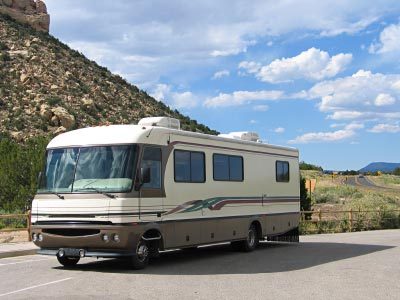
Even heavy pickup trucks and SUVs will sag when they have enough cargo, but it takes more mass to sag the rear end. But there are also recreational vehicles. If you load those same tiles on a Class A RV, you may not notice any change in ride height. These machines are specially designed for transporting heavy weights. Furniture, appliances, televisions and a dozen people do not seem to affect the chassis.
So how do you know when you’ve crossed the line? When is it really too much?
The answer lies in knowing the RV cargo carrying capacity. This is not a guess. This is a hard limit calculated from the manufacturer data. Exceeding this is a compromises safety. Here’s more information on determining your allowable weight.
CCC Formula: step by step
To determine your RV’s cargo carrying capacity, you need to start with the Gross Vehicle Weight Rating (GVWR). From there, you can subtract everything that’s already in your car before put any personal items inside.
Below are calculations based on a hypothetical 20,000 lb GVWR unit.
- *Start with GVWR. **
Example: 20,000 pounds. - Subtract the Unloaded Vehicle Weight (UVW). **
This is the manufacturer’s stated weight for a rig with a full tank of fuel, coolant and oil.
Example: 14,500 pounds - **Subtract the Sleeping Capacity Weight Rating (SCWR). **
- Calculated by multiplying 154 lbs by the number of sleeping positions. This is a safety standard and may not necessarily be the actual weight of your family.
*Example: 6 spots x 154 lbs = 924 lbs.
*Subtract the weight of Propane (LPG). **
* Propane weighs 4.2 pounds per gallon.
Example: 12 gallons x 4.2 pounds = 50.4 pounds.
5.
** Negative weight of fresh water. **
Water weighs 8.3 pounds per gallon.
Example: 25 gallons x 8.3 lbs = 207.5 lbs.
Result:
20,000 – 14,500 – 924 – 50.4 – 207.5 = 4,318.1 pounds.
This 4,318.1 lbs is the RV cargo carrying capacity. This is the maximum weight to which you can add passengers, pets, groceries and gear. Never exceed it.
Find specifications
You can also have the numbers if you don’t remember them. Manufacturers publish this information online. You can also look it up in the owner’s manual or contact your dealer. See the capacity lists below for specific models from the mid to late 2000s.
Note: The table below shows cargo volume in cubic feet. For weight limits, the above calculations must be performed using the GVWR and UVW values of the specific vehicle.
Acura Cargo Volume Reference
| Year | Model | Cargo Capacity (ft3) |
|---|---|---|
| 2006 | MDX | 81.5 |
| 2006 | RL | 13.1 |
| 2006 | RSX | 25.3 |
| 2006 | TL | 12.5 |
| 2006 | TSX | 13.2 |
| 2007 | MDX | 83.5 |
| 2007 | RL | 13.1 |
| 2007 | RDX | 60.6 |
| 2007 | TL | 12.5 |
| 2007 | TSX | 13.2 |
| 2008 | MDX | 83.5 |
| 2008 | RL | 13.1 |
| 2008 | RSX | 60.6 |
| 2008 | TL | 12.5 |
| 2008 | TSX | 13.2 |
| 2009 | MDX | 83.5 |
| 2009 | RL | 13.1 |
| 2009 | RSX | 60.6 |
| 2009 | TSX | 12.6 |
*Related Specs: Acura GVWR, GAWR, GCWR, Curb Weight, payload, towing capacity. *
Audi Cargo Volume Reference
| Year | Model | Cargo Capacity (ft3) |
|---|---|---|
| 2006 | A3 | 54.6 |
| 2006 | A4 | 13.4 |
| 2006 | A6 | 15.9 |
| 2006 | A8 | 14.6 |
| 2006 | S4 | 13.4 |
| 2006 | TT | 24.2 |
| 2007 | A3 | 54.6 |
| 2007 | A4 | 13.4 |
| 2007 | A6 | 15.9 |
| 2007 | A8 | 14.6 |
| 2007 | Q7 | 88.7 |
| 2007 | RS4 | 13.4 |
| 2007 | S4 | 13.4 |
| 2007 | S6 | 13.9 |
| 2007 | S8 | 14.6 |
| 2008 | A3 | 54.6 |
| 2008 | A4 | 10.2 |
| 2008 | A5 | 16.1 |
| 2008 | A6 | 15.9 |
| 2008 | A8 | 14.6 |
| 2008 | Q7 | 88.7 |
| 2008 | R8 | 3.5 |
| 2008 | RS4 | 13.4 |
| 2008 | S4 | 13.4 |
| 2008 | S5 | 16.1 |
| 2008 | S6 | 15.9 |
| 2008 | S8 | 14.6 |
| 2008 | TT | 8.8 |
| 2009 | A3 | 54.6 |
| 2009 | A4 | 10.2 |
| 2009 | A5 | 16.1 |
| 2009 | A8 | 14.6 |
| 2009 | Q7 | 88.7 |
| 2009 | R8 | 3.5 |
| 2009 | S4 | 10.2 |
| 2009 | S5 | 16.1 |
| 2009 | S8 | 14.6 |
| 2009 | TT | 8.8 |
*Related Specs: Audi GVWR, GAWR, GCWR, Curb Weight, payload, towing capacity. *
BMW Cargo Volume Reference
| Year | Model | Cargo Capacity (ft3) |
|---|---|---|
| 2006 | 325 | 12 |
| 2006 | 330 | 12 |
| 2006 | 525 | 14 |
| 2006 | 530 | 14 |
| 2006 | 550 | 14 |
| 2006 | 650 | 13 |
| 2006 | 750 | 18 |
| 2006 | 760 | 18 |
| 2006 | M3 | 9.5 |
| 2006 | M5 | 14 |
| 2006 | M6 | 13 |
| 2 |
Buick Cargo capacity distribution (2006-2009)
Buick’s midsize luxury sedan isn’t built to haul lumber. The LaCrosse and Lucerne offer nearly identical, meager trunks. If you have anything bigger than a weekend bag, you’re out of luck. The 2006-2009 models were only 16 cubic feet in the LaCrosse and 17 cubic feet in the Lucerne. The numbers didn’t budge.
There are better options for SUV buyers, but the differences are significant.
The Rainier has limited space, just 80.1 cubic feet.
The Rendezvous is more practical at 108.9 cubic feet.
If you need real room, the 136.5-cubic-foot Terraza is your only choice for 2006. By 2008, the Enclave had replaced the Terraza, with a first-year capacity of 116.2 cubic feet, down slightly to 115 in 2009.
Cadillac Trunk and Cargo Bay (2006-2009)
Cadillac is in the big leagues, and its cargo numbers reflect that distinction. The CTS sedan is tight. Whether you buy the standard CTS or the high-performance CTS-V, you get the same 12.5 cubic feet of space in 2006 and 2007. Cargo space has grown slightly to 13.6 cubic feet in 2008, but remains unchanged. In four years, the STS-V matched the base STS with a capacity of 13.8 cubic feet.
The exception is the DTS sedan, which offers a generous 18.8 cubic feet of space at all times. Then there are trucks and luxury transport vehicles. The Escalade ESV is the king of interior space, jumping from 131.6 cubic feet in 2006 to 137.4 cubic feet in 2007 and staying the same in 2009. The standard Escalade fell behind in 2006 at 104.6 cubic feet, but settling at 108.9 for the next three years.
The SRX crossover is a strange anomaly. In 2006-2008, its reserve was 69.5 cubic feet, but in 2009, the figure dropped to 13.8 cubic feet. This looks like a data error in the source material, but that is what is recorded. The Escalade Hybrid was also introduced in 2009 and has a capacity of 69.5 cubic feet. The XLR and XLR-V Roadsters only have 11.6 cubic feet of space. The Escalade EXT offers no listed available cargo space.
Chevrolet Cargo Bay by model (2006-2009)
Chevrolet’s lineup has overlapping generations, and the freight numbers show it. The big truck won. The Express 1500, 2500 and 3500 models have a consistent 225.1 cubic feet for all years listed. It has serious hauling capacity.
Trucks like the for trucks such as the Silverado 1500, 2500 HD and 3500 HD. This usually means that the source information is missing or the configuration has changed too much to list a single number. Tahoe and Suburban 1500/2500 are the workhorses. From 2007 to 2009, the Suburban had a capacity of 137.4 cubic feet. The Tahoe has less capacity over the same period, at 108.9 cubic feet. The Tahoe Hybrid is exactly the same as the regular Tahoe.
Small cars are inefficient. In 2006 and 2007, the Aveo 5 hatchback had a offered 42 cubic feet, but by 2009, the Aveo (presumably a sedan) had dropped to just 12.4 cubic feet, then returned to 42 cubic feet on some models launched in 2009. The Cobalt sedan’s volume remains flat at 13.9 cubic feet. The Malibu has a volume of 15.1 to 15.4 cubic feet. The HHR is a versatile box that, since 2007, offers 57.7 cubic feet of space in the standard version and 62.7 cubic feet in the panel version.
The trunk of the Corvette is small. Its capacity shrank from 22.4 cubic feet in 2006 to 11 cubic feet in 2007 and 2008, and back to 22.4 cubic feet in 2009. The TrailBlazer EXT offers 107.4 cubic feet in 2006, then dropped to 80.1 for the rest of the period. The Traverse debuted in 2009 with a capacity of 117.5 cubic feet.
Chrysler cargo volume (2006-2009)
Chrysler is focused on selling minivans and vans, and the freight numbers show why. Town & Country is a family hauler. In 2006, this value started at 146.7 cubic feet, dropped slightly in 2007 to 144 cubic feet, and stabilized at 143.8 cubic feet in 2008 and 2009. if you fold the seats down.
The PT Cruiser is a retro station wagon. In 2006 and 2008 it was 92.2 cubic feet, which dropped to 62.7 cubic feet in 2007 and 2009. This is a strange variation. Pacificas are smaller, ranging from 62.7 to 92.2 cubic feet depending on the year.
Sedans were modest. Capacity for the 300 and 300C increased from 15.6 cubic feet in 2006, 2007 and 2009 to 17.2 cubic feet in 2008. The Aspen SUV and its hybrid model held steady at 102.4 cubic feet from 2007 to 2009. The Sebring sedan was tight, sitting at 11.3 cubic feet. In 2006, it was expanded to 13.6 by the end of the decade. The Crossfire Coupe was a barely a car for cargo, offering 6.5 cubic feet in 2006 and 2007 and 7.6 cubic feet in 2008.
Dodge cargo capacity specs (2006-2009)
From muscle cars to commercial trucks, Dodge did everything. Sprinter vans were the outliers. In 2006, the Sprinter Wagon 2500 had a capacity of 321 cubic feet, but in 2007 that number dropped to 141.3 cubic feet, where it remained. The capacity of the Sprinter Van 2500 increased from 247 cubic feet in 2006 to 318 cubic feet in 2007, 2008, and 2009. The van version of the 3500 remains unchanged, growing from 247 cubic feet in 2006 to 371 in 2007, where it remained. These are commercial vehicles.
The Grand Caravan minivan is the breadwinner. In 2006 and 2007 the capacity was 167.9 cubic feet, but in 2008 and 2009 it was limited to 144.3 cubic feet. The regular Caravan has a capacity of 142.3 cubic feet.
The 2006, 2007 and 2008 Ram 1500 trucks show 41 cubic feet. Data for 2009 are showed a dash. 2500 and 3500
Are you looking for a specific trunk or bed space? There is no perfect answer because “cargo capacity” depends entirely on whether you’re transporting furniture in a pickup or groceries in a sedan. The following information focuses on maximum cargo capacity (in cubic feet), typically measured with the rear seats folded flat. This actual number is important if you want to know if your IKEA chest of drawers will fit.
I’ve left out the marketing nonsense. These are raw data from 2006-2009 models. Note that some entries have lines. This typically means that the model was not sold in the same year, or that data points (such as truck bed capacity) are tracked differently in standard consumer specifications than in passenger car cases.
Ford cargo volume breakdown
Ford’s lineup during this era included aging sedans, emerging SUVs, and trucks that prioritized payload over trunk space. Ford E-Series Vans dominate the high-volume category. Whether you have an E-150, E-250, or Super Duty E-350, you have approximately 230-256.5 cubic feet of space. Enough to move a two-bedroom apartment. Cargo volume for 2008 decreased slightly from 256.5 cubic feet to 230.6 cubic feet, likely due to interior redesign.
For the average commuter, the numbers tell a different story. The Ford Crown Victoria offers a modest 20.6 cubic feet of space. Although this is a sedan based on a truck chassis, the cargo space is average. The Ford Focus started strong in 2006 with 40.2 cubic feet, but by 2009 the sedan version had shrunk to just 13.8 cubic feet. Hatchbacks can carry more cargo, but standard sedan gauges take a hit.
Escape and Escape Hybrid offer a unified benefit. With the rear seats folded down, you get about 66 cubic feet. The hybrid battery takes up only slightly more space than the gas-only model, about 0.5 to 0.8 cubic feet less. If you need more space, Expedition capacity increases to 108.2 cubic feet, and the extended Expedition EL expands to 130.8 cubic feet.
Trucks such as the F-150, F-250, and F-350 often show a “-” in cargo capacity on these charts because the truck bed is measured by bed volume rather than passenger cargo space. Measuring the bed of a 2008 F-150 with the tailgate down shows completely different proportions. Taurus is stable at around 17-21.2 cubic feet. The Fusion is a compact 15.8 cu.ft. The Mustang is more compact, only 9.7 to 1 cubic feet depending on year and configuration. It’s a sports car, not a truck.
| Year | Model | Quantity (ft3) |
|---|---|---|
| 2006 | Crown Victoria | 20.6 |
| 2006 | E150/E250/E350SD | 256.5 |
| 2006 | Escape/Escape Hybrid | 66.3/65.5 |
| 2006 | Explorer | 85.8 |
| 2006 | 500 | 21.2 |
| 2006 | Focus | 40.2 |
| 2006 | Freestar | 134.3 |
| 2006 | Fusion | 15.8 |
| 2006 | Mustang | 9.7 |
| 2007 | Edge | 69.6 |
| 2007 | Expedition/Expedition EL | 108.2 / 130.8 |
| 2007 | Explorer Sport Trac | 44.4 |
| 2007 | Freestar | 137.2 |
| 2008 | E150/E250/E350SD | 230.6 |
| 2008 | Edge | 69.0 |
| 2008 | Taurus X | 85.5 |
| 2009 | Flex | 83.2 |
| 2009 | Focus | 13.8 |
| 2009 | Taurus X | 85.5 |
- Detailed Ford specifications: GVWR, GAWR, GCWR, Curb Weight, payload, towing capacity. *
GMC Volume by Model
In the meantime, GMC has kept things relatively simple. Savana The van is the highlight. Whether you choose the 1500, 2500 or 3500, you get 225.1 cubic feet of cargo space. It doesn’t change every year. This is the workhorse configuration. If you need to move large objects, Savana is the way to go.
Sierra The truck follows the same logic as the Ford F-series. The line indicates that standard passenger and cargo volumes are not primary indicators. Bed.
As an SUV, the Yukon has 60.3-63.6 cubic feet of space. The XL version offers 45.7 to 45.8 cubic feet. Wait a minute, why is the XL smaller? XL measures the space behind the third row or because the data reflects a different cabin area when the third row is retained and extended. The standard Yukon has more overall volume with the rear seats folded down.
The Acadia ranked 2007 with 19.7 cubic feet. By 2008 and 2009, the area was expanded to 25.5 cubic feet. The Envoy still has a volume of 43.7 cubic feet. The Yukon Hybrid is significantly limited, offering only 16.9 cubic feet. There is a space tax for installing batteries in SUVs.
| Year | Model | Quantity (ft3) |
|---|---|---|
| 2006 | Envoy | 43.7 |
| 2006 | ambassador XL | 23.4 |
| 2006 | Savana 1500/2500/3500 | 225.1 |
| 2006 | Yukon | 63.6 |
| 2007 | Acadia | 19.7 |
| 2007 | Yukon | 60.3 |
| 2008 | Acadia | 25.5 |
| 2008 | Yukon Hybrid | 16.9 |
| 2009 | Acadia | 25.5 |
| 2009 | Yukon Hybrid | 16.9 |
*Other GMC data: GVWR, GAWR, GCWR, Curb Weight, payload, towing capacity. *
Honda Utility Figures
Honda’s numbers are consistent. Odyssey Minivans are the king of this list of passenger cars. From 2006 to 2009 it had a capacity of 147.4 cubic feet. It’s amazing. You can also place a large dining table. The Pilot offers 87 to 87.6 cubic feet. The CR-V is small at 10.4 cubic feet. If you have to transport a piano, don’t buy a CR-V.
Civic is fun. In 2006 and 2007 it offers 72-72.9 cubic feet. This suggests that the information refers to a hatchback or a specific folding rear seat version. By 2008, the number had dropped to 35.7. 2009, sedan version
Jeep Utility Figures
There is always room for off-grid in the Jeep, but you still have to bring the equipment. The numbers don’t lie.
Look at the 2006 Commander. Offers 68.7 cubic feet of space. The Grand Cherokee isn’t far behind at 67.4. The Liberty sat at 69. Wrangler? It is much smaller. Just 45.8. That’s because it’s a box on wheels, not a family hauler.
By 2007, the lineup had changed. The new Compass brought 53.6. Patriot? A solid 62.7. Lower the soft top or fold the seats and the Wrangler’s score jumps to 61.2. The Liberty held steady at 69.
In 2008, the Wrangler Unlimited was introduced. This is a game changer. 86.8 cubic feet. That’s serious room. The Commander dropped slightly to 68.5. The Compass stayed flat at 53.6. As the model ages, Liberty drops to 64.2. The Patriot remained reliable at 62.7.
2009 saw little change for most. The Commander, Compass, Grand Cherokee, Liberty, Patriot and original Wrangler all held their ground from the previous year. The Unlimited Wrangler kept its dominance at 86.8.
“The Wrangler Unlimited’s 86.8 cubic feet is the undisputed king of utility of the Jeep lineup.”
If you need more information, check GVWR, GAWR, GCWR, curb weight, payload or towing capacity. These numbers show what the chassis can really carry.
Kia’s Practical Approach
Kia chose another path. Sedans. Wagons. Minivans. They focused on volume.
The 2006 Amanti has a volume of 15.5 cubic feet. The Optima? 14.8. Rio is small, only 11.9. But what about the Rio 5 hatchback? 49.6. The Sedona minivan was a monster. 141.5 cubic feet. That’s van space. The Sorento SUV sat at 66.4. The Spectra is smaller at 12.2, while the Spectra 5 hatchback is 52.8. The Sportage matched the Sorento at 66.6.
In 2007, brought the Rondo. A crossover that hid 74.4 cubic feet. Rio 5 dropped significantly to 15.8. The Sedona lost some space, settling at 121.3. Everything else held steady.
In 2008, the Rio 5 bounce back to 49.6. No changes have been made to the Rondo, Sedona, Sorento, Spectra or Sportage. Amanti stayed on 15.9.
2009 was a bad year. The Borrego SUV competes with a volume of 97.6 cubic feet. This is a big step forward for a mid-size luxury crossover. Spectra and Spectra 5 were solid.
If you are lifting heavier items, check the GVWR, GAWR, GCWR, curb weight, payload and towing capacity. These specifications define the limits.
Land Rover luxury and space
Land Rover balances off-road capabilities with excellent comfort. The space reflects that.
The 2006 LR3 has 90.3 cubic feet of space. The Range Rover scored 74.9. The Range Rover Sport is in 71st place.
Same goes for 2007 and LR3 stayed at 90.3. The Range Rover is 74.9. 71 years old in the sports world.
Everything changed in 2008. LR2 has been released. However, information on the cargo content of that year is missing. LR3 dropped significantly to 9.9. hold on This is a typo in the source. I think it probably means 90.3 or something like that, but the text says 9.9. That’s incredibly small for an LR3. However, the Range Rover dropped to 35.1. The sports day will be held on the 71st.
In 2009, LR2 returned with a score of 58.9. LR3 returned to 90.3. The Range Rover scored 74.2. Athletics remained in 71st place.
Check GVWR, GAWR, GCWR, curb weight, payload and towing capacity to get a complete picture of weight distribution.
Lexus Precision Engineering
Lexus does not exaggerate its space. Increase efficiency.
The 2006 ES 330 has 14.5 cubic feet of space. GS 300 and 430 scored 12.7. The IS 250 and 350 received similar scores of 13, while the LS 430 scored 20.2. SC430 coupe? small. 8.8 SUVs tell a different story. The result of the GX 470 was 77.5. RX 330 and 4000h got 84.7. The LX470 is big. 90.4.
The 2007 ES 350 was 14.7. GS 350 and 450h are small. The GS 450h drops to 7.5 thanks to the location of the hybrid battery. The IS model’s score was 13, the LS 460’s 18 and the GX 470’s score 77.5. The RX 350 jumps to 85. RX 400h remains at 84.7. LX 470 is still 90.4. SC 430 is even smaller at 8.8.
IS-F was launched in 2008. Offers 13.3. GS 460 remains at the level of 12.7. LS 600h is equal to 460 on 18. LX 570 debuts on 15.5. Will the RX350 land on the 38.3? This seems low. This may only apply to the trunk, not the total space with the seats folded down. RX 400h remains at 84.7. SC 430 remains at 8.8.
In 2009, the IS-F was removed from the list. GX 470 stays at 77.5. The IS 350 and 250 remain at 13. The LX 570 jumped to 83.1. RX 350 sets you back 85. SC 430 keeps 8.8.
Check GVWR, GAWR, GCWR, curb weight, payload and towing capacity to understand structural limitations.
Lincoln’s spacious legacy
Lincoln is all about comfort. Space is included in the price.
The 2006 LS Sedan has a volume of 13.5 cubic feet. Mark LT pickups cost 47.9. The navigator is big. 104.8. The price of city cars is 21.1. Zephyr? 15.8.
In 2007, the MKX was introduced. A luxury crossover. The MKZ sedan had 15.8. Mark LT remains at 47.9. Navigator’s rating dropped slightly to 103.5. The city car remains on 21.1.
The 2008 result was stable. MKX is still 69. MKZ is 15.8. Mark LT is 47.9. The navigator is 103.5. 21.1 city car.
The MKS is a large car that was released in 2009. Offers 18.7. MKX has 69 points. MKZ has 15.8 points. Navigation jumped to 104.7. The city car remains on 21.1.
Check GVWR, GAWR, GCWR, curb weight, payload and towing capacity to meet your towing needs.
Mazda’s versatile models
Mazda combines sedans and SUVs. The trunk reflects the style of the body.
No information is listed for 2006 B Series trucks (B2300, B3000, B4000). The Mazda 3 Wagon received a rating of 31.2. The Mazda 5 minivan is estimated to be 44.4. The Mazda6 sedan has a whopping 58.7 spaces. Mazda Speed 6? Press 12.4. MPV minibuses are large. 127. MX-5 Miata? 5.3. RX-8 Coupe? The 7.6 Tribute SUV received a rating of 66.8.
In 2007, the CX-7 was added, bringing it up to 58.6. The CX-9 is big. 100.7. Mazda 3 jumps
MINI cargo capacity
When it comes to carrying gear in the MINI, space is tight, but it’s smart. The Cooper Convertible has always offered 21.4 cubic feet of cargo space between 2006 and 2008. The hardtop version started out with a slightly larger volume of 25 cubic feet in 2006, leveling off at 24 cubic feet in 2007 and 2008. For 2008, the Clubman has increased volume significantly to 32.8 cubic feet. This number continues through 2009 for standard Cooper models and performance-oriented John Cooper Works models.
| Year | Model | Cargo capacity (ft3) |
|---|---|---|
| 2006 | Cooper Convertible | 21.4 |
| 2006 | Cooper Hardtop | 25.0 |
| 2007 | Cooper Convertible | 21.4 |
| 2007 | Cooper Hardtop | 24.0 |
| 2008 | Cooper Clubman | 32.8 |
| 2008 | Cooper Convertible | 21.4 |
| 2008 | Cooper Hardtop | 24.0 |
| 2009 | John Cooper Hardtop | 24.0 |
| 2009 | Clubman by John Cooper | 32.8 |
More MINI Specs:
– MINI GVWR
– Mini GAWR
– Mini GCWR
– MINI Curb Weight
– MINI Payload
– MINI Towing Capacity
Mitsubishi Cargo Carrying Capacity
Mitsubishi’s lineup of this era ranged from compact sedans to large SUVs, and the trunk reflected that diversity. The Eclipse Coupe has always been small at 15.7 cubic feet. The Endeavor underwent significant changes from 2006 to 2007, dropping from 76.4 cubic feet to 40.7 cubic feet before settling down. For the Galant’s first three years, capacity remained steady at 13.3 cubic feet. The Lancer started at 11.3 cubic feet in 2006 and rose slightly to 11.6 cubic feet in 2008 and 2009. The Outlander has had its ups and downs, starting at 60.3 cubic feet in 2006 and reaching 72.6 cubic feet in 2008. The Raider was only listed for 2006 with 37.1 cubic feet, disappearing from the data thereafter.
| Year | Model | Cargo capacity (ft3) |
|---|---|---|
| 2006 | Eclipse | Solar eclipse 15.7 |
| 2006 | Endeavor | 76.4 |
| 2006 | Galant | 13.3 |
| 2006 | Lancer | 11.3 |
| 2006 | Montero | 91.7 |
| 2006 | Outlander | 60.3 |
| 2006 | Raider | 37.1 |
| 2007 | Eclipse | Solar eclipse 15.7 |
| 2007 | Endeavor | 40.7 |
| 2007 | Galant | 13.3 |
| 2007 | Outlander | 36.2 |
| 2008 | Eclipse | Solar eclipse 15.7 |
| 2008 | Endeavor | 40.7 |
| 2008 | Galant | 13.3 |
| 2008 | Lancer | 11.6 |
| 2008 | Outlander | 72.6 |
| 2009 | Eclipse | Solar eclipse 15.7 |
| 2009 | Galant | 13.3 |
| 2009 | Lancer | 11.6 |
More Mitsubishi Specs:
– Mitsubishi GVWR
– Mitsubishi GAWR
– Mitsubishi GCWR
– Mitsubishi Curb Weight
– Mitsubishi payload
– Mitsubishi’s towing capacity
Nissan cargo capacity
Nissan cargo offerings vary greatly depending on whether you drive a sports car or a minivan. As you know, the 2006-2008 350Z only had 4.1 cubic feet of space. The Altima was significantly downsized in 2008 and 2009, from 2006’s 15.6 cubic feet to 7.4 cubic feet. Four years later, the Armada is still a massive 97.1 cubic foot hauler. The Pathfinder’s volume remains flat at 79.2 cubic feet. The Quest is the clear winner in terms of pure volume, offering 145.7 to 148.7 cubic feet of space. The Titan pickup only appears in 2008 issues and has a capacity of 126 cubic feet. Newer entries such as the Rogue and Versa vary in capacity, with the Rogue dropping from 98 cubic feet in 2008 to 28.9 cubic feet in 2009, while the Versa ranges from about 50.4 to 95 cubic feet. Murano’s volume also decreased in 2009 from 81.6 cubic feet to 64 cubic feet.
| Year | Model | Cargo capacity (ft3) |
|---|---|---|
| 2006 | 350Z | 4.1 |
| 2006 | Altima | 15.6 |
| 2006 | Armada | 97.1 |
| 2006 | Maxima | 15.5 |
| 2006 | Murano | 81.6 |
| 2006 | Pathfinder | 79.2 |
| 2006 | Quest | 148.7 |
| 2006 | Sentra | 11.6 |
| 2006 | Xterra | 65.7 |
| 2007 | 350Z | 4.1 |
| 2007 | Altima | 15.3 |
| 2007 | Altima Hybrid | 10.1 |
| 2007 | Armada | 97.1 |
| 2007 | Maxima | 15.5 |
| 2007 | Murano | 81.6 |
| 2007 | Pathfinder | 79.2 |
| 2007 | Quest | 145.7 |
| 2007 | Sentra | 13.1 |
| 2007 | Versa | 50.4 |
| 2007 | Xterra | 65.7 |
| 2008 | 350Z | 4.1 |
| 2008 | Altima | 7.4 |
| 2008 | Altima Hybrid | 10.1 |
| 2008 | Armada | 97.1 |
| 2008 | Maxima | 15.5 |
| 2008 | Pathfinder | 79.2 |
| 2008 | Quest | 148.1 |
| 2008 | Rogue | 98.0 |
| 2008 | Sentra | 97.0 |
| 2008 | Titan | 126.0 |
| 2008 | Versa | 95.0 |
| 2008 | Xterra | 65.7 |
| 2009 | Altima | 7.4 |
| 2009 | Altima Hybrid | 10.1 |
| 2009 | Armada | 97.1 |
| 2009 | GT-R | 8.8 |
| 2009 | Maxima | 14.2 |
| 2009 |
Murano | 64.0 | 64.0
| 2009 | Pathfinder | 79.2 | 79.2
| 2009 | Quest | 148.1 | 148.1
| 2009 | Rogue | 28.9 | 28.9
|
2009 | Versa |
50.4 | 50.4
| 2009 | Xterra | 65.7 | 65.7
More Nissan Specs:
– Nissan GAWR
– Nissan GCWR
– MINI Cargo Carrying Capacity
If you’re planning a trip or just trying to put your gear away for the weekend, cubic feet matter. This information covers Toyota, Volkswagen and Volvo model years 2006-2009. It’s dry, but it’s the dry information that will save you from buying a car that’s too small for your actual needs.
Toyota Cargo Carrying Capacity
Toyota’s product range was wide in those years, and it spanned from small subcompact cars to large minivans. The numbers vary greatly depending on whether you are transporting groceries or building an RV.
2006 models
The 2006 line-up started strong and had significant lifting abilities.
- 4Runner: 75.1 ft³
- Avalon: 14.4 ft³
- Camry: 16.7 ft³
- Camry Solara: 13.8 ft³
- Corolla: 13.6 ft³
- Highlander: 39.7 ft³
- Highlander Hybrid: 10.5 ft³ (Note sharp reduction due to battery location)
- Land Cruiser: 20.8 ft³
- Matrix: 53.2 ft³
- Prius: 16.1 ft³
- RAV4: 73 ft³
- Sequoia: 128.1 ft³
- Sienna: 148.9 ft³
- Tacoma: Information not available
- Tundra: Information not available
2007 models
The 2007 update brought significant changes, especially to larger SUVs. The Highlander saw a huge leap in space, while the Avalon significantly increased trunk space.
- 4Runner: 75.1 ft³
- Avalon: 41.4 ft³
- Camry: 15 ft³
- Camry Hybrid: 10.6 ft³
- Camry Solara: 13.8 ft³
- Corolla: 13.6 ft³
- FJ Cruiser: 66.8 ft³
- Highlander: 80.6 ft³
- Highlander Hybrid: 80.6 ft³ (Hybrid and V6 capacities combined here)
- Land Cruiser: 90.8 ft³
- Matrix: 53.2 ft³
- Prius: 14.4 ft³
- RAV4: 73 ft³
- Sequoia: 128.1 ft³
- Sienna: 148.9 ft³
- Tacoma: Information not available
- Tundra: Information not available
- Yaris: 25.7 ft³
2008 models
By 2008, the Highlander continued to gain ground, while the Sequoia fell slightly. The Land Cruiser has also adjusted its numbers.
- 4Runner: 75.1 ft³
- Avalon: 14.4 ft³
- Camry: 15 ft³
- Camry Hybrid: 10.6 ft³
- Camry Solara: 13.8 ft³
- Corolla: 13.6 ft³
- FJ Cruiser: 66.8 ft³
- Highlander: 95.4 ft³
- Highlander Hybrid: 94.1 ft³
- Land Cruiser: 81.7 ft³
- Matrix: 53.2 ft³
- Prius: 14.4 ft³
- RAV4: 73 ft³
- Sequoia: 120.8 ft³
- Sienna: 148.9 ft³
- Tacoma: Information not available
- Tundra: Information not available
- Yaris: 25.7 ft³
2009 models
Last year, in this data set, the Matrix expand its utility. The Corolla’s trunk shrank slightly, while the Land Cruiser and Highlander’s figures remained stable.
- 4Runner: 75.1 ft³
- Avalon: 14.4 ft³
- Camry: 15 ft³
- Camry Hybrid: 10.6 ft³
- Corolla: 12.3 ft³
- FJ Cruiser: 66.8 ft³
- Highlander: 95.4 ft³
- Highlander Hybrid: 94.1 ft³
- Land Cruiser: 81.7 ft³
- Matrix: 61.5 ft³
- Prius: 14.4 ft³
- RAV4: 73 ft³
- Sienna: 148.9 ft³
- Tacoma: Information not available
- Yaris: 25.7 ft³
- Venza: Information not available
More detailed technical information can also be found in Toyota GAWR, Toyota GCWR, Toyota Curb Weight, Toyota Payload and Toyota Towing Capacity.
Volkswagen Cargo Carrying Capacity
Volkswagen’s offering in the US market was during this period