


Cordless drills are no longer just for making holes.
They tighten screws. They strip rust. They polish paint. With battery tech getting better every year, the cord is basically dead weight. You don’t need it. But picking the right tool matters. A huge battery gives you runtime, sure, but it also makes the tool heavy and slow to charge. Two smaller batteries? That’s the sweet spot. Swap them out and keep working.
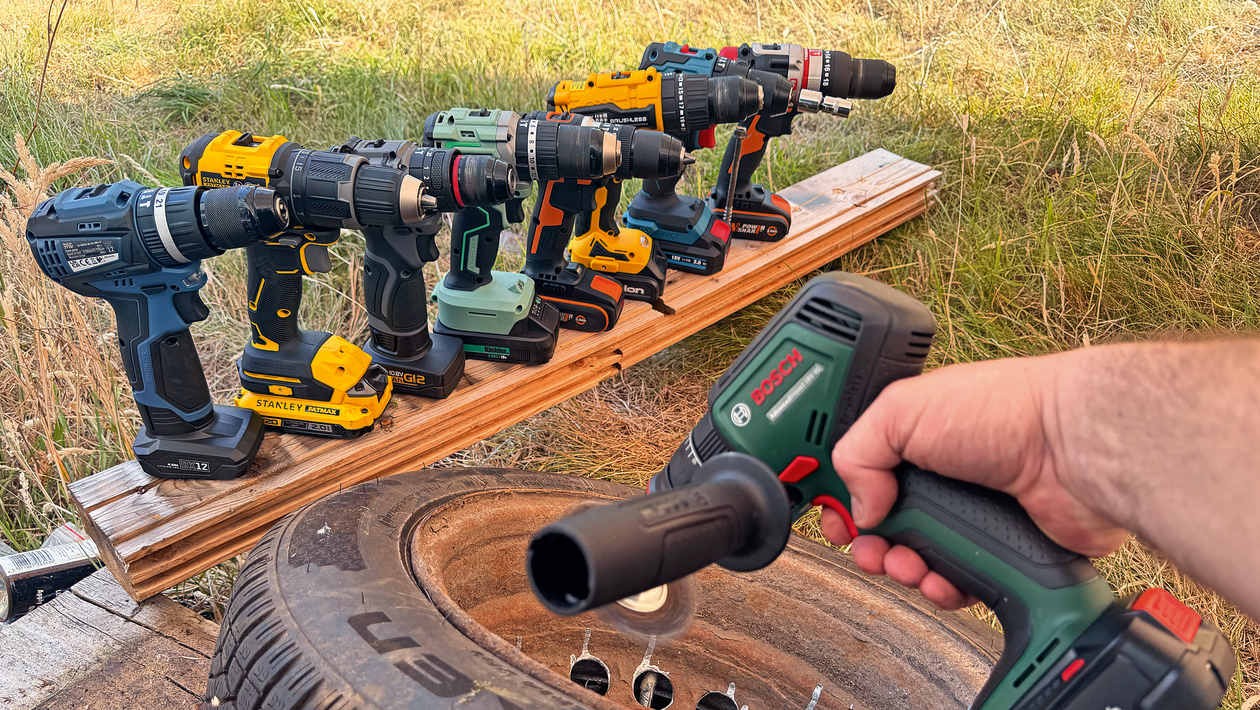
We tested ten drills. We didn’t just look at the box. We put them to work.
How we tested the best cordless drills for DIY projects
The test was simple but brutal.
First, full charge. Then, five minutes of wire-brushing a rusty steel wheel at full speed. This tests sustained power and battery drain. Next, we drilled through aluminium with a 10mm bit. Finally, we drove 6.7x123mm hex screws into timber. No pilot holes. Just torque.
We judged comfort. We checked how easy it was to swap bits. We looked at accessories. We cared about value.
Here is how the top contenders stack up against the rest of the pack.
Why the Kielder KWT-020 is the best value cordless drill
Price: £70 (plus £24 for charger)
Battery: 18V, 2Ah
Torque: 75Nm
Rating: 5/5
The Kielder is cheap. Shocking, almost. But it has the second-highest torque in this group. You need two hands to keep it steady when driving big screws. It’s that powerful.
On high gear, it ran a wire brush for five minutes. Maxed out at 2,000rpm. Lost only one bar of charge. Efficient? Yes.
There are cuts. No case. No bag. You buy the charger separately.
Is that a dealbreaker? For a crowded shed, maybe it’s a feature. It’s still the best value on the market right now.
“The cheapest drill by a margin, yet the second most powerful motor.”
Does the Bosch AdvancedImpact 18V-8 QuickSnap justify the price?
Price: £150
Battery: 18V, 2.4Ah
Torque: 82Nm
Rating: 4.5/5
Bosch calls it QuickSnap. Not a great name if you’re fixing a car. But it works. Pull a collar and the chuck swaps for a magnetic holder. You snap in driver bits instantly. No tightening. No fumbling.
It sheds nearly 300 grams. Lighter means easier to hold overhead.
The torque is 82Nm. The highest here. It can undo wheel nuts. You just have to use the side handle.
It’s expensive. But the feature set is clever. And the power is undeniable.
Which Stanley drill offers the best balance of power and comfort?
Price: £95
Battery: 18V, 2Ah
Torque: 60Nm
Rating: 4/5
The Stanley FATMAX is heavy. 1,510 grams. But it feels balanced. The weight sits right, so your arm doesn’t fatigue as fast.
It has 15 torque settings. Plenty for delicate screws or stubborn bolts. The LED light is bright enough to see what you’re doing in a dark engine bay.
The case is huge. The buttons are stiff. But for under £100, the build quality is solid. It’s a workhorse.
Why speed matters: The Worx WX355.1
Price: £100
Battery: 20V, 2Ah
Torque: 55Nm
Rating: 3.5/5
Small. Light. Punchy.
The Worx isn’t the strongest. But it is the fastest. 2,100rpm tops the charts. If you are polishing or drilling, speed is king. The screw went in without a fight.
The downside? The charger is slow. You will wait.
But for light tasks, the quick rotation saves time. And fatigue.
What to expect from Erbauer, Makita, and Durofix
These three are solid, but flawed.
The Erbauer ECCD18 comes with two batteries. That’s its main win. You swap and go. But at 1.5kg, it’s heavy. The specs are average. 1,800rpm. 50Nm. It works. It just doesn’t impress.
The Makita DHP490 has a massive 5Ah battery. It will last all day. The problem? The weight. 1,700 grams is exhausting after an hour. You pay for the battery, not the handling. The case is also absurdly large.
The Durofix RK1218 is compact. 1.26kg. Easy to handle. The 4Ah battery lasted the whole test with charge to spare. It’s soft-bagged, not hard-cased. Good for portability. Weak on torque, though. You need the low gear to get screws in.
Mid-range contenders: Clarke, DXpulse, and Worx WX354
The Clarke CON18 has two batteries but no charge indicator. It dies when you least expect it. It’s slow, too. 1,500rpm is behind the rest. It gets the job done, but slowly.
The DXpulse 12V is tiny. But the motor is weak. 40Nm isn’t enough for big screws. It struggled past halfway. It comes with a nice case and bits, but the tool itself is underpowered.
The Worx WX354 costs £180. That’s a lot. It has two 20V batteries. It feels powerful, even if the spec says 60Nm. Fast wire brushing. Good case. But the price tag makes it hard to recommend over cheaper options.
Final verdict: Which cordless drill should you buy?
It depends on what you value.
If you want power without the price tag, grab the Kielder. It’s raw. It’s cheap. It works.
If you want clever features and maximum torque, the Bosch is worth the extra cash.
For a reliable all-rounder, the Stanley strikes the best balance.
Don’t overpay for brands you don’t need. Don’t underpower your projects. Pick the tool that fits your hands and your budget.
What are you drilling this weekend?


